

Description
- Brand: GE Energy / General Electric
- Full Model Number: IS200TSVCH2AED
- MRP Number: MRP246517
- Lifecycle Status: Obsolete / legacy spare; exact OEM lifecycle designation should be verified against the installed system documentation
- Core Function: TSVC Servo I/O Terminal Board for Mark VIe turbine control
- Primary Interface: PSVO I/O Pack and WSVO Servo Driver
- Servo Channels: 2 electro-hydraulic servo valve channels
- Position Feedback: Up to 8 LVDT valve-position inputs
- Control Architecture: Simplex, Dual, and TMR
- Power Interface: Three 28 VDC supplies through J28
- Stock & Condition: New Surplus / Unused inventory subject to physical stock confirmation
- Dispatch: Emergency shipment available when stock, order approval, and carrier cutoff are confirmed
GE documentation identifies TSVC as a Mark VIe accessory, while the Mark VIe control guide specifies its use with PSVO and WSVO servo-control hardware.
Obsolescence & Supply Chain Deep Dive
A failed TSVC board can turn a localized control-hardware problem into a turbine maintenance schedule problem. The GE IS200TSVCH2AED is the servo terminal interface between the Mark VIe control hardware and electro-hydraulic servo valves, carrying LVDT position feedback and servo-related field connections. GE’s documentation states that TSVC is specifically designed for the PSVO I/O pack and WSVO servo driver and supports Simplex, Dual, and TMR arrangements. For plants maintaining legacy Mark VIe assets, locating the exact MRP246517 assembly can therefore be more practical than redesigning an installed servo-control architecture.
From a TCO perspective, replacing only the failed terminal assembly can avoid the engineering, validation, outage, cabinet, wiring, and controls-software costs associated with a wider migration. The investment case becomes stronger when an outage window is already constrained and the installed PSVO/WSVO hardware remains serviceable. TSVC provides two servo channels, accepts up to eight LVDT valve-position inputs, and uses three 28 VDC supply connections through J28 according to the Mark VIe control documentation. (Lead times for legacy hardware vary by physical inventory, so lot-specific availability should be confirmed before the maintenance window is fixed.)
Compatibility & Replacement Matrix
| Approval Item | Engineering Guidance |
|---|---|
| Exact IS200TSVCH2AED / MRP246517 replacement | Drop-in Replacement when the replacement carries the same full part number, hardware revision, connector arrangement, and applicable field configuration |
| Different TSVC variant | Engineering Verification Required; do not assume that another TSVC suffix is interchangeable |
| Firmware Flash | Normally Not Required for the terminal board itself; firmware/configuration resides in the associated control and I/O hardware |
| Hardware Modification | Not expected for an exact-match replacement; existing field wiring and connector geometry must still be checked |
| Typical Physical Swap Allowance | Approximately 1–4 labor hours for controlled isolation, removal, installation, wiring verification, and functional checks; actual outage duration depends on plant procedures |
| Post-Replacement Verification | LVDT feedback validation, servo output checks, channel-power confirmation, alarm review, and redundancy-path verification before return to service |
Field Traps — Watch Out
PSVO/WSVO pairing: The Mark VIe guide explicitly states that TSVC is designed for the PSVO I/O pack and WSVO servo driver and will not work with the VSVO processor. Substituting hardware based only on a similar-looking terminal-board designation can therefore create a system-level mismatch.
Redundancy and wiring configuration: TSVC supports Simplex, Dual, and TMR arrangements, with separate R/S/T power paths and specific connector and terminal-block assignments. Before issuing a PO, engineers should compare the existing board’s connector labels, terminal wiring, jumper configuration, and installed redundancy architecture against the replacement documentation.
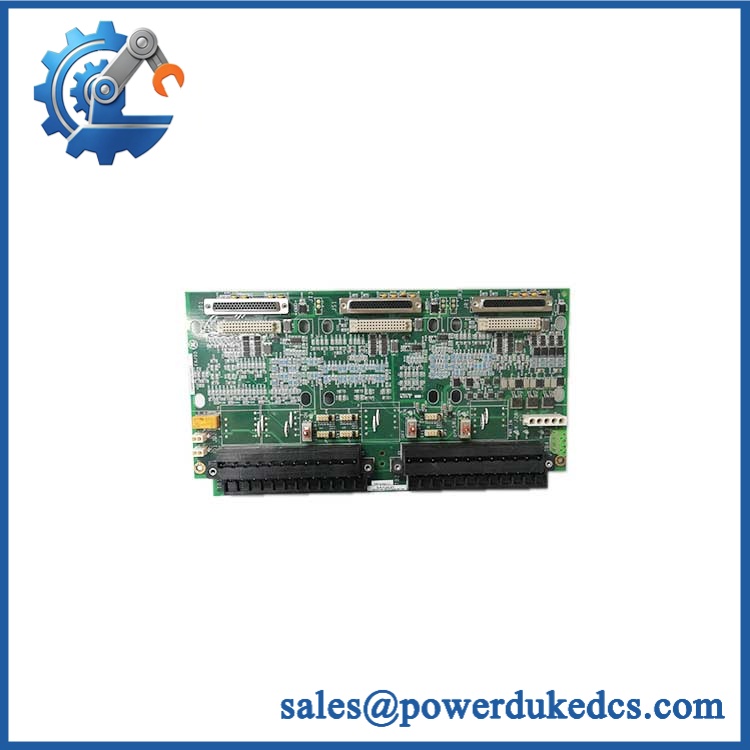
GE IS200TSVCH2AED
Quality Assurance & Testing SOP
Every supplied IS200TSVCH2AED unit should pass a documented pre-shipment inspection sequence before release:
- OEM anti-counterfeit visual inspection: compare GE identification labels, board markings, part number, MRP number, revision markings, connector condition, PCB finish, and workmanship against the required assembly specification.
- Part-number and revision verification: record the exact IS200TSVCH2AED / MRP246517 identification before packaging; photograph the label and serial or traceability markings where present.
- PCB condition inspection: check for cracked laminates, lifted pads, corrosion, contamination, damaged connectors, loose hardware, and evidence of unauthorized rework.
- Power integrity test: verify applicable supply paths and connector continuity against the documented terminal-board architecture before functional testing.
- Indicator verification: where the associated PSVO/WSVO pack provides diagnostic indicators, check the expected ERR/RUN status during system-level testing; for the TSVC terminal board itself, verify the applicable channel-power indication rather than assuming a processor-style POST.
- I/O load testing: use representative or simulated servo/LVDT loads to validate signal paths without connecting the board directly to a live turbine control loop.
- LVDT path verification: check excitation and feedback channels for correct continuity and expected response under the approved bench-test method.
- Connector and terminal inspection: verify TB1/TB2-related field interfaces, J28 power connection, and mating connectors for secure mechanical engagement.
- Final QA release: attach inspection records, test results, photographs, and packing identification to the shipment file for procurement and maintenance traceability.
This protocol separates visual authenticity checks from electrical verification, reducing the risk of sending a cosmetically acceptable board that has not been functionally screened.
Procurement & Lifecycle FAQ
Is the GE IS200TSVCH2AED MRP246517 genuinely in stock, and what is the cutoff for emergency shipping?
Current independent industry listings report this exact part number as available from multiple suppliers, including unused inventory listings. That does not establish any particular warehouse’s live quantity. Before an emergency PO is released, request a physical-stock confirmation, exact label/part-number confirmation, and the carrier cutoff applicable to the shipment destination.
How do you verify the condition and authenticity of an obsolete or surplus unit?
The control point is the physical unit, not the catalog description. Require the supplier to verify the GE identification label, IS200TSVCH2AED, MRP246517, revision markings, connector condition, PCB workmanship, and available traceability records. For surplus stock, request pre-shipment photographs and the documented inspection record.
Are firmware compatibility issues likely?
The TSVC board is an interface assembly rather than the primary firmware-bearing controller. The key compatibility issue is the associated architecture: the GE guide specifies PSVO I/O pack + WSVO servo driver operation and excludes the VSVO processor. Confirm the installed pack, driver, redundancy mode, jumper settings, and control-system configuration before PO approval.
What warranty and return terms should be written into the PO?
Use the supplier’s written quotation as the controlling document. The PO should state the warranty duration, coverage for DOA or functional failure, RMA procedure, inspection window, and whether the original serial/identification label must remain intact. For obsolete hardware, serial-number and part-number traceability should be recorded at receipt.
Is a full Mark VIe migration necessary when this board fails?
Not necessarily. When the installed PSVO/WSVO architecture remains serviceable and the failure is isolated to the terminal board, an exact-match replacement can preserve the existing control design and avoid the broader engineering and validation burden of a system migration. Any substitution involving a different TSVC revision or associated servo hardware requires engineering review before installation.



 Start Chat