

Description
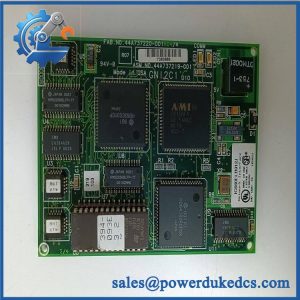
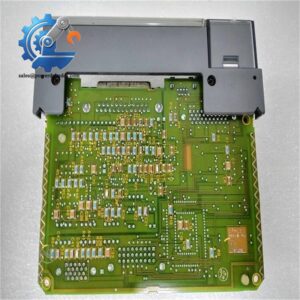
- Model & Brand: GE IS215VCMIH2CA
- Functional Designation: VCMI
- Product Family: GE SPEEDTRONIC Mark VI
- Part Type: VME Communications Interface / Bus Master Controller
- Primary Function: Provides the communication interface between the Mark VI controller, VME I/O boards, terminal-board identification system, and IONet control network.
- Board Format: 6U VME, approximately 0.787 in. wide according to the Mark VI guide.
- Estimated Net Weight: Approximately 0.35 kg according to current secondary inventory records.
- Estimated Shipping Weight: Approximately 0.7–1.0 kg with ESD shielding, connector protection, cushioning, and export carton.
- Approx. Shipping Dimensions: Approximately 2 × 18.8 × 26.1 cm from secondary supplier records; verify the actual packed unit for freight documentation.
- Processor: Texas Instruments TMS320C32, 32-bit DSP.
- IONet: 3 × 10BASE2 Ethernet ports for H2 architecture, using BNC connectors.
- Serial Interface: 1 × RS-232C, D-style connector, 9600 baud according to the Mark VI guide.
- Memory: 32 KB dual-port memory, 256K × 32 SRAM, and up to 4 MB × 8 flash for the VCMI-H_C implementation.
- Diagnostics: Monitors internal +5, ±12, ±15, and ±28 V power buses and receives diagnostic inputs from the power distribution module.
- What’s in the Box: IS215VCMIH2CA board/assembly only unless the purchase order expressly includes VME mounting hardware, cables, or removable configuration media.
The H2 designation is important: the Mark VI documentation identifies three IONet 10BASE2 ports for the H2 version, while the H1 version has only one.
Product Introduction
Within a Mark VI VME rack, the GE IS215VCMIH2CA serves as the VME Communications Interface and bus master. It manages communication between the controller and I/O boards, interfaces with the IONet control network, and handles board and associated terminal-board identification. This makes the VCMI a central communications asset rather than a simple network adapter.
The exact suffix should remain intact in the warehouse master. The H2 hardware configuration provides three IONet 10BASE2 ports, while the functional revision codes in the complete designation identify the specific board generation. A replacement must therefore be matched against the installed VME rack and network topology—not just the “VCMI” family name (particularly in TMR installations).
Core Technical Specifications
| Parameter | Value |
|---|---|
| Manufacturer | General Electric |
| Product Family | SPEEDTRONIC Mark VI |
| Model | IS215VCMIH2CA |
| Functional Acronym | VCMI |
| Product Type | VME Communications Interface / Bus Master Controller |
| Form Factor | 6U VME |
| Board Width | Approximately 0.787 in. |
| Architecture | H2 |
| Processor | Texas Instruments TMS320C32, 32-bit DSP |
| Dual-Port Memory | 32 KB |
| SRAM | 256K × 32 |
| Flash Memory | 4 MB × 8 for VCMI-H_C implementation |
| IONet Ports | 3 |
| IONet Standard | 10BASE2 Ethernet |
| IONet Connector | BNC |
| Serial Port | 1 × RS-232C |
| Serial Connector | D-style |
| Serial Speed | 9600 baud |
| VME Function | VME bus master / block transfers |
| Frame Rate | 10 ms simplex / 40 ms TMR |
| Internal Bus Monitoring | +5, ±12, ±15, ±28 V |
| PDM Monitoring | Supported via J301 |
| Typical System Role | Controller-to-I/O and IONet communications |
| Approx. Weight | 0.35 kg, secondary-source value |
| Estimated Shipping Weight | 0.7–1.0 kg |
| Lifecycle Position | Legacy / Obsolete |
The Mark VI technical guide provides the processor, memory, IONet, RS-232, VME, frame-rate, and internal power-monitoring specifications.
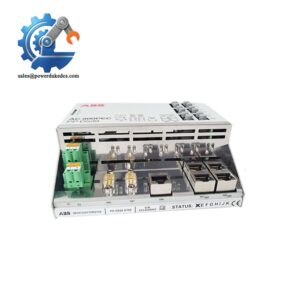
One caution belongs in the asset master: some current reseller pages incorrectly list 24 channels, relay outputs, or DIN-rail mounting for this part. Those descriptions conflict with the Mark VI technical documentation, which identifies the IS215VCMIH2CA as a 6U VME VCMI bus-master/communications board.
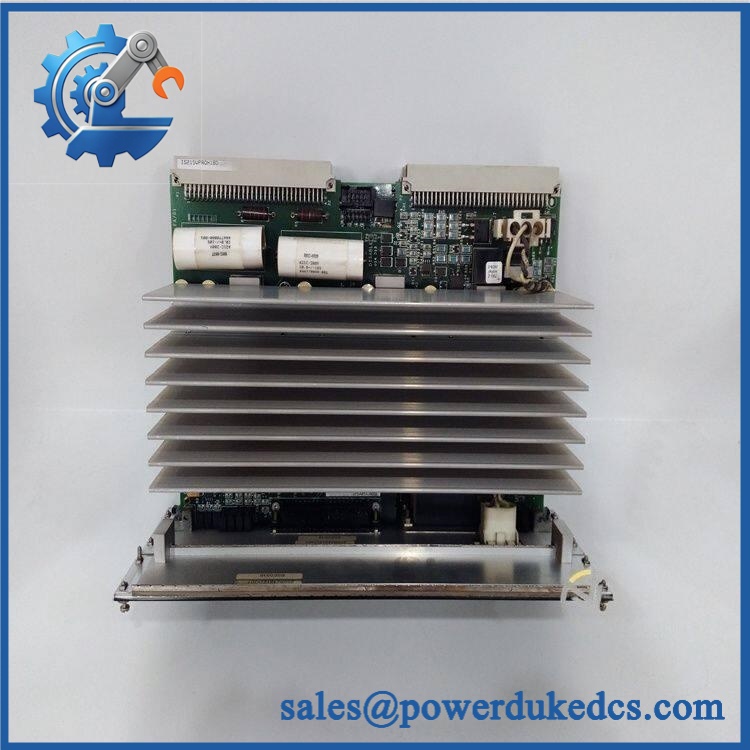
GE IS215VCMIH2CA
Global Compliance & Industry Certifications
For IS215VCMIH2CA, certification should be evaluated at the Mark VI system and installation level unless a board-specific certificate explicitly covers the loose unit.
- CE Mark: Verify against the applicable GE Mark VI conformity documentation and exact hardware revision.
- UL/cUL: Do not record standalone UL/cUL status without the applicable GE agency documentation.
- ATEX / IECEx: The VCMI board should not be classified as intrinsically safe solely from its model number. Hazardous-area suitability depends on the complete Mark VI control system, enclosure, interfaces, and installation method.
- Marine / DNV: No standalone DNV approval was reliably established for this exact VCMI board.
- EMC: Preserve the original Mark VI cabinet grounding, shield termination, cable routing, and network architecture used for qualified operation.
- Functional Safety: The VCMI is important to Mark VI communications, but the existence of TMR-compatible communications architecture does not by itself establish SIL certification for the loose board.
For audit purposes, retain the nameplate photograph, hardware revision, system-level conformity documents, serial number, and installation-specific certification records.
Verify specific lot certifications with OEM.
Long-Term Storage & Asset Preservation Guide
Keep the VCMI in an ESD shielding bag with the VME connector protected. The board has multiple BNC connectors, an RS-232 connector, a VME backplane interface, and exposed electronic components. Mechanical damage to the connector field can make an otherwise healthy controller unusable.
Maintain warehouse humidity below 60% RH where practical. Stable dry conditions reduce oxidation at the VME contacts and BNC interfaces, particularly when the board remains in storage for several years.
Protect the BNC connectors from impact and dust. Keep protective caps installed whenever available. Do not stack another PCB directly on the connector side.
Record the complete H2CA identity. The H2 hardware configuration has three IONet ports, so it should never be mixed indiscriminately with H1 VCMI stock. Retain the full part number, board revision, and port configuration in the asset record.
Physical Installation Prerequisites
The designed for installation in the Mark VI VME rack. It is not a DIN-rail controller.
Rack compatibility: Verify the VME backplane, slot assignment, controller relationship, and IONet topology before insertion. The VCMI is the VME bus master, so an incorrect board can affect multiple I/O functions simultaneously.
Mechanical clearance: Preserve the card-guide spacing and front-panel clearance defined by the Mark VI rack. Do not impose an arbitrary 50 mm gap where the VME chassis provides the engineered card pitch.
Power: The board monitors several VME supply rails, including +5, ±12, ±15, and ±28 V. Apply power only through the approved Mark VI rack distribution system; do not improvise a bench supply connection.
Network interface: H2 uses three 10BASE2 IONet ports. Verify BNC cable routing, termination, port assignment, and network topology before commissioning.
Serial interface: Preserve the RS-232C connection and its intended equipment association. Do not use an arbitrary serial cable based only on connector fit.
Grounding: Maintain the Mark VI rack protective-earth and signal-reference scheme. Shielding should follow the approved turbine-control wiring design.
Cooling: Keep rack fans and ventilation channels unobstructed. The VCMI contains a processor and memory devices that require the VME chassis’ designed thermal environment.
Redundancy: In TMR systems, verify all relevant VCMI/control modules and network paths before replacing a single board. A single visible communication fault does not necessarily identify the failed VCMI.
Buyer’s FAQ — Logistics & Compliance Focus
Q: What HS Tariff Code should be used for ?
A: A classification under HS 8538.90 may be considered for a specialized circuit board used with electrical control equipment, while some commercial records use HS 8537.10 because of the board’s control-system function. The final national tariff code must be validated against the importing country’s tariff schedule and the precise customs description. Secondary trade records are useful as reference only.
Q: What Country of Origin should I declare?
A: Use the actual manufacturing origin supported by the physical board label or traceable GE documentation. Current supplier records report USA, but reseller-origin data should not replace lot-specific evidence.
Q: Should I insure one VCMI board during international shipment?
A: Yes when it supports a production-critical Mark VI turbine. The board itself is relatively light—approximately 0.35 kg in several current records—but the downtime consequence can be substantial. Use ESD protection, rigid support around the VME and BNC connectors, moisture protection, tracking, and cargo insurance based on documented replacement value.
Q: Does include the latest firmware pre-loaded?
A: Do not assume that. The VCMI contains processor, memory, and flash resources, and its software/configuration is tied to the Mark VI application environment. Verify the board’s software/hardware revision and the installed Mark VI configuration before commissioning rather than treating the board as firmware-neutral.
Q: Is interchangeable with the H1 VCMI?
A: No automatic substitution should be made. The H2 version has three IONet 10BASE2 ports, while H1 has one. Network architecture and rack configuration therefore have to be checked before substitution.
Q: What should be recorded for this legacy spare?
A: Retain GE , VCMI function, H2 architecture, hardware revision, serial number, processor identity, flash/memory configuration, IONet port count, COO evidence, certification status, storage date, and test status. That level of asset control is appropriate for a board that can affect the communications path of multiple Mark VI I/O modules.


 Start Chat