

Description
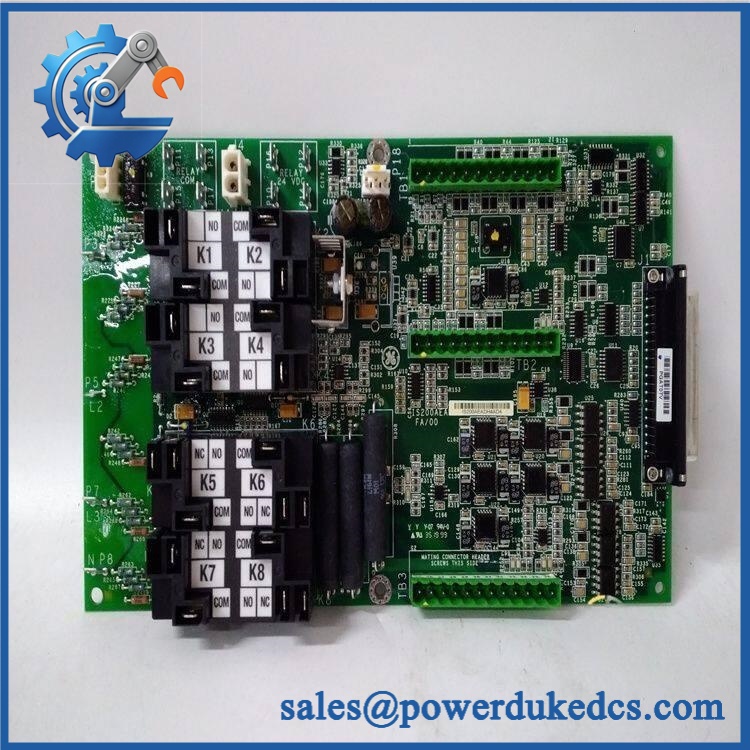
- Model & Brand: GE General Electric IS215WEPAH2B
- Product Family: Mark VIe Speedtronic
- Functional Acronym: WEPA — Wind Energy Pitch Axis
- Functional Description: 30 Nm non-CANBus wind pitch axis control
- Physical Dimensions: Mark VIe special PCB assembly; exact W × H × D should be verified from the physical unit because the H2B revision uses a special modular construction and published legacy dimensions can vary.
- Estimated Shipping Weight: Approximately 1.0–1.5 kg including protective packaging; actual packed weight should control freight documentation.
- What’s in the Box: IS215WEPAH2B PCB assembly, ESD protection, protective packaging, and applicable documentation. Mounting hardware or mating connectors are not assumed unless specifically included with the supplied unit.
Product Introduction
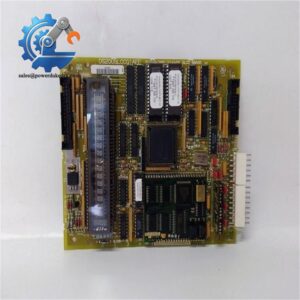
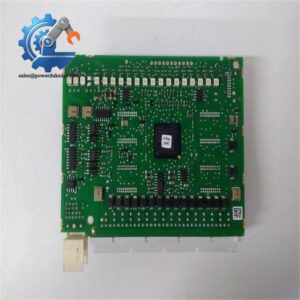
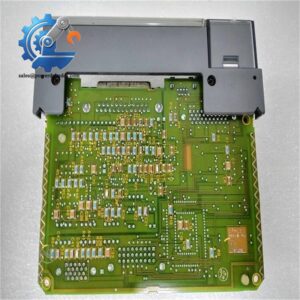
Pitch control is one of those turbine functions where a board-level substitution can have consequences far beyond a simple I/O mismatch. The GE IS215WEPAH2B is a specialized Mark VIe Wind Energy Pitch Axis (WEPA) control board used for non-CANBus wind pitch control, processing blade-position feedback, discrete status signals, encoder information, and actuator-control outputs within the turbine control architecture.
The H2B assembly is more than a plain circuit card. It uses a conformal-coated PCB configuration with an associated daughterboard assembly (the exact installed daughterboard should be confirmed against the nameplate and physical configuration). GE documentation identifies the H2B variant as the 30 Nm non-CANBus WEPA configuration, which is important when selecting a replacement because nearby WEPA and AEPA variants are not automatically interchangeable.
Core Technical Specifications
| Parameter | Value |
|---|---|
| Manufacturer | GE General Electric |
| Model | IS215WEPAH2B |
| Series | Mark VIe Speedtronic |
| Functional Acronym | WEPA |
| Functional Description | Wind Energy Pitch Axis |
| Pitch Application | 30 Nm non-CANBus wind pitch-axis control |
| Board Type | Special modular PCB assembly |
| Functional Revision | B |
| PCB Construction | Conformal coated |
| Analog Inputs | 8 |
| Incremental Encoder Input | 1 |
| Additional Analog Input | 1 |
| Discrete Inputs | 20 |
| Discrete Outputs | 2 |
| Relay Outputs | 9 |
| RS-485 Interfaces | 2 |
| PWM Control Outputs | 2 |
| COM Ports | COM1, COM2, and micro-miniature 9-pin D |
| Ethernet Interface | 10BaseT / AUI |
| Software Frame Rates | 10 ms, 20 ms, 40 ms |
| Rated Power Input | 125 VDC |
| Female Plug Connectors | 2 |
| Metal-Oxide Varistors | 4 |
| Relative Humidity | 10–95%, non-condensing |
| Storage Temperature | -40°C to +70°C |
| Non-Operating Shock | Maximum 10 g |
| Firmware / Configuration | Application-dependent |
| Installation | GE Mark VIe wind-turbine control architecture |
| Hot Replacement | Do not assume hot-swap capability |
Engineering identification note
The IS215WEPAH2B is particularly sensitive to configuration identity. GE’s lifecycle documentation distinguishes it from the earlier IS215WEPAH2A, with the H2B representing the current replacement within that specific 30 Nm non-CANBus WEPA family.
Do not substitute the CANBus WEPAH1 family merely because the PCB appears similar. Communication architecture is part of the functional identity.
GE IS215WEPAH2B
Global Compliance & Industry Certifications
The IS215WEPAH2B is an industrial wind-turbine control PCB, and certification claims should be evaluated at the equipment or certified system level rather than assumed from the bare replacement board.
For compliance-controlled procurement:
- CE: May be associated with the applicable GE Mark VIe equipment configuration.
- UL/cUL: Any approval should be tied to the applicable GE control-system assembly and jurisdiction.
- ATEX / IECEx: Do not assume standalone hazardous-area certification for this PCB without documentation covering the exact turbine/control assembly.
- Marine / DNV-type approvals: Not assumed for the standalone board; project-specific equipment certification must be verified separately.
- COO: Establish from actual manufacturing traceability, not the supplier’s shipping location.
- HS classification: Classification can vary by importing country and customs interpretation; a broker should confirm the final tariff heading.
Verify specific lot certifications with OEM.
For audit purposes, preserve the board’s complete part number, functional revision, serial number, and any associated certificate or inspection record.
Long-Term Storage & Asset Preservation Guide
Keep the board in an ESD shielding bag with the original identification label visible. Avoid repeated removal from its protective packaging during warehouse audits; unnecessary exposure is a common source of connector contamination and electrostatic damage.
Maintain a dry, temperature-controlled storage location without condensation. The published environmental range identifies 10–95% RH non-condensing and -40°C to +70°C storage, but a controlled indoor spare-parts environment is preferable for long-term preservation.
Inspect the conformal coating, communication connectors, board edges, terminal interfaces, and daughterboard connection before installation. Look for corrosion, coating damage, cracked solder joints, or evidence of moisture ingress.
For lifecycle records, photograph the complete part-number label and hardware revision. The H2B suffix must remain tied to the inventory record, particularly where H1 and H2 WEPA variants coexist.
Physical Installation Prerequisites
Install the only in the specified GE Mark VIe wind-control cabinet and compatible mechanical/electrical interface. The board’s special modular construction means the mating daughterboard and connector arrangement should be checked before insertion.
Confirm the cabinet’s DC supply architecture before energizing the replacement. The documented input rating is 125 VDC, so a field technician should not treat this as a conventional low-voltage 24 VDC control card.
Grounding, connector retention, cabinet airflow, shielding, and cable segregation should follow the turbine manufacturer’s control-cabinet design. Pay particular attention to the encoder and RS-485 wiring; incorrect signal routing or termination can produce intermittent pitch-control faults that may initially appear to be board failure.
The replacement should be carried out with the turbine in the site-approved maintenance state. Do not remove or insert the board under power unless GE documentation and the plant procedure explicitly authorize that operation.
Buyer’s FAQ — Logistics & Compliance
Q: What HS tariff code applies to ?
A: This is an industrial control PCB, but the correct HS classification depends on the importing country’s tariff rules and the customs interpretation of the complete article. Use the broker-confirmed classification for the commercial invoice rather than relying on a generic supplier code.
Q: How should Country of Origin be established?
A: COO should come from manufacturing traceability or supplier documentation for the actual unit. Warehouse location, export port, and seller address are not reliable substitutes for manufacturing origin.
Q: Does the board arrive with the latest firmware pre-loaded?
A: Do not assume that it does. The WEPA board operates as part of a GE Mark VIe wind-turbine control application, and software/configuration is system-dependent. Verify the installed hardware revision and the approved turbine configuration before commissioning.
Q: Is a hot-swappable module? How should authenticity be checked?
A: Do not assume hot replacement. Follow the GE and site-specific power isolation procedure. For authenticity, verify the full identifier, H2B functional revision, conformal-coating condition, daughterboard configuration, connector arrangement, serial/traceability markings, and incoming functional-test report.


 Start Chat