

Description
- Brand: GE
- Full Model Number: IS220PAICH1B
- System/Series Family: GE Mark VIe / SPEEDTRONIC turbine control
- One-Sentence Core Function: Distributed analog I/O pack interfacing field analog signals with the Mark VIe controller through IONet Ethernet
- Top 3 Hardcore Specs: 10 analog inputs + 2 analog outputs; 16-bit A/D conversion; 5 ms normal scan time
- Stock Status: New surplus / fully tested refurbished, subject to exact hardware revision
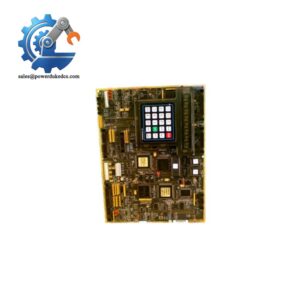
GE identifies IS220PAICH1B as a Mark VIe Control Analog I/O Module. The PAIC pack interfaces with an analog terminal board and communicates with one or two IONet Ethernet networks. GE’s Mark VIe documentation also places the PAIC within the analog I/O family used for turbine control applications.
Module 3: Commercial-Technical Deep Dive
A failed analog I/O pack can remove pressure, temperature, flow, valve-position, or other process measurements from a turbine control loop even though the field transmitter itself remains healthy. The GE IS220PAICH1B is the Mark VIe PAIC Analog I/O Pack, providing 10 analog inputs and 2 analog outputs through the associated terminal board. Inputs 1–8 can be configured for 1–5 VDC, ±5 VDC, ±10 VDC, or 0–20 mA, while inputs 9–10 support 0–20 mA or ±1 mA. The two analog outputs operate as 0–20 mA channels.
The numbers matter during a shutdown replacement. The PAIC uses a 16-bit analog-to-digital converter, with a documented normal scan time of 5 ms (200 Hz), although the controller frame rate is limited to 100 Hz. Typical power consumption is about 5.3 W, increasing to approximately 6.2 W maximum, while the associated transmitter-power circuit provides approximately 24 VDC excitation. GE documentation also confirms that Mark VIe analog I/O modules can use simplex or TMR arrangements depending on the terminal-board and I/O-pack configuration.
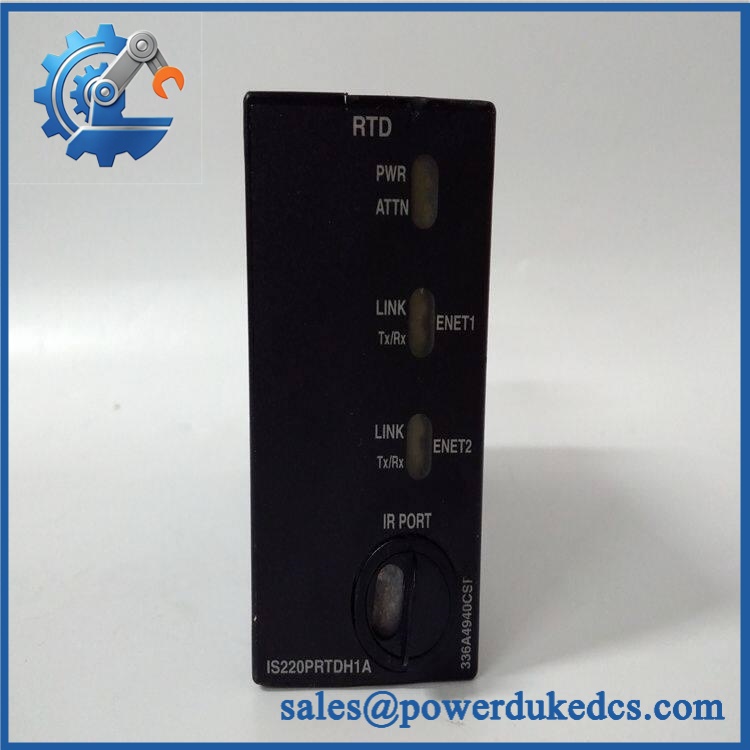
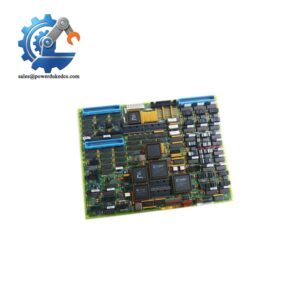
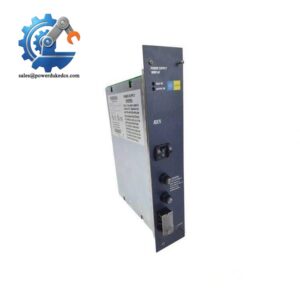
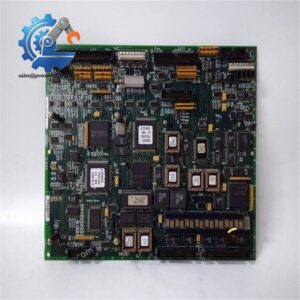
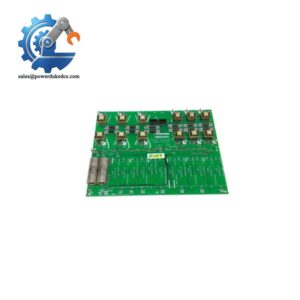
GE IS220PAICH1B
Module 4: Compatibility & Installation Traps
Migration/Compatibility
- Replacement type: GE Mark VIe PAIC Analog I/O Pack
- Model: IS220PAICH1B
- Functional family: PAIC
- Firmware flash: May be required depending on the installed Mark VIe software and I/O configuration.
- Logic rewrite: Not normally required for a same-model replacement with matching configuration.
- Drop-in status: Potentially direct, but the terminal-board revision must be verified before installation.
- IONet interface: Dual RJ45 Ethernet connections for Mark VIe distributed I/O communications
- Known terminal-board compatibility: Published technical references identify IS200TBAIH1C, IS200STAIH1A, and IS200STAIH2A among compatible terminal boards
⚠️ Field Traps (Watch Out)
1. Terminal-board revision is critical.
The PAIC will physically mount on some earlier TBAI versions, but published technical documentation warns that the H1C version is required for full analog accuracy and that earlier revisions can generate a board-compatibility fault. Check the exact terminal-board part number before shipping the replacement pack.
2. Do not confuse PAICH1B with PAICH2 variants.
The PAICH1 configuration supports two 0–20 mA outputs, whereas PAICH2 adds hardware for higher-current output applications. Substitution should therefore be based on the complete part number, not only the PAIC family name.
3. Current-loop measurements depend on the terminal-board circuitry.
For current inputs, the terminal board provides the load/burden resistors and the PAIC measures the resulting voltage. A wrong terminal board can therefore affect measurement accuracy even when the PAIC pack itself is healthy.
4. Verify TMR architecture before disconnecting the pack.
In TMR systems, each PAIC can participate in redundant analog-output control, and the output circuit includes a relay used to isolate a failed output path. The maintenance procedure should account for the active redundancy arrangement before removing the pack
Module 5: Quality Assurance SOP
Each GE IS220PAICH1B unit should pass a documented pre-shipment inspection sequence:
- OEM anti-counterfeit visual inspection: Verify GE identification, IS220PAICH1B marking, PCB revision, connector arrangement, label quality, and physical construction.
- Part-number verification: Match the complete identifier against the purchase order and the installed Mark VIe BOM.
- Terminal-board compatibility check: Record the intended terminal-board model and verify that the replacement is appropriate for the installed board revision.
- Mechanical inspection: Check the housing, dual RJ45 Ethernet ports, 3-pin power interface, DC-37 I/O connector, mounting surfaces, and IR diagnostic interface for damage or contamination.
- Power-on self-test (POST): Energize the PAIC in an approved Mark VIe test environment and verify expected LED/status behavior and absence of persistent diagnostic faults.
- Analog-input verification: Apply calibrated voltage and current signals across representative channels and confirm correct engineering-value acquisition.
- Analog-output verification: Exercise the two 0–20 mA outputs and measure actual loop current against the approved test tolerance.
- Resolution and scan verification: Confirm normal analog acquisition behavior and verify the expected 16-bit conversion and approximately 5 ms normal scan under the controlled test configuration.
- Communication handshake verification: Confirm successful IONet communication between the PAIC and the Mark VIe controller/test rack through the Ethernet interface.
- Transmitter-power verification: Where the test fixture supports it, verify the approximately 24 VDC transmitter excitation output and current limiting behavior.
- Final QC: Photograph the nameplate and revision markings, record test results, protect the Ethernet and I/O connectors, and package the unit in ESD-safe material.
Module 6: CRO-Driven Buyer FAQ
1. What is GE ?
The is a GE Mark VIe PAIC Analog I/O Pack. It interfaces analog field signals with the Mark VIe control system through a compatible terminal board and communicates over the Mark VIe IONet architecture.
2. How many analog channels does the PAICH1B provide?
The standard configuration provides 10 analog inputs and 2 analog outputs. Inputs 1–8 support voltage or 0–20 mA configurations, while inputs 9–10 support 0–20 mA or ±1 mA. The two analog outputs are 0–20 mA.
3. Can the be hot-swapped?
Do not assume hot-swap capability from the part number. The appropriate replacement procedure depends on the Mark VIe architecture, terminal-board arrangement, IONet configuration, and whether the installation is simplex or TMR. Follow the applicable GE maintenance procedure and isolate the relevant circuits before removal.
4. Which terminal boards are compatible?
Published references identify IS200TBAIH1C, IS200STAIH1A, and IS200STAIH2A as compatible terminal-board families. The TBAIH1C revision is particularly important because earlier TBAI revisions may report compatibility issues or fail to provide the expected analog accuracy.
5. What warranty and technical support are provided?
Warranty duration should be stated on the quotation for the exact inventory condition supplied. Technical support should cover part-number and terminal-board verification, inspection/test documentation, I/O testing, IONet communication checks, and replacement guidance within the documented Mark VIe architecture. Field calibration, turbine protection changes, and energized commissioning remain the responsibility of qualified site personnel.



 Start Chat