

Description
- Model & Brand: GE General Electric IS220PPRFH1A
- Series: Mark VI / Mark VIe / Mark VIeS
- Product Type: PPRF PROFIBUS Master Gateway I/O Pack
- Primary Function: PROFIBUS DP master gateway between PROFIBUS slave devices and the Mark VIe I/O Ethernet architecture.
- Compatible Accessory ID Board: IS200SPIDG1A. GE’s hazardous-location documentation specifically identifies the IS220PPRFH1A with the IS200SPIDG1A terminal/accessory board.
- Physical Dimensions: Approximately 82.6 × 41.9 × 121 mm (W × H × D) for the commonly published PPRF assembly; confirm the actual mechanical envelope against the installed cabinet drawing before fit-up.
- Estimated Shipping Weight: Approximately 0.4–0.5 kg packed allowance. Published commercial records vary, so use the actual packed weight for freight and customs documentation.
- What’s in the Box: IS220PPRFH1A I/O pack, ESD shielding bag, connector protection, cushioning, shipping carton, and available inspection/test documentation.
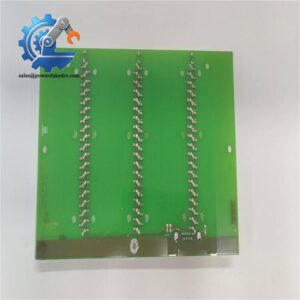
- Visible Hardware: PROFIBUS DE-9 interface and status indication are associated with the PPRF communication assembly (protect the connector during long-term storage).
Product Introduction
In a turbine-control cabinet, the gateway has to sit between two very different communication environments: a deterministic plant fieldbus on one side and the Mark VIe I/O Ethernet architecture on the other. The GE IS220PPRFH1A performs that gateway function as a PROFIBUS Master I/O Pack, using a dedicated RS-485 PROFIBUS interface while communicating upward through the Mark VIe I/O network.
Mounting is equally important. The PPRF pack is used with the IS200SPIDG1A accessory ID board, and GE documentation identifies that combination for hazardous-location applications. The pack operates from a tightly defined 28 VDC nominal supply, with published limits of 27.4 to 28.6 VDC and a maximum input current of 0.18 A (approximately 5 W at the maximum rated current).
Core Technical Specifications
| Parameter | Value |
|---|---|
| Manufacturer | GE General Electric |
| Model | IS220PPRFH1A |
| Functional Acronym | PPRF |
| Product Type | PROFIBUS Master Gateway I/O Pack |
| Control Platform | Mark VI / Mark VIe / Mark VIeS |
| PROFIBUS Role | DP Class 1 Master |
| PROFIBUS Protocol | PROFIBUS DP-V0; secondary documentation also reports DP-V1 capability depending on implementation |
| PROFIBUS Physical Layer | RS-485 |
| PROFIBUS Connector | DE-9 D-sub receptacle |
| Transmission Rate | 9.6 Kbps to 12 Mbps |
| Supported Slave Capacity | Up to 124–125 devices, depending on configuration/documentation convention |
| Data Per Slave | Up to 244 bytes input and 244 bytes output |
| IONet Interface | Ethernet connection to Mark VIe controllers |
| Ethernet Ports | Dual Ethernet ports are reported for the Mark VIe I/O pack architecture |
| Supply Voltage | 28.0 VDC nominal |
| Supply Range | 27.4–28.6 VDC |
| Maximum Input Current | 0.18 ADC |
| Operating Temperature | -20°C to +55°C (-4°F to +131°F) |
| Accessory ID Board | IS200SPIDG1A |
| Internal Communication Hardware | Hilscher COM-C PROFIBUS communication module reported |
| Controller Integration | Maps PROFIBUS slave I/O to Mark VIe controllers through IONet |
| Redundancy | Hot-backup configurations using paired PPRF packs are supported in applicable architectures |
| Approx. Physical Size | 82.6 × 41.9 × 121 mm |
| Approx. Unit Weight | 0.4–0.5 kg planning range |
The communication architecture is the key specification here. The PPRF uses a Hilscher COM-C PROFIBUS communication module with an RS-485 interface, while the processor portion connects to the Mark VIe control system through I/O Ethernet.
For memory, avoid assigning a generic DRAM or flash capacity to this model unless the exact hardware revision and controlled GE documentation are available. The PPRF is fundamentally a gateway I/O pack, not a general-purpose application processor; firmware and configuration storage should therefore be recorded as installed asset data rather than treated as a universal purchasing specification.
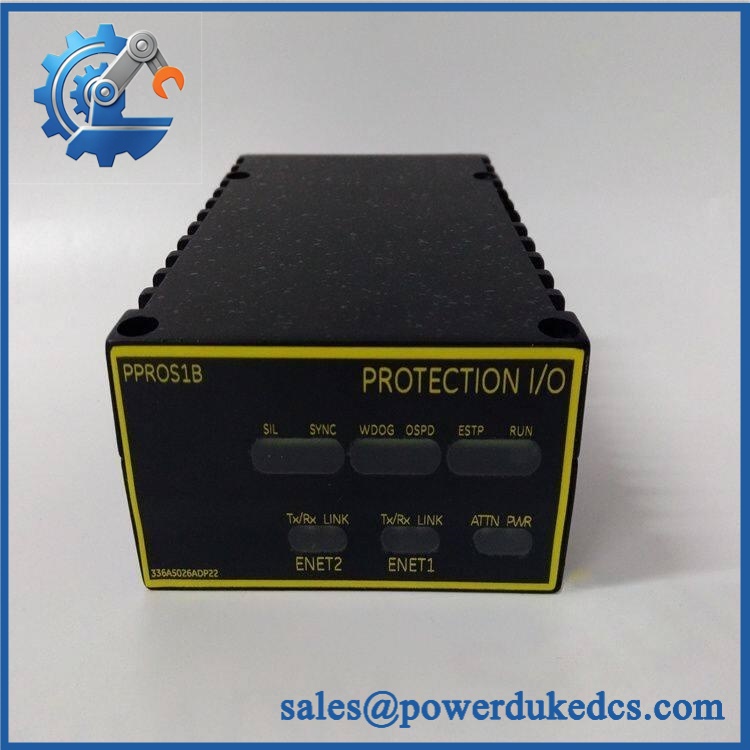
GE IS220PPRFH1A
Global Compliance & Industry Certifications
GE’s published hazardous-location certification documentation specifically lists IS220PPRFH1A with IS200SPIDG1A as an approved PPRF combination. The documented electrical rating is 28 VDC nominal, 27.4–28.6 VDC, 0.18 A maximum, with an operating ambient range of -20°C to +55°C for the PPRF pack.
Potential compliance documentation for this class of equipment can include:
- CE Mark — relevant to European-market system conformity, although the declaration applies to the applicable equipment configuration rather than automatically to every individually resold board.
- UL/cUL — important for acceptance of control equipment in North American installations and project specifications.
- ATEX/IECEx — critical where the complete installation is located in a classified hazardous area. GE documentation identifies the PPRF in the Mark VIe hazardous-location certification framework.
- Marine approvals such as DNV — project-dependent and not implied merely because a Mark VIe component has industrial certification.
For hazardous areas, certification matters because the equipment’s electrical and thermal characteristics must remain within the conditions established for the classified installation. Do not substitute a visually similar PPRF revision without checking its certification status.
Verify specific lot certifications with OEM.
Long-Term Storage & Asset Preservation Guide
Keep the in an ESD shielding bag and protect the DE-9 PROFIBUS connector from impact, dust, and moisture. Do not store exposed circuit assemblies beside steel shelving, ungrounded work surfaces, or active electrical equipment.
Control warehouse humidity and avoid condensation. A practical storage target is below 60% relative humidity, with stable temperature and no repeated cold-to-warm transitions; connector oxidation can compromise RS-485 communications long before visible corrosion becomes obvious.
Record the model, serial number, PCB revision, firmware revision, and IS200SPIDG1A compatibility in the asset register. For a critical spare, photograph the connector, identification labels, and housing condition before shelving (that record can establish whether a later communication fault originated before or after warehouse issue).
Do not energize an aged module simply to “check whether it still works.” After extended storage, use a controlled inspection and test procedure with current-limited power, verified IONet configuration, and a PROFIBUS test environment.
Physical Installation Prerequisites
The PPRF should be installed with the specified accessory ID board and the correct Mark VIe I/O arrangement. GE’s certification documentation explicitly treats that pack/board combination as the approved configuration.
Provide adequate cabinet airflow and keep the ventilation path clear. A practical field allowance is at least 50 mm of unobstructed space around the major airflow path, unless the approved GE cabinet drawing requires a different value.
Verify the 28 VDC supply before energization; the published operating window is narrow at 27.4–28.6 VDC, so do not treat an uncontrolled 24 VDC source as equivalent.
For PROFIBUS wiring, use the specified shielded twisted-pair RS-485 cable, correct DE-9 pin assignment, and proper bus termination. Keep power and communications wiring physically separated where cabinet design permits (this is especially important near contactors, VFD wiring, and other high-noise circuits).
Before commissioning, verify the PROFIBUS baud rate, slave addresses, GSD configuration, I/O mapping, and IONet controller configuration. A healthy PPRF can still report a system fault when the network database does not match the actual slave population.
Buyer’s FAQ
Q: Which HS Tariff Code should be used for ?
A: The correct HS classification depends on the importing country’s tariff schedule and the declared function of the module. Some commercial records list classifications under heading 8537, but that should not be treated as a universally binding code; validate the final declaration with your customs broker or trade-compliance team.
Q: Does Country of Origin affect this purchase?
A: Yes. COO can affect duty treatment, marking requirements, import records, and eligibility for preferential tariff programs. Preserve the manufacturer’s identification and lot-specific origin documentation rather than relying solely on the seller’s standard country statement.
Q: Is shipping insurance worthwhile for this module?
A: For a critical turbine-control communication spare, yes. Protect the DE-9 connector, use ESD packaging and rigid cushioning, and photograph the unit before shipment so transit damage can be distinguished from pre-existing condition.
Q: Does arrive with the latest firmware pre-loaded?
A: Not necessarily. Firmware should match the target Mark VIe application and PROFIBUS configuration. Request the actual installed firmware revision and configuration status; an unspecified “latest” image should not be accepted as a compatibility guarantee.



 Start Chat