

Description
- Model: GE IS230TNPAH2A
- Brand: General Electric
- Series: Mark VIe
- Part Type: Primary Trip DIN-Rail Module with PTURH1B I/O pack
- Core Function: Provides the DIN-rail-mounted hardware arrangement for primary turbine trip/protection, using a PTURH1B turbine-specific protection I/O pack.
- Key Specs: Turbine primary-protection function; DIN-rail construction; PTURH1B integrated; interfaces associated turbine protection signals through the Mark VIe architecture.
- Important Identity Note: The IS230TNPAH2A is an assembly, not simply another analog or discrete I/O module. Treat the complete assembly number and the installed PTURH1B pack as one procurement identity.
Product Introduction
A primary turbine-trip circuit is not the place for an approximate replacement. The GE IS230TNPAH2A is identified as a Primary Trip DIN-Rail Module with PTURH1B, providing the mechanical and electrical arrangement used for turbine-specific primary protection in the Mark VIe platform. The associated PTURH1B pack handles protection-related turbine inputs and interfaces with the Mark VIe I/O Ethernet architecture.
From a maintenance perspective, this distinction matters. The assembly belongs to the turbine protection chain rather than general-purpose process I/O, and its function should be preserved as an engineered replacement rather than treated as a generic DIN-rail spare (especially on systems where trip availability and redundancy are tightly controlled).
Core Technical Specifications
| Parameter | Value |
|---|---|
| Manufacturer | GE General Electric |
| Model | IS230TNPAH2A |
| Series | Mark VIe |
| Functional Description | Primary Trip DIN-Rail Module |
| Associated I/O Pack | IS220PTURH1B |
| Protection Function | Primary turbine trip / turbine protection |
| Mounting | DIN rail |
| Application | GE Mark VIe turbine control and protection |
| Architecture | Turbine-specific protection I/O |
| Processor Technology | distributed-I/O architecture |
| Ethernet Interface | Dual 10/100 Ethernet architecture on associated |
| Local Service Interface | Infrared diagnostic interface on associated I/O pack |
| Terminal Interface | interfaces with the associated turbine protection terminal arrangement |
| Supply | Determined by the integrated /terminal assembly configuration |
| Firmware | Associated and Mark VIe application dependent |
| Standalone Board Firmware | Not applicable to the passive DIN-rail assembly itself |
| Hot Replacement | Do not assume live replacement |
| Physical Envelope | Verify against the complete IS230 assembly and installed hardware before cabinet work |
| Shipping Weight | Approximately 2 kg packed, depending on supplied configuration and packaging |
Functional identification
The IS230TNPAH2A should be purchased and inspected as a complete assembly identified as TNPAH2A, with the associated pack verified separately.
Public industrial records consistently identify this part as a Primary Trip DIN-Rail Module with . Some third-party catalog records incorrectly classify the same part number as an analog-input module. That conflicting description should not be used for engineering selection; the primary-trip identification is the more relevant assembly description.
The associated itself is a turbine-specific primary-trip I/O pack. GE documentation describes PTUR hardware as interfacing turbine protection signals such as speed inputs, voltage-related signals, shaft measurements, flame-sensor inputs, and breaker-related outputs depending on the terminal-board architecture.
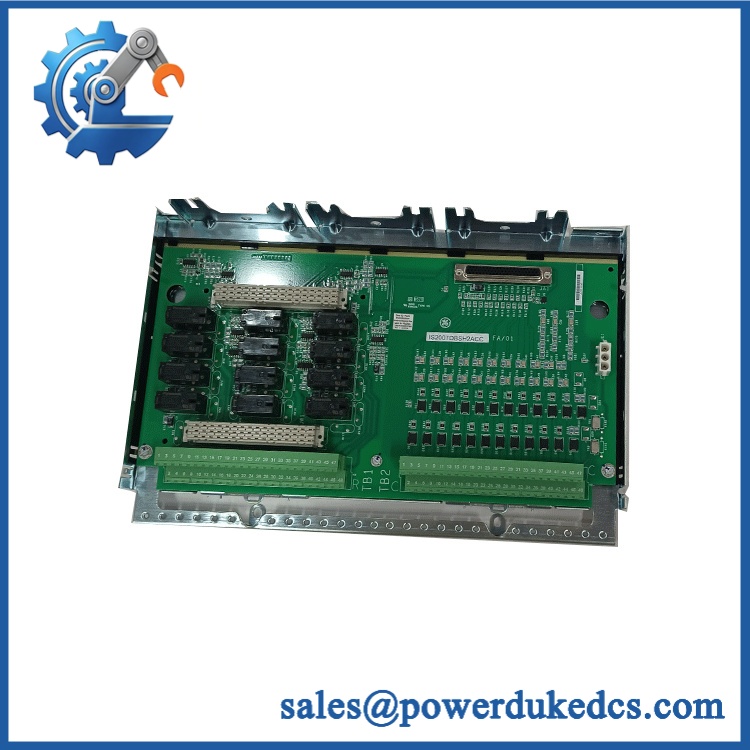
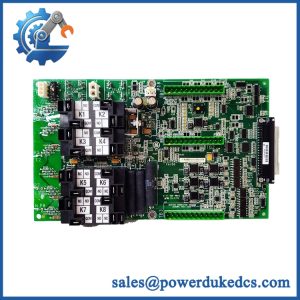
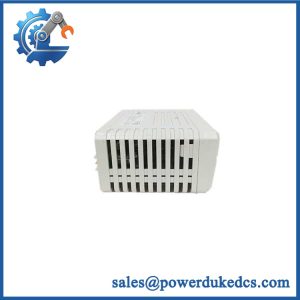
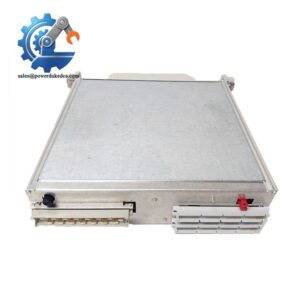
GE IS230TNPAH2A
Application Scenarios & Pain Points
Gas turbine primary protection: During turbine operation, the primary trip system must recognize critical overspeed and turbine-protection conditions without relying on ordinary process-control I/O. The TNPAH2A provides the DIN-rail implementation for the protection hardware.
Power-generation emergency shutdown: A plant may use turbine-specific protection inputs to initiate a shutdown sequence when predefined protective conditions are reached. The distinction between primary protection and standard control I/O is fundamental here.
Brownfield Mark VIe maintenance: With legacy turbine cabinets, a failed primary-trip assembly can become a procurement bottleneck because the replacement must match both the DIN-rail assembly and the associated configuration.
Protection-system troubleshooting: When a protection signal is missing, technicians should first determine whether the problem is in the field sensor, wiring, terminal assembly, pack, or higher-level configuration. Replacing the TNPA assembly without that isolation can create unnecessary downtime.
Hot cabinet environments: At 50°C+ ambient, the thermal condition of the complete protection assembly should be considered, including adjacent I/O packs, power supplies, and cabinet ventilation.
🚨 Common Error Codes & Diagnostic Symptoms
Symptom/Code: unavailable or loss of I/O-pack communication
→ Diagnosis: Possible loss of supply, Ethernet communication, internal processor fault, or configuration mismatch involving the associated .
→ Action: Verify control power and I/O network connectivity first; perform controlled diagnostics before replacing the TNPA assembly.
Symptom/Code: Primary-trip input does not respond to a known-good field signal
→ Diagnosis: The fault may originate in the field sensor, wiring, terminal interface, PTUR acquisition circuitry, or configuration rather than the DIN-rail assembly itself.
→ Action: Trace the signal from field termination through the using the approved turbine protection schematic, then replace the defective assembly only after isolation testing.
Symptom/Code: Protection channel diagnostic mismatch after replacement
→ Diagnosis: An incorrect PTUR revision, incompatible terminal arrangement, or system-configuration mismatch can prevent a replacement from behaving like the removed assembly.
→ Action: Verify the complete part identity and approved Mark VIe configuration before declaring the replacement hardware defective.
Exact numerical diagnostic codes depend on the installed Mark VIe software and turbine application. Use the controller’s diagnostic record rather than assigning a generic fault number to TNPAH2A hardware.
🚨 Cross-Reference & Lifecycle Migration
Lifecycle Status: Legacy / Obsolescence-Controlled
The IS230TNPAH2A belongs to the GE Mark VIe turbine-protection hardware family. Public inventory records continue to identify the model as a Primary Trip DIN-Rail Module with , but availability in the aftermarket should not be interpreted as proof of current OEM production status.
Compatibility considerations
- Complete primary-trip DIN-rail assembly identity.
- Associated turbine-specific primary-trip I/O pack.
- IS220PTURH1A / IS220PTURH1B: These are PTUR I/O-pack identifiers, not automatic drop-in replacements for the complete TNPAH2A assembly.
- IS200TRPAH1A / related terminal boards: These belong to alternative PTUR installation architectures and should not be substituted solely because the functional acronym is similar.
- Firmware flashing: Firmware applies to the associated PTUR I/O pack and Mark VIe control environment, not to the passive DIN-rail assembly itself. Do not flash firmware merely to force hardware compatibility.
- System migration: Moving from an older PTUR configuration to newer Mark VIe or Mark VIeS protection hardware should be treated as an engineered migration, with terminal-board, firmware, ControlST, certification, and safety-function review.
- Buffer-stock strategy: Because this is protection hardware, maintain a verified spare where the installed turbine cannot tolerate extended loss of primary-trip availability. Matching the exact PTUR revision and assembly configuration is more important than simply holding a visually similar GE DIN-rail module.
Field Engineer’s Tech Notes
Warning 1 — Verify whether you are buying the assembly or only the PTUR pack.
The identifies a DIN-rail primary-trip assembly with . A loose IS220PTURH1B may not provide the complete mechanical or terminal interface required by the existing cabinet.
Warning 2 — Do not use the incorrect functional description from a reseller listing.
This part number has appeared in conflicting third-party catalogs, including analog-I/O descriptions. For a turbine protection spare, trust the physical nameplate, GE documentation, terminal-board arrangement, and system drawing rather than an isolated web catalog description.
Strict QA & Testing SOP
Step 1 — Inbound identity inspection
Verify , assembly revision, serial/traceability markings, and the presence and identity of the associated pack.
Step 2 — Mechanical inspection
Inspect the DIN-rail mounting hardware, enclosure, connector interfaces, mounting studs, terminal interfaces, and protective covers. Check for impact damage or distorted mounting hardware.
Step 3 — PTUR identity verification
Confirm the complete catalog number and hardware revision. Record the installed configuration before applying power.
Step 4 — Electrical pre-check
Perform controlled continuity and resistance checks on the applicable power and signal interfaces. Do not energize the protection assembly from an unverified supply.
Step 5 — Power-up test
Apply the approved Mark VIe test power and monitor startup behavior, diagnostic LEDs, internal status, and supply-current behavior.
Step 6 — Communication test
Verify both applicable I/O Ethernet paths and confirm that the host test environment recognizes the PTUR hardware correctly.
Step 7 — Protection-signal simulation
Using an approved test fixture, simulate the relevant PTUR input conditions and verify the corresponding acquisition and diagnostic responses.
Step 8 — Output/protection-path verification
Where the test facility and approved safety procedure permit, verify the associated primary-trip output path under controlled conditions. Do not energize actual turbine trip circuits during bench testing unless explicitly authorized.
Step 9 — Traceability package
Record measured values, hardware revisions, serial numbers, configuration details, photographs, and final QA results. Test videos are available as part of the QA evidence package when requested.
Step 10 — Final packaging
Place the assembly in suitable ESD protection, secure the DIN-rail hardware and connectors against impact, attach the QA identification record, and use shock-resistant packaging for shipment.
Buyer’s FAQ — Dynamic Q&A
Q: Can I hot-swap the while the turbine is running?
A: Do not assume it. This assembly belongs to the primary turbine protection chain. Replacement should occur only under the approved GE and plant maintenance procedure, with the protection system placed in the required maintenance condition.
Q: What exactly should arrive when I order ?
A: Confirm whether the quotation covers the complete TNPAH2A DIN-rail assembly with or only a related PTUR I/O pack. The two are not the same commercial item.
Q: How do I verify “New Original” authenticity?
A: Check the complete TNPAH2A nameplate, assembly revision, identity, serial/traceability markings, connector condition, enclosure condition, and incoming QA documentation. A generic unused PTUR module should not be represented as the complete assembly.
Q: What warranty should I require for this protection-system spare?
A: Require a written warranty tied to the exact serialized assembly and its tested condition. For a primary-trip component, the purchasing record should include the hardware identity, test report, serial number, condition statement, and warranty start date from receipt.


 Start Chat