

Description
- Brand: GE
- Full Model Number: IS420PPNGH1A
- System/Series Family: Mark VIe / Mark VIeS
- One-Sentence Core Function: PROFINET gateway/controller module connecting Mark VIe controllers with PROFINET I/O devices
- Top 3 Hardcore Specs: 1066 MHz Intel EP80579 processor; 256 MB DDR2 SDRAM; 100 Mbps PROFINET Ethernet
- Power Input: 28 VDC, 1.1 A maximum
- Cooling: Passive air cooling
- Mounting: Vertical panel mounting
- Stock Status: New Surplus / Fully Tested Refurbished subject to actual inventory inspection
Module 3: Commercial-Technical Deep Dive
PROFINET integration becomes a real maintenance problem when the gateway module fails while the Mark VIe controller and remote I/O remain healthy. The GE IS420PPNGH1A, functional abbreviation PPNG, is the Mark VIe/Mark VIeS PROFINET gateway module used to connect the control system to PROFINET I/O devices. GE certification documents explicitly list the IS420PPNGH1A as a Mark VIe controller module and specify a 28 VDC, 1.1 A maximum input. Third-party technical references identify the embedded processor as an Intel EP80579 at 1066 MHz, with 256 MB DDR2 SDRAM.
The useful advantage is protocol integration without replacing the central controller architecture. The PPNG provides the functions required for a PROFINET RT Version 2.2 I/O controller and uses 100 Mbps Ethernet interfaces to communicate with PROFINET devices. Published technical references also identify a maximum data-handling figure of approximately 6 KB per millisecond, although application throughput depends on the configured network and device topology. One field constraint matters immediately: PROFINET and IONet should not share the same switch path on this architecture. Keep the PROFINET network physically and logically separated from the Mark VIe IONet where required by the system design.
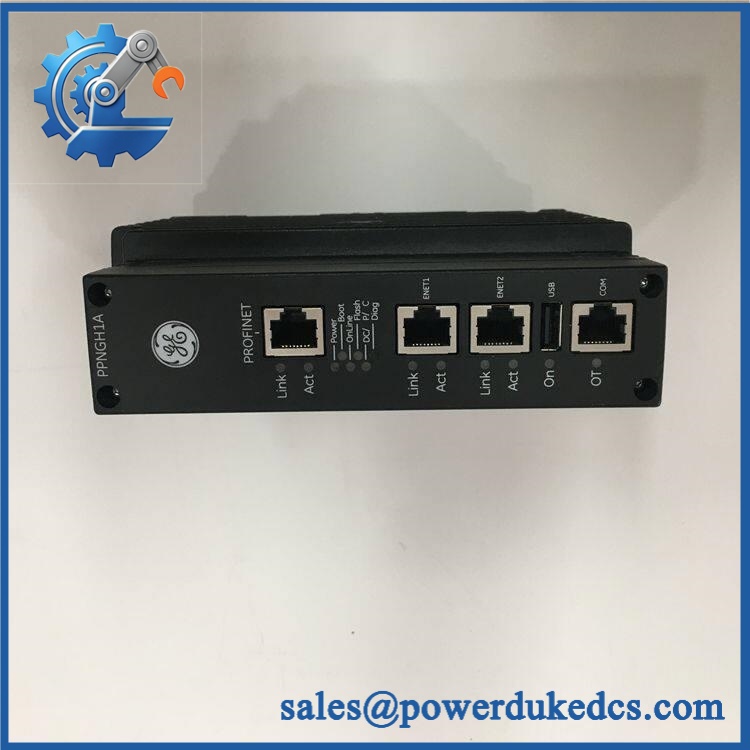
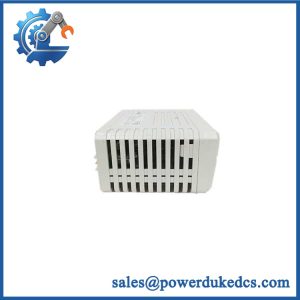
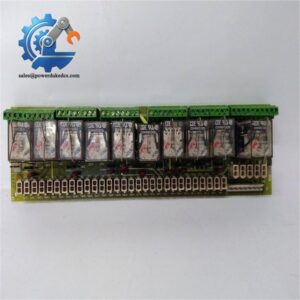
GE IS420PPNGH1A
Module 4: Compatibility & Installation Traps
Migration/Compatibility
- Replacement status: GE Mark VIe/Mark VIeS PPNG PROFINET Gateway Module
- Logic rewrite: Normally not required for a like-for-like replacement when the existing ToolboxST project and PROFINET device configuration are retained.
- Firmware update: Configuration dependent. Verify PPNG firmware and ControlST/ToolboxST compatibility before performing any software update.
- Drop-in status: Potentially direct only when the Mark VIe architecture, network configuration, firmware, and PROFINET device mapping are unchanged.
- Controller role: PROFINET I/O controller/gateway connecting Mark VIe control logic to PROFINET field devices.
- Power requirement: GE certification identifies 28 VDC, 1.1 A maximum for IS420PPNGH1A.
⚠️ Field Traps (Watch Out)
- PROFINET versus IONet separation: Do not place PROFINET and IONet traffic onto the same switch path where the Mark VIe architecture prohibits simultaneous support. Use the specified network topology and dedicated switching hardware.
- PROFINET device configuration: Replacing the physical gateway does not automatically restore the complete PROFINET configuration. Verify device names, IP assignments, GSD/GSDML configuration, cyclic I/O mapping, and controller project data.
- Power polarity: Confirm the 28 VDC supply and polarity before energizing the module.
- Cooling orientation: The module is intended for vertical panel mounting with unobstructed airflow. Blocking the ventilation path can raise internal temperature during continuous operation.
- Firmware mismatch: A gateway can complete startup and still fail to establish the expected PROFINET network if its firmware or project environment is incompatible.
Module 5: Quality Assurance SOP
Before shipment, the GE IS420PPNGH1A should undergo a communication-module-specific inspection:
- OEM anti-counterfeit visual inspection — verify GE markings, IS420PPNGH1A identification, PPNG designation, connector layout, PCB construction, and label consistency.
- Part-number reconciliation — photograph the full module label and confirm the exact designation.
- Mechanical inspection — inspect Ethernet ports, mounting hardware, enclosure, ventilation openings, and PCB surfaces for damage, corrosion, contamination, or unauthorized modification.
- Power-input verification — apply a controlled 28 VDC laboratory supply with current limiting.
- Power-on self-test (POST) — verify processor startup, module initialization, diagnostic indications, and absence of hardware faults.
- Ethernet link verification — establish 100 Mbps Ethernet links through the available ports and verify stable physical-layer negotiation.
- PROFINET controller handshake — connect the gateway to a controlled PROFINET test network and verify controller initialization and device discovery.
- I/O data exchange test — exchange controlled cyclic data with compatible PROFINET test devices and verify expected input/output mapping.
- Network fault test — simulate controlled loss of a PROFINET device or network segment and verify expected diagnostics without connecting the test unit to a live turbine control network.
- Software/configuration verification — verify the module’s identification and communication behavior against the intended ControlST/ToolboxST test configuration.
- Final QC record — document complete part number, firmware identification where accessible, test network, PROFINET device configuration, communication results, photographs, and packaging condition.
A PPNG module that simply reaches a normal startup state is not fully tested. Ethernet link stability, PROFINET controller initialization, device recognition, and cyclic I/O exchange are the meaningful acceptance checks.
Module 6: CRO-Driven Buyer FAQ
1. Is GE obsolete, and how do I verify an authentic replacement?
GE certification documentation continues to identify as a Mark VIe controller module, while current industrial references identify it as the PPNG PROFINET Gateway Module. For procurement, verify the complete physical label, hardware revision, and Mark VIe/Mark VIeS compatibility rather than purchasing a generic PROFINET gateway.
2. Can I hot-swap the ?
Do not assume hot-swap capability. Whether online replacement is permissible depends on the specific Mark VIe architecture, redundancy arrangement, network design, and GE-approved maintenance procedure. Follow the site’s turbine-control maintenance and LOTO procedures rather than treating the PPNG as universally hot-swappable.
3. Will replacing the PPNG require rewriting the Mark VIe control logic?
Normally not a complete control-logic rewrite for a like-for-like replacement. The existing ToolboxST project and PROFINET configuration can generally be retained, but device names, IP settings, I/O mapping, firmware compatibility, and gateway identification should all be verified before returning the system to service.
4. What processor and power supply does the use?
Industrial technical references identify an Intel EP80579 1066 MHz processor and 256 MB DDR2 SDRAM. GE certification documentation specifies 28 VDC, 1.1 A maximum input for the .
5. What warranty and technical support are available?
Warranty duration should be stated according to the actual inventory condition, such as new surplus or tested refurbished. Technical support should cover exact PPNG identification, Mark VIe/Mark VIeS compatibility, ControlST/ToolboxST configuration review, PROFINET device mapping, network-topology checks, and documented communication testing. Live turbine commissioning and safety-critical control changes remain the responsibility of qualified site controls personnel.



 Start Chat