

Description
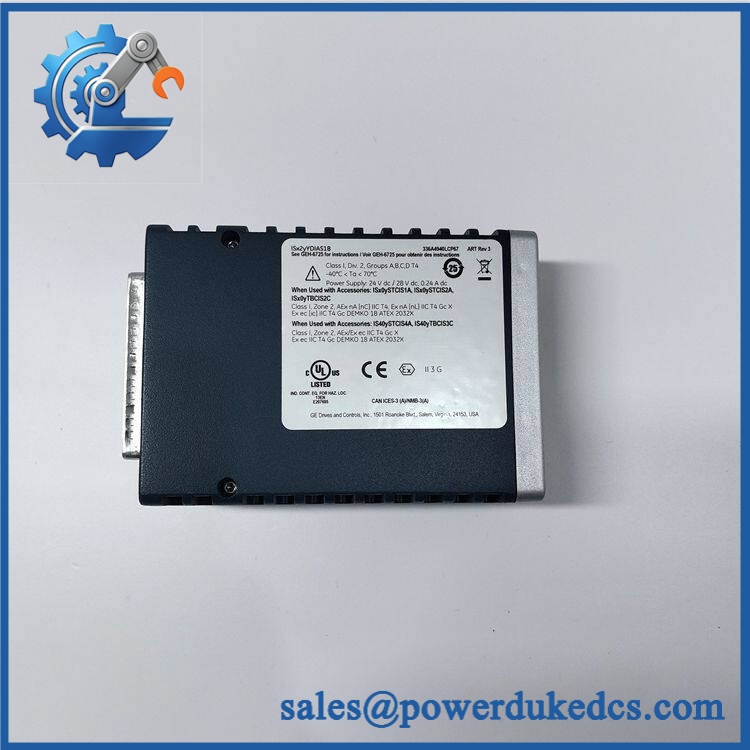
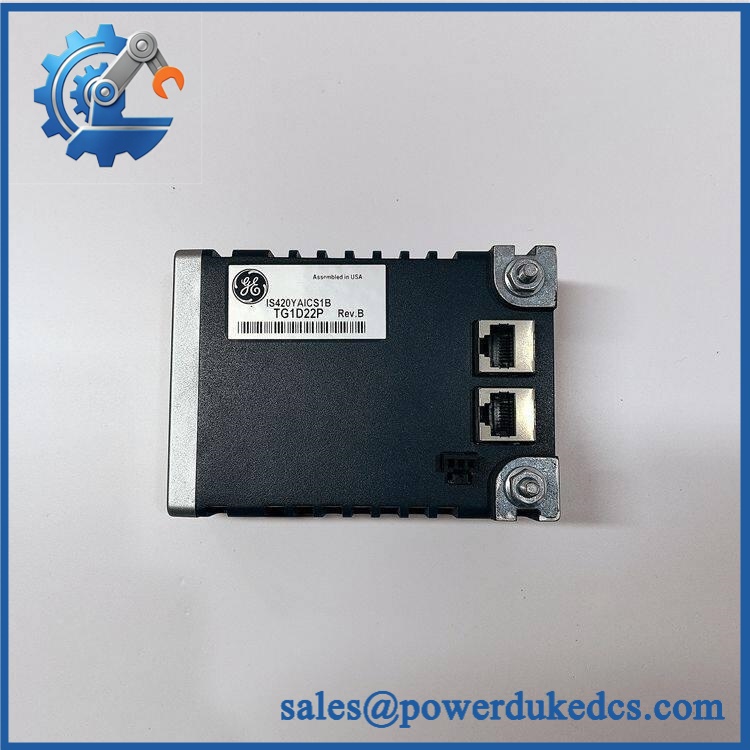
- Model: IS420YAICS1B
- Brand: GE
- Series: Mark VIeS Functional Safety System
- Part Type: YAIC Analog I/O Pack
- Core Function: Processes isolated analog field signals and communicates the resulting I/O data through the Mark VIeS distributed control architecture.
- Analog Inputs: 8 channels, with support for voltage and current transmitter signals
- Analog Outputs: 2 channels
- Total Analog Channels: 10
- Resolution: 16-bit A/D conversion
- Input Accuracy: Approximately 0.1% of full scale for the specified operating range
- HART: Supported on applicable analog-input channels
- Network Interface: Dual Ethernet
- Typical Power: 28 VDC nominal
- Compatible Terminal Board: IS410STAIS2A STAI Simplex Analog I/O Terminal Board and related Mark VIeS terminal-board configurations
- Application: Functional-safety analog monitoring and control
- Lifecycle Focus: Mark VIeS safety-platform hardware; verify exact project and certification configuration before substitution.
Product Introduction
Structure B — Technical Direct
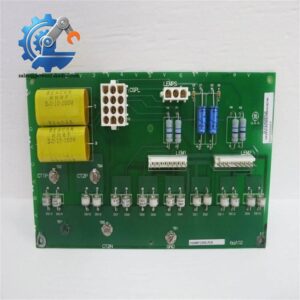
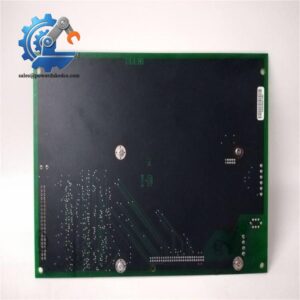
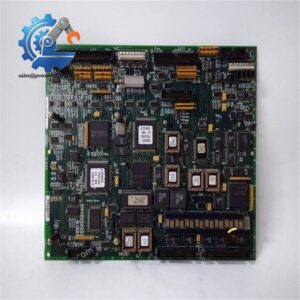
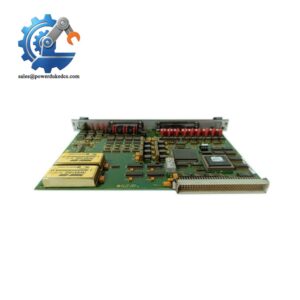
The GE IS420YAICS1B is the YAIC analog I/O pack used within the Mark VIeS Functional Safety System. It mounts to a compatible terminal board, such as the IS410STAIS2A, and provides the electronics required to acquire analog field signals, execute signal conversion and diagnostics, and exchange processed data with the Mark VIeS controller. GE documentation identifies the YAIC as a 10-channel analog I/O pack comprising 8 analog inputs and 2 analog outputs.
The analog-input section supports several field-signal configurations, including voltage and current transmitters, with 16-bit conversion and HART capability on the supported input channels. The output section provides two analog outputs. This makes the YAIC materially different from the PAIC/YAIC hardware used in non-safety Mark VIe applications, even where connector and mechanical characteristics appear similar. For a safety-system replacement, the controller configuration, terminal-board identity, software baseline, and approved safety architecture all need to remain aligned.
From an inventory perspective, IS420YAICS1B should be managed as a functional-safety component rather than ordinary analog I/O stock. A spare with the wrong revision or a mismatched terminal board can create a commissioning problem even when the electronics pass a basic power-up test. (Keep the I/O pack and its compatible terminal-board designation together in the warehouse master record.)
Core Technical Specifications
| Parameter | Value |
|---|---|
| Manufacturer | GE |
| Model | IS420YAICS1B |
| Functional Acronym | YAIC |
| Series | Mark VIeS Functional Safety System |
| Product Type | Analog I/O Pack |
| Total Analog Channels | 10 |
| Analog Inputs | 8 |
| Analog Outputs | 2 |
| AI Channels 1–8 | 1–5 VDC, ±5 VDC, ±10 VDC, 0–20 mA |
| AI Signal Type | Voltage and current transmitter inputs |
| Transmitter Wiring | 2-wire, 3-wire, 4-wire, and externally powered configurations through compatible terminal-board architecture |
| A/D Resolution | 16 bit |
| Typical AI Accuracy | Approximately 0.1% of full scale under specified conditions |
| HART Support | Supported on applicable analog input channels |
| Analog Outputs | 0–20 mA |
| D/A Resolution | Controlled through the YAIC output architecture; verify exact project specification |
| Terminal Board | IS410STAIS2A for the documented simplex Mark VIeS configuration |
| Network | Mark VIeS IONet / Ethernet architecture |
| Ethernet Ports | 2 |
| Nominal I/O Pack Power | 28 VDC |
| Operating Temperature | Approximately −40°C to +70°C, depending on certified configuration |
| Operating Humidity | Up to approximately 95% RH, non-condensing, for the documented system environment |
| Mounting | Directly onto compatible Mark VIeS terminal board |
| Safety Application | Mark VIeS functional-safety I/O |
| Safety Standard | IEC 61508, within the applicable GE-certified architecture |
| Typical Diagnostic Features | Power, communication, I/O, and terminal-board identification diagnostics |
| Lifecycle Position | Active Mark VIeS platform component; verify current OEM supply status |
GE’s Mark VIeS documentation identifies the YAIC as the analog I/O pack paired with STAI/TBAI terminal boards. The same documentation lists selectable analog input ranges, 16-bit analog conversion, and 0.1% full-scale accuracy for the specified input configuration.
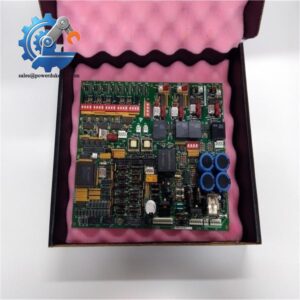
GE IS420YAICS1B
Application Scenarios & Pain Points
A YAIC replacement has to be evaluated at the system level. The I/O pack, terminal board, safety configuration, and field loop are one functional chain.
Combined-Cycle Power Generation
In a combined-cycle plant, the YAIC can handle continuous signals used for turbine auxiliaries, pressure measurement, flow monitoring, and other analog process values. With 8 analog input channels and 2 outputs, one pack can serve several related control loops.
Functional Safety Instrumentation
For a safety-related Mark VIeS installation, analog measurements may form part of shutdown, permissive, or protective logic. The important procurement question is not only whether the YAIC produces the expected current or voltage; the replacement must also belong to the approved safety architecture.
Turbine Auxiliary Systems
Lube-oil, hydraulic, seal-gas, and other auxiliary systems commonly depend on analog transmitter loops. Before replacing the YAIC, verify whether the field instrument is 2-wire loop-powered, 3-wire, 4-wire, or externally powered.
HART-Based Maintenance
Where HART is enabled, technicians may use the communication capability for transmitter diagnostics and parameter access. HART behavior should be tested with the actual terminal-board configuration rather than assumed from the catalog number alone.
High-Temperature Cabinets
At 50°C+ ambient cabinet temperatures, inspect enclosure airflow, terminal connections, and DC supply margin before diagnosing intermittent analog drift as a failed YAIC. Thermal problems can affect the whole I/O assembly.
🚨 Common Error Codes & Diagnostic Symptoms
Symptom/Code: Incorrect Terminal Board / Terminal Board ID Fault
→ Diagnosis: The YAIC pack is not seeing the terminal-board identity expected by the controller, or the installed terminal board does not match the configured hardware. GE’s Mark VIeS documentation specifically includes terminal-board identification and checking.
→ Action: Verify the IS410STAI/TBAI board identity, connector seating, controller configuration, and I/O pack compatibility; replace the YAIC or terminal board according to the diagnostic result.
Symptom/Code: Multiple Analog Inputs Simultaneously Invalid
→ Diagnosis: A shared YAIC, terminal-board, field-power, or network problem is more likely than several independent transmitter failures occurring together.
→ Action: Verify loop power, common connections, terminal-board interface, and IONet diagnostics; replace the YAIC when the failure follows the pack.
Symptom/Code: Analog Output Command Present but Measured Current Is Incorrect
→ Diagnosis: Possible YAIC output-stage fault, terminal-board interface issue, field-load problem, or wiring polarity error.
→ Action: Isolate the field load and verify the output with a calibrated current meter and controlled test load; replace the module if the output stage fails.
🚨 Cross-Reference & Lifecycle Migration
Cross-Reference
- IS420YAICS1B is the YAIC analog I/O pack used in GE’s Mark VIeS safety architecture.
- IS410STAIS2A is the documented STAI Simplex Analog I/O terminal board for a single YAIC pack.
- IS410TBAIS1C belongs to the TBAI terminal-board family used for the corresponding TMR analog I/O architecture.
- The YAIC pack and terminal board are separate components and should be ordered separately unless the supplier quotation explicitly includes both.
- Do not cross-reference the YAIC directly to a conventional Mark VIe PAIC, because the safety application and approved architecture are different.
Firmware and Configuration
The YAIC is the processor-bearing I/O component; the terminal board itself does not replace the YAIC’s firmware function.
Before installing a replacement:
- Record the existing YAIC hardware revision.
- Capture the current ControlST/ToolboxST baseline.
- Document the terminal-board catalog number.
- Back up the active application and I/O configuration.
- Verify channel scaling and HART configuration.
- Confirm the safety-system project accepts the replacement hardware.
- Complete the required safety validation before returning the loop to service.
Firmware flashing should not be performed merely because a replacement YAIC has a different revision. Use the firmware version and compatibility matrix approved for the site’s Mark VIeS system.
Lifecycle Status
Status: Active Mark VIeS platform component
The IS420YAICS1B remains identified in GE’s published Mark VIeS documentation as the YAIC analog I/O pack. That reduces immediate obsolescence exposure compared with older IS220-series analog packs, but safety-system inventory should still be controlled by exact catalog number and hardware revision.
For critical applications, maintain a tested spare based on the consequence of loss and the actual OEM lead time. Do not use a generic analog-input inventory target.
Field Engineer’s Tech Notes
Warning 1 — Never separate the YAIC identity from the terminal-board identity.
An with the wrong STAI/TBAI terminal board can appear perfectly healthy on a bench and still fail the intended Mark VIeS configuration check. Record the complete pairing in the asset database.
Warning 2 — Verify the analog range before applying a live field loop.
The YAIC architecture supports multiple input ranges. Do not assume that every channel is configured for 4–20 mA simply because the plant primarily uses 4–20 mA transmitters. Verify the controller scaling, terminal-board wiring, and intended signal range first.
One more point from field maintenance: do not use a transmitter simulator as the only acceptance test. Exercise both analog-input acquisition and analog-output behavior, then confirm controller diagnostics.
Strict QA & Testing SOP
Step 1 — Inbound Identity Verification
Record:
- GE manufacturer
- Hardware revision
- Serial number
- Manufacturing identifier
- Intended terminal-board family
- Safety-system application
Photograph the complete nameplate and connector faces.
Step 2 — Physical Inspection
Check the housing, terminal-board connector, Ethernet connectors, mounting interface, indicator LEDs, and exposed surfaces for impact damage, oxidation, contamination, or moisture evidence.
Step 3 — DC Power Test
Install the YAIC on a compatible test terminal board and apply the documented Mark VIeS DC supply.
Verify:
- Startup behavior
- Supply stability
- Abnormal current
- LED response
- Temperature rise
Step 4 — Terminal-Board Recognition Test
Confirm that the controller identifies the correct terminal board and that no incorrect-terminal-board diagnostic is present.
Step 5 — Analog Input Test
Use calibrated sources to exercise the supported voltage and current ranges.
Test representative points such as:
- Low scale
- Mid scale
- High scale
- Negative range where applicable
- 0–20 mA current range
Record the controller reading against the calibrated source.
Step 6 — HART Verification
Where the test environment supports HART, verify communication with a compatible HART transmitter or simulator. Confirm both primary-variable acquisition and digital communication behavior.
Step 7 — Analog Output Test
Command both analog outputs through the configured 0–20 mA range. Measure the actual loop current with a calibrated instrument and document the deviation at multiple setpoints.
Step 8 — Network and Diagnostic Test
Verify:
- IONet communication
- Ethernet link
- YAIC identification
- Channel diagnostics
- Terminal-board recognition
- Controller data exchange
Step 9 — Extended Run
Operate the assembly under representative conditions and monitor analog stability, communication continuity, power behavior, and temperature.
Step 10 — Final QC Documentation
The inspection package should contain:
- Exact catalog number
- Serial number
- Hardware revision
- Associated terminal board
- Input test results
- Output test results
- HART result where applicable
- Communication result
- Diagnostic result
- Test date
- Technician sign-off
Step 11 — ESD Preservation
After acceptance, place the YAIC in an ESD-safe antistatic bag with appropriate moisture and mechanical protection. Keep the associated test report with the physical spare.
Test videos are available when visual evidence is included with the individual inspection package.
Buyer’s FAQ
A: Do not assume it can be removed under power simply because Mark VIe/Mark VIeS supports certain online maintenance procedures. The YAIC is part of a safety-related analog I/O chain. Follow the approved Mark VIeS replacement procedure and site electrical-safety controls for the actual architecture.
Q: Is the same as the IS410STAIS2A terminal board?
A: No. is the YAIC I/O pack; IS410STAIS2A is the associated simplex STAI terminal board. They are separate cataloged components. GE documents the two as a paired analog-I/O assembly.
Q: How can I verify a New Original YAIC?
A: Check the GE nameplate, exact catalog number, serial number, hardware revision, connector construction, and traceability documentation. For Mark VIeS applications, also verify that the delivered hardware corresponds to the approved safety-system BOM.
Q: What warranty should I require?
A: Specify warranty duration and product condition by serial number. For a safety-critical analog pack, acceptance should include documented power-up, terminal-board recognition, analog-input testing, analog-output testing, communication verification, and HART testing where applicable—not merely a visual inspection or basic power-on test.



 Start Chat