

Description
- Brand: GE Reuter-Stokes
- Full Model Number: RS-FS-9001
- Related GE Part Number: 362A1052P104 documented in current Reuter-Stokes cross-reference material
- Lifecycle Status: Legacy GE-branded / current Reuter-Stokes family documentation
- Core Function: UV flame detection and continuous flame-intensity monitoring for combustion systems
- Top 3 Technical Specs: 4–20 mA DC output | 12–30 VDC supply | <25 ms response time
- Sensor Technology: Silicon carbide photodiode
- Mechanical Connection: 3/4 in. NPT female process connection
- Electrical Connector: MIL-C-38999 Series III size 15 five-pin connector
- Temperature Range: -40°C to +150°C ambient; up to +235°C with specified cooling
- Process Pressure: Up to 400 psig / 2.8 MPa
- Stock & Condition: Physical stock confirmation required per lot | New surplus or tested replacement subject to quotation
The OEM operation and maintenance manual identifies RS-FS-9001 as a SiC two-wire flame sensor with 4–20 mA output, 12–30 VDC supply, response time below 25 ms, a silicon carbide photodiode, 3/4-inch NPT process connection, and a MIL-C-38999 Series III five-pin electrical connector.
A current GE/Reuter-Stokes cross-reference identifies RS-FS-9001 with GE part number 362A1052P404 in one version of the matrix, while GE documentation and other technical references also associate the model with 362A1052P104. For a replacement PO, verify the complete nameplate and installed system BOM rather than relying on the base RS-FS-9001 designation alone.
Obsolescence & Supply Chain Deep Dive
A failed flame detector can hold up turbine or burner operation even when the control electronics remain serviceable. RS-FS-9001 is a two-wire UV flame sensor intended to monitor flame intensity through a 4–20 mA signal. Its SiC photodiode was developed for applications where conventional UV detection can be affected by fuel, steam, or water mist. The sensor is sealed, uses a sapphire optical window, and is designed for industrial combustion service. GE Reuter-Stokes documentation also states that the sensor is not repairable; a failed unit must be replaced rather than rebuilt in the field.
For TCO calculations, a matching sensor can avoid the engineering work associated with changing the controller interface, field wiring, mounting arrangement, flame-detection thresholds, and commissioning procedure. A replacement also limits the scope of outage work to the affected sensing point rather than triggering a wider combustion-control redesign. The economic case depends on the installed system, access conditions, commissioning requirements, and replacement price, but the maintenance advantage is clear where the existing installation already uses the RS-FS-9001 interface and approved cabling. (For legacy turbine assets, locating an exact stocked replacement can also reduce unplanned procurement time.)
Compatibility & Replacement Matrix
| Existing Application | Replacement Classification | Required Engineering Check | Estimated Field Time | Estimated Switch Cost |
|---|---|---|---|---|
| Existing RS-FS-9001 with matching mounting and approved cable | Drop-in Replacement | Verify exact part number, connector, cable, supply, and process connection | 1–3 hours | Sensor cost + technician labor |
| RS-FS-9001 family with different documented configuration | Software Compatible | No sensor firmware flash expected; verify controller scaling and flame-on/off thresholds | 2–4 hours | Sensor + loop validation labor |
| Different detector body, mounting, connector, or cable system | Hardware Modification | Engineering review of mounting, wiring, hazardous-area approvals, and controller input | 1–2 engineering days or more | Hardware + engineering + commissioning |
The sensor behaves as a conventional two-wire current transmitter rather than a programmable PLC module, so a firmware flash should not normally be expected at the sensor itself. The OEM manual instead places emphasis on power supply, current-loop configuration, connector pinout, cable routing, and controller setup.
Field Traps — Watch Out
Approved cable requirement: Hazardous-area certification depends on the approved interconnecting cable. OEM documentation specifies RS-E2-0285PXXX or GE 362A1053PXXX cable families for the certified configuration. Substituting cable without checking the applicable approval can affect the installation’s certification basis.
Controller threshold mismatch: The OEM manual describes approximately 3.7–4.1 mA as the expected no-light field-check range, with the flame-off set point at 6.25% corresponding to 5 mA and the flame-on set point at 10% corresponding to 5.6 mA. These values must be evaluated against the actual controller configuration and site safety design rather than copied blindly into another combustion system.
Temperature and cooling: The standard ambient operating range reaches +150°C, while +235°C requires the specified cooling arrangement. Installation temperature therefore has to be checked at the actual sensor location, not only at the turbine enclosure or junction box.
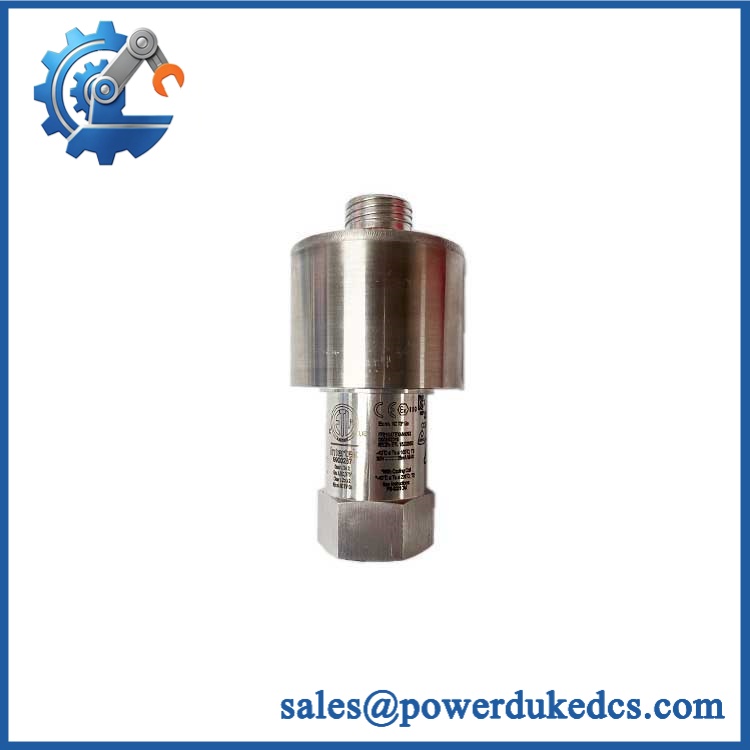
GE RS-FS-9001
Quality Assurance & Testing SOP
OEM anti-counterfeit visual inspection
Verify manufacturer markings, complete RS-FS-9001 identification, serial or traceability information, connector condition, process-thread condition, stainless-steel body, sapphire window, and evidence of unauthorized disassembly.
Mechanical inspection
Check the 3/4-inch NPT female process connection, mounting nut, electrical connector, sealing surfaces, and optical window. Reject units showing cracked windows, damaged threads, deformation, or evidence that the sealed sensor body has been opened. The OEM specifically warns that disassembly can render the sensor unusable.
Power-on and loop verification
Energize the sensor from a controlled 12–30 VDC supply. Confirm stable current-loop behavior before connecting the unit to the plant controller. A conventional PLC-style ERR/RUN LED POST is not applicable to this sensor; electrical acceptance is based on supply current and controller-side signal behavior.
4–20 mA functional test
With the optical port covered, verify approximately 3.7–4.1 mA as the no-light field-check range. Apply a controlled optical stimulus and confirm the current increases. The OEM describes a flashlight test as a general field-function check, not as a calibrated quantitative test.
I/O load and loop-load testing
Test the complete analog input path using the intended controller or an equivalent calibrated current-loop test setup. Verify signal stability, scaling, polarity, sense resistance, and absence of intermittent communication or current-loop dropout.
Response and stability test
Confirm the sensor responds to a controlled flame or approved optical test method within the documented response specification of less than 25 ms. Repeat energization and signal checks to identify unstable output behavior.
Final release inspection
Photograph the actual nameplate and connector condition, record the tested serial number, document measured current values, verify packaging protection, and retain the test record with the shipment file.
Procurement & Lifecycle FAQ
Is GE RS-FS-9001 genuinely in stock, and what is the cutoff for emergency shipping?
Physical stock must be confirmed against the actual warehouse unit before PO acceptance. For emergency requirements, request same-day dispatch confirmation together with the warehouse cutoff and carrier pickup schedule. Do not treat a website availability indicator as proof of physical inventory.
How do you verify the condition and authenticity of a legacy RS-FS-9001?
The unit should be matched to the full nameplate, inspected for correct Reuter-Stokes/GE markings, checked for connector and thread condition, and subjected to controlled power and 4–20 mA functional testing. The OEM safety documentation states that RS-FS-9001 is not field-repairable and must be replaced when failed, so evidence of disassembly is a material acceptance issue.
Are there firmware compatibility issues before issuing the PO?
The RS-FS-9001 is an analog two-wire sensor, so a conventional sensor firmware upgrade is not the normal compatibility concern. Engineering review should concentrate on the exact GE/Reuter-Stokes part number, approved cable, 12–30 VDC supply, controller current-loop input, signal scaling, flame-on/off thresholds, mounting, and hazardous-area certification.
What warranty and return terms apply to a replacement RS-FS-9001?
Warranty coverage should be stated on the supplier quotation because legacy and surplus units can have different commercial conditions. The quotation should identify the warranty duration, DOA procedure, RMA requirements, return window, and exclusions before the PO is released.
Can RS-FS-9001 still be sourced for older GE turbine installations?
Yes, the model remains documented in Reuter-Stokes/Baker Hughes technical and conformity material, and a June 2026 National Fertilizers Limited procurement document specified RS-FS-9001 for GE-designed gas-turbine equipment. At the same time, third-party inventory references describe the older GE listing as discontinued, so procurement should distinguish between legacy GE branding and current Reuter-Stokes supply channels.


 Start Chat