

Description
- Brand: GE Multilin
- Full Model Number: UR9EH / UR-9EH
- System/Series Family: GE Multilin Universal Relay Series
- Core Function: Central processing module executing relay logic, algorithms, gates, latches, and timers
- Top 3 Hardcore Specs: 9E-generation CPU module; approx. 165 × 152 × 64 mm; approx. 0.75 kg
- Stock Status: New Surplus — final unit condition and availability to be verified
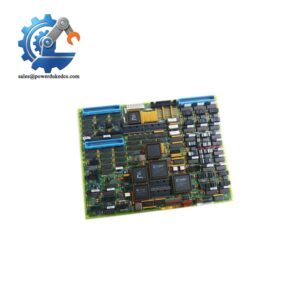
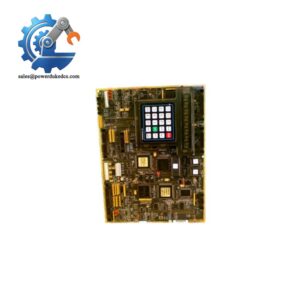
The UR9EH is identified as a CPU module for the GE Multilin Universal Relay family. Published technical references classify the 9E and later lettered CPU variants as the newer UR CPU generation and describe the UR-9EH as providing the computing resources for relay logic functions.
Technical Product Introduction
A Universal Relay can remain mechanically intact while a failed CPU leaves the protection application unable to execute its configured logic. The GE UR9EH is the central processing module for the UR Series, handling the relay’s logic algorithms, gates, latches, and timers. Unlike a simple I/O replacement, this card sits at the processing layer, so compatibility must be checked against the complete relay hardware set rather than the CPU slot alone.
The defining specification is its 9E-generation CPU architecture. Published dimensional data is approximately 6.5 × 6 × 2.5 inches (165 × 152 × 64 mm), with a reported weight of about 1 lb 10 oz (0.75 kg). More important during a retrofit is the generation pairing: technical references specifically warn that newer CPU modules must be paired with corresponding newer CT/VT modules, while older CPU modules should remain with older CT/VT hardware; an incorrect pairing can produce HARDWARE MISMATCH or DSP ERROR indications.
Application Scenarios & Field Realities
- Generator protection systems: In a generator relay where protection calculations, programmable logic, timers, and control decisions all depend on the central processor, a UR9EH failure affects the processing layer rather than an individual field-input circuit. CPU replacement should therefore be followed by a complete functional review, not just a power-up check.
- Transmission and distribution relay panels: The UR family is used across protection applications such as line and feeder protection. A replacement CPU can be appropriate when the surrounding hardware remains serviceable, but the exact CT/VT generation must be confirmed before installation.
- Legacy relay modernization: The UR9EH belongs to the newer CPU generation identified by the 9E designation. That makes generation matching a practical engineering issue when maintaining older UR installations. A CPU upgrade should be treated as a hardware-compatibility project, not simply as a same-slot board exchange.
- IEC 61850-enabled applications: Published technical material notes configurable CPU behavior such as SERVER SCANNING, which can affect available CPU resources when IEC 61850 client/server functions are used. After replacement, review the existing communications configuration instead of assuming every CPU setting will match the removed card automatically.
Migration, Compatibility & Installation Traps
Replacement Matrix
| Replacement Type | Assessment |
|---|---|
| Drop-in Replacement | Only for an existing UR9EH-compatible installation with matching UR hardware generation |
| Software Compatible | Generally within the same supported UR configuration, but configuration and firmware should be verified |
| Hardware Modification Required | Normally no for a correctly matched replacement |
The key trap is the CPU-to-CT/VT generation pairing. Technical documentation for the UR-9EH states that a newer CPU must be used with a newer CT/VT module, while older CPU modules must remain paired with older CT/VT modules. Mixing generations can result in HARDWARE MISMATCH or DSP ERROR messages.
Field Traps — Watch Out
Generation mismatch: Do not order the solely because the existing relay is from the UR Series. First identify the installed CPU and CT/VT module generations. The 9E designation places in the newer CPU family, and the corresponding measurement hardware needs to be compatible.
Configuration retention: Record the existing relay configuration before removing the CPU. Protection settings, logic assignments, communications parameters, and application-specific settings should be verified after replacement. A successful boot does not establish that the protection application has been restored correctly.
Live equipment handling: Disconnect the appropriate control and auxiliary circuits and follow the site’s approved isolation and ESD procedures before removing the relay hardware. The CPU is part of the active protection chain, so an incorrect replacement procedure can affect more than communications.
Firmware and feature settings: Review the installed firmware and configurable CPU functions after startup. Features such as SERVER SCANNING can influence CPU resource allocation in applications using IEC 61850 services.
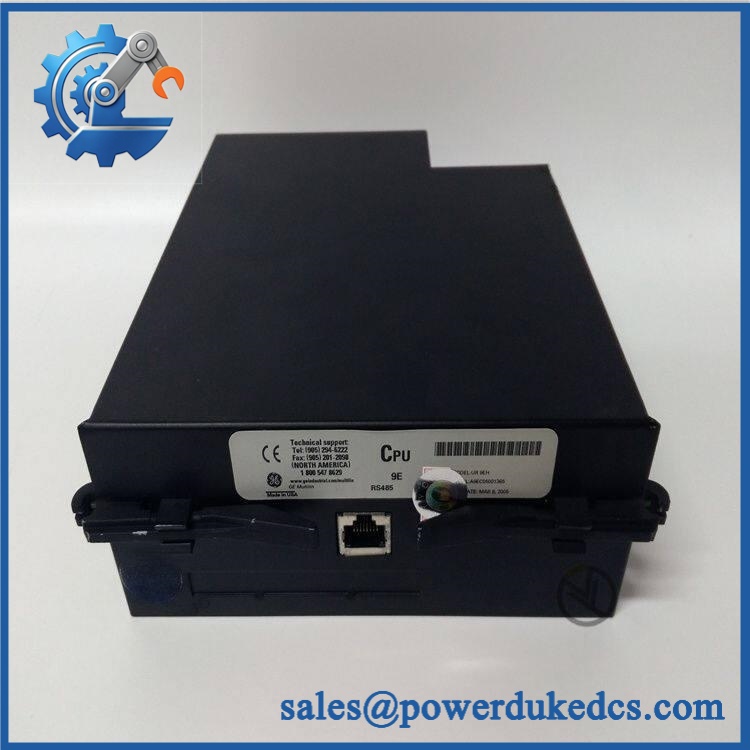
GE UR9EH
Quality Assurance SOP
For surplus inventory, QA should establish that the CPU is genuine, physically sound, correctly identified, and capable of operating with a suitable UR test assembly.
- OEM anti-counterfeit visual inspection: Verify GE/Multilin markings, model designation, label consistency, PCB identification, connector construction, and visible hardware-revision information.
- Mechanical inspection: Check the enclosure, PCB, connectors, mounting surfaces, fasteners, and board areas for cracks, corrosion, contamination, bent contacts, or evidence of unauthorized rework.
- Power-on self-test (POST): Install the in an appropriate test relay assembly and monitor startup behavior, including applicable ERR/RUN indications from the host relay.
- CPU recognition check: Confirm that the host UR relay identifies the installed CPU without unexpected hardware or DSP-related errors.
- Logic execution verification: Run controlled relay logic functions involving gates, latches, timers, and configured application logic to confirm correct CPU operation.
- Configuration verification: Load or compare the approved relay configuration and confirm that protection logic, settings, communications parameters, and assigned functions are correctly interpreted by the replacement CPU.
- Communication handshake verification: Where the test configuration supports the relevant interfaces, verify normal exchange between the UR CPU and connected relay subsystems and communications functions.
- Error-state monitoring: Observe the system through an extended powered operating period for recurring hardware, processor, DSP, or configuration alarms.
- Final traceability check: Record model number, hardware revision, serial or identification information where available, test date, functional-test results, and shipment condition.
For procurement, the most important point is that is a GE Multilin UR Series CPU module in the newer 9E generation. Its approximate physical specification is 165 × 152 × 64 mm and 0.75 kg, while the critical replacement constraint is compatibility with the corresponding CT/VT generation.



 Start Chat