

Description
- Brand: GE / GE Fanuc
- Full Model Number: VMIACC-5595-208 / 350-805595-208N
- System/Series Family: VMIxxx-5565 Reflective Memory Real-Time Network
- One-Sentence Core Function: Managed reflective-memory network hub for distributing and regenerating real-time optical data between connected nodes
- Top 3 Hardcore Specs: Up to 8 SFP optical ports; 2 Gb/s port operating speed; up to 256 nodes through cascaded hub architecture
- Stock Status: New Surplus / Fully Tested — Stock Condition Confirmation Required
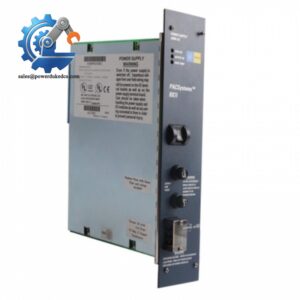
The VMIACC-5595 is documented as a managed hub for GE Fanuc embedded-system reflective-memory networks. Published technical references describe up to eight SFP ports, optical signal regeneration, automatic bypass functions, RS-232 local management, and Ethernet-based remote management.
Module 3: Commercial-Technical Deep Dive
When a reflective-memory network loses a hub, the failure can affect multiple control or computing nodes even when the endpoint cards themselves remain healthy. The GE VMIACC-5595-208 provides the network aggregation and optical signal regeneration required by the VMIxxx-5565 reflective-memory architecture. Each optical port uses an SFP transceiver, while signal regeneration helps counter insertion loss and fiber attenuation across the network. The hub can also automatically bypass a defective or disconnected node when configured for the corresponding bypass behavior.
The useful engineering metric is network scale rather than CPU performance. Published material specifies operation at 2 Gb/s per optical port and a cascaded architecture supporting up to 256 nodes. The chassis also provides a 10BaseT Ethernet TCP/IP interface for remote monitoring and control plus an RS-232 interface for local access. For larger systems, that management capability reduces the need to troubleshoot every node individually… the hub itself exposes signal-loss, synchronization, transceiver, and port-status information.
Module 4: Compatibility & Installation Traps
Migration/Compatibility
The VMIACC-5595-208 is a managed reflective-memory hub, not a conventional PLC I/O module. It is intended for the VMIxxx-5565 reflective-memory real-time network family used with GE Fanuc embedded systems. A replacement should therefore be matched to the existing reflective-memory network architecture, optical transceiver type, management configuration, and fiber topology. Published references also describe the VMIACC-5595 as available in desktop or 19-inch 1U rack-mount configurations.
A firmware reload should not be assumed solely from the model number. Configuration items such as automatic bypass, manual port control, transmitter disable behavior, and management settings can be retained in NVRAM on the documented architecture. Capture the existing configuration before replacement where access is available.
⚠️ Field Traps (Watch Out)
- Fiber/SFP mismatch: The front panel uses SFP optical transceivers, and each installed transceiver requires the appropriate LC fiber arrangement. A replacement hub with incompatible optical transceivers can power up normally while still failing to establish the reflective-memory link. Verify multimode versus single-mode requirements and the installed SFP specification before commissioning.
- Bypass configuration error: The hub can automatically bypass ports based on loss of optical signal or valid synchronization, and it can also be manually controlled. A mismatch between the replacement’s retained settings and the plant’s intended network behavior can create confusing symptoms during startup. Record the original port and bypass configuration before substitution.
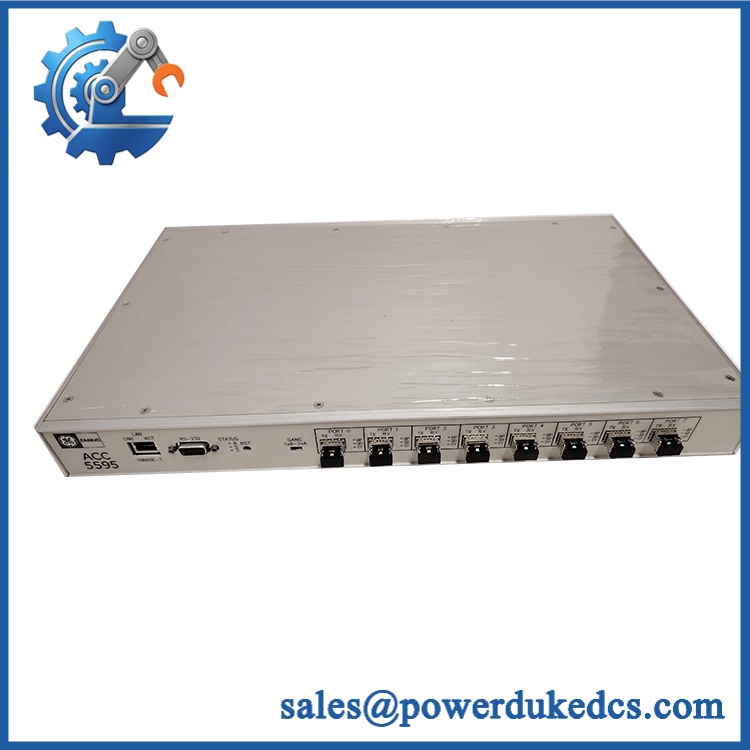
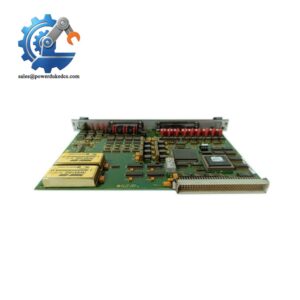
GE VMIACC-5595-208 350-805595-208N
Module 5: Quality Assurance SOP
Before shipment, each VMIACC-5595-208 / 350-805595-208N unit should pass a controlled network-hardware inspection sequence.
- OEM anti-counterfeit visual inspection — Verify GE identification labels, full model number, assembly markings, connector construction, chassis details, and visible PCB/manufacturing characteristics.
- Physical inspection — Check the enclosure, SFP cages, RJ45 connector, RS-232 connector, power section, LEDs, mounting points, and internal assemblies for corrosion, impact damage, contamination, bent contacts, or unauthorized rework.
- Configuration capture — Record available hardware identifiers and, where accessible, management or NVRAM configuration before functional testing.
- Power-on self-test (POST) — Apply the specified input power through an approved test setup and verify normal startup behavior, status LEDs, and absence of unexplained fault indications.
- Communication handshake verification — Connect compatible reflective-memory endpoints and verify optical link establishment, synchronization behavior, and expected port status.
- 2 Gb/s link verification — Confirm supported port operation with an appropriate reflective-memory test environment rather than relying only on LED activity.
- Management interface verification — Test the Ethernet TCP/IP management path and RS-232 service interface where the test fixture permits.
- Bypass and fault-response check — Verify representative port-loss behavior and confirm that the hub responds as expected to loss-of-signal or synchronization conditions.
- Final QC release — Record part number, revision, traceability data, test results, photographs, ESD protection, packaging condition, and inspector approval.
The unit should be represented accurately after testing. A hub that passes power and link checks is not automatically a validated component of a plant’s complete reflective-memory application network.
Module 6: CRO-Driven Buyer FAQ
Is the GE -208 still identifiable as a reflective-memory network hub?
Yes. Current technical references identify the as a managed hub for the VMIxxx-5565 reflective-memory real-time network family, with model references including -208 and 350-805595-208-series identifiers.
the be hot-swapped?
Do not assume hot-swap capability. The available technical references describe network and management functions but do not establish a universal hot-swap procedure. For an operating reflective-memory network, follow the site’s approved power-down, isolation, and network-maintenance procedure before removing the hub.
How many optical ports does the provide?
Published references specify up to eight SFP optical ports. The actual installed transceiver complement should be verified on the physical unit because the SFP sockets may ship unpopulated.
Does replacing the hub require configuration or firmware work?
Not necessarily, but do not treat it as a simple cable swap. The documented hub architecture supports configurable port behavior, bypass controls, transmitter control, and NVRAM-retained settings. Capture the existing configuration and verify the replacement’s settings before reconnecting the production network.
What warranty and technical support are included?
Warranty duration depends on the actual inventory condition and commercial terms for the supplied unit. Confirm the warranty period on the quotation or order confirmation. Technical support should cover model identification, optical-interface compatibility, available test records, and basic replacement guidance; plant-specific reflective-memory network engineering and production commissioning remain the responsibility of qualified site personnel.



 Start Chat