

Description
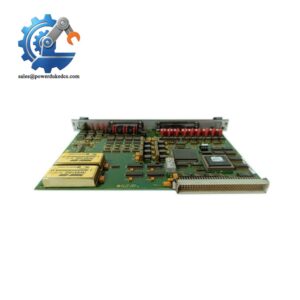
- Brand: GE Fanuc / VMIC
- Full Model Number: VMIACC-5595-208 / 350-805595-208J
- System/Series Family: VMIC 5595 Reflective Memory Network / 5565 Series
- Core Function: Optical hub for distributing shared reflective-memory data among compatible real-time computing nodes
- Top 3 Hardcore Specs: 2 Gb/s network rate; 8 SFP optical ports; multimode and single-mode optical link support
- Stock Status: New Surplus — stock confirmation required
Technical Product Introduction
A failed reflective-memory hub can interrupt data exchange between multiple real-time computing nodes even when the individual VME or embedded controllers remain operational. The GE Fanuc / VMIC VMIACC-5595-208 is a reflective-memory network hub associated with the 5565 family. Its architecture provides eight SFP optical interfaces for connecting compatible reflective-memory nodes, while the hub manages the optical network between those endpoints. The documented network rate is up to 2 Gb/s, making the unit suitable for applications where predictable shared-memory data distribution is required.
The 350-805595-208J designation identifies a specific VMIACC-5595-208 hardware variant. The platform supports both multimode and single-mode optical configurations, with achievable distance determined by the installed optical transceiver, wavelength, and fiber type. Management connectivity is provided through Ethernet and RS232 interfaces. Exact functionality depends on the installed SFP population, connected 5565-series hardware, firmware, and network topology — the hub should therefore be evaluated as part of the complete reflective-memory system rather than as an isolated network device.
Application Scenarios & Field Realities
- Distributed VME computing: When several VME-based processors need access to common real-time data, a reflective-memory network allows compatible nodes to exchange shared information through dedicated optical links. The VMIACC-5595-208 provides the central optical interconnection point.
- Real-time simulation and test equipment: Simulation systems may distribute state variables, measurement data, or control information among multiple processing nodes. Reflective memory can reduce the application software overhead associated with repeatedly transferring shared data through conventional network protocols.
- Embedded control architectures: In a distributed control installation using compatible VMIC 5565 hardware, the hub connects multiple optical nodes and manages the corresponding reflective-memory links. Optical transceiver type must match the installed fiber infrastructure.
- Legacy system maintenance: For an operational VMIC reflective-memory installation, replacing a failed hub can preserve the existing node architecture. Before installation, record the current SFP arrangement, port configuration, optical topology, management settings, and connected node types.
Migration, Compatibility & Installation Traps
Replacement Matrix
| Replacement Type | Assessment | Engineering Requirement |
|---|---|---|
| Drop-in Replacement | Conditionally applicable | Verify VMIACC-5595-208 family, exact 350-805595-208J identification, SFP configuration, and network topology |
| Software Compatible | Configuration verification required | Review port modes, bypass settings, management parameters, and stored configuration |
| Hardware Modification Required | Normally not required for a correctly matched unit | May become necessary if the optical transceiver configuration differs from the existing installation |
Field Traps — Watch Out
SFP compatibility: The hub uses pluggable optical transceivers. Matching the physical SFP form factor alone is insufficient. Confirm optical wavelength, multimode or single-mode fiber type, transmission distance, and transceiver specifications before installation.
Fiber polarity: Optical links require correct transmit-to-receive routing. If a replacement hub appears powered but the connected node does not synchronize, verify the LC fiber orientation and the transmit/receive path before replacing additional hardware.
Port configuration: Reflective-memory hubs can use configurable port states and bypass behavior. Record the existing port configuration before removing the original unit. After installation, verify each populated port individually.
Management settings: Ethernet and RS232 management interfaces may be used to inspect or configure the hub. Preserve existing configuration information before replacement where the original unit remains accessible. A successful power-up does not prove that the previous network configuration has been restored.
Optical budget: Maximum link distance depends on the specific SFP and fiber installation. Do not use the longest published distance as a universal value for every transceiver combination. Verify the actual optical budget for the installed hardware.
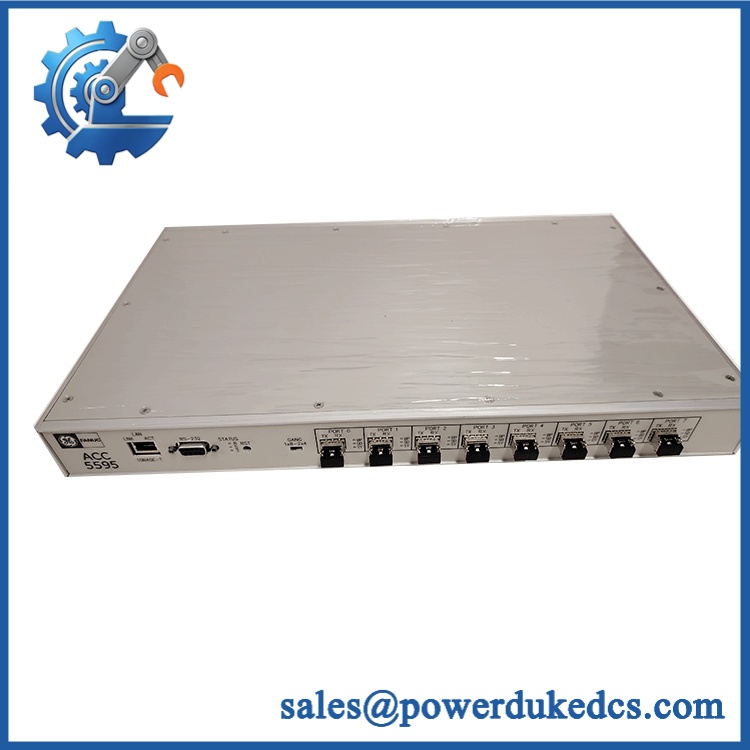
GE VMIACC-5595-208
Quality Assurance SOP
Each available VMIACC-5595-208 should pass a documented inspection sequence before shipment:
- OEM anti-counterfeit visual inspection: Check GE Fanuc / VMIC identification, markings, labels, chassis construction, SFP cages, connector arrangement, revision information, and manufacturing identifiers.
- Part-number verification: Confirm the physical identification against and 350-805595-208J before release.
- Mechanical inspection: Examine the enclosure, front panel, SFP receptacles, Ethernet connector, RS232 interface, power input, switches, mounting points, and retaining hardware.
- Connector inspection: Check all optical ports for damaged cages, contamination, bent contacts, loose mechanisms, or foreign material.
- Power-input inspection: Verify the power-entry assembly, switch, fuse arrangement where applicable, and power connector condition.
- Power-on self-test (POST): Energize the unit using an appropriate laboratory test setup and record startup behavior and front-panel status indications.
- Optical link verification: Connect compatible known-good reflective-memory equipment and confirm optical synchronization on each populated port.
- Reflective-memory data test: Verify representative data exchange between compatible nodes through the hub.
- Port-status verification: Check populated SFP ports individually and confirm expected link and synchronization indications.
- Management interface check: Test the applicable Ethernet or RS232 management interface and confirm that hub status information can be accessed.
- Network-rate verification: Where the laboratory setup supports it, verify operation at the applicable 2 Gb/s reflective-memory network rate.
- Final inspection: Record model number, suffix, serial or identification information, SFP population, physical condition, test results, packaging condition, and inspection status before shipment.
Procurement note: is associated with the VMIC 5595 reflective-memory hub family and 5565-series reflective-memory systems. Before purchasing a replacement, verify the exact hardware suffix, installed SFP types, fiber architecture, connected node hardware, port configuration, and management settings. A matching enclosure alone does not establish system compatibility.



 Start Chat