

Description
- Brand: GE Fanuc / VMIC
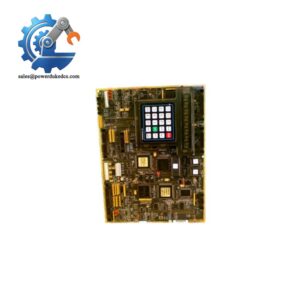
- Full Model Number: VMIVME-3215-000
- System/Series Family: VMIC VMEbus Industrial I/O Series
- Core Function: VMEbus digital input/output interface for legacy industrial computing and control platforms
- Top 3 Hardcore Specs: VMEbus architecture; board-level digital I/O function; exact channel configuration to be verified by module revision and nameplate
- Stock Status: New Surplus — exact condition and availability to be verified
Available technical records consistently place VMIVME-3215-000 within the GE Fanuc / VMIC VMEbus hardware family, but public listings disagree on its exact electrical function and even copy specifications from other VMIVME models. One current parts index classifies it as a VMEbus digital I/O module, while another listing describes it as an 8-channel thermocouple board.
Technical Product Introduction
A legacy VME rack can stay operational for years until one interface card starts producing intermittent field faults. The difficult part is often identification: several VMIVME boards share similar mechanical formats, while their signal types, connectors, and host-bus behavior are not interchangeable. GE VMIVME-3215-000 is associated with the GE Fanuc / VMIC VMEbus product family and is currently indexed as a digital input/output module. For an actual replacement, the board marking and connector arrangement should take priority over a distributor description—particularly for older hardware with multiple revisions.
From a maintenance perspective, the important characteristics are the VMEbus host interface, the module’s digital I/O role, and the exact hardware revision installed in the cabinet. Public records do not provide a sufficiently reliable common specification for channel count, signal voltage, isolation, or current rating, so those values should not be presented as fixed facts without checking the original documentation or physical board. One published listing gives an 8-channel thermocouple configuration, but other sources classify the same part number as digital I/O, indicating that the available web data is internally inconsistent.
Application Scenarios & Field Realities
- Legacy VME control racks: In an aging control cabinet, the first symptom may be loss of several field points rather than a complete CPU failure. A VME I/O module is then a logical inspection point, but the technician should verify the actual board function before replacing it.
- Industrial data acquisition equipment: VME systems frequently combine CPU, communications, counter, analog, and digital boards in one chassis. A module-level replacement works only when the signal architecture and connector pinout match the original design.
- Machine control and test systems: Where discrete status points are exchanged between a VME host and external equipment, an I/O board failure can appear as software logic trouble. Check the physical input state at the board before changing application code.
- Long-life retrofit projects: During an outage, preserving the installed VME chassis and host software can be preferable to rebuilding the control platform. —That approach is practical only after confirming the replacement card’s exact revision, connectors, electrical interface, and bus configuration.
Migration, Compatibility & Installation Traps
Replacement Matrix
| Replacement Type | Assessment |
|---|---|
| Drop-in Replacement | Conditional — appropriate only when the original board is confirmed as the same VMIVME-3215-000 hardware revision and interface configuration |
| Software Compatible | Normally hardware-level compatibility; verify I/O addressing, register mapping, and application configuration |
| Hardware Modification Required | Not normally required for an exact same-model replacement; required if connector or electrical configuration differs |
The strongest compatibility evidence is the physical and electrical identity of the installed board. Public sources currently classify VMIVME-3215-000 inconsistently: one catalog lists it as a VMEbus digital I/O module, while another assigns thermocouple-input specifications to the same part number. That conflict is significant enough that a part number alone should not be treated as proof of channel type.
Field Traps — Watch Out
Incorrect board identification: Do not substitute a VMIVME board merely because it fits the same VME slot. Confirm the front-panel markings, rear connectors, jumper or switch configuration, and board revision against the failed unit.
I/O pinout mismatch: A software-compatible VME board can still be electrically unsuitable if its field connector assignments differ. Record the existing wiring before removal and verify each external circuit against the applicable pinout documentation.
Address configuration: Older VME boards may use board-level address selection or configuration jumpers. A replacement with different settings can cause the host to miss the board or respond to the wrong register space.
ESD and backplane handling: Remove chassis power unless the specific platform documentation explicitly permits live insertion. Inspect the VME connectors carefully; partially seated contacts can create intermittent faults that look like processor or application errors.
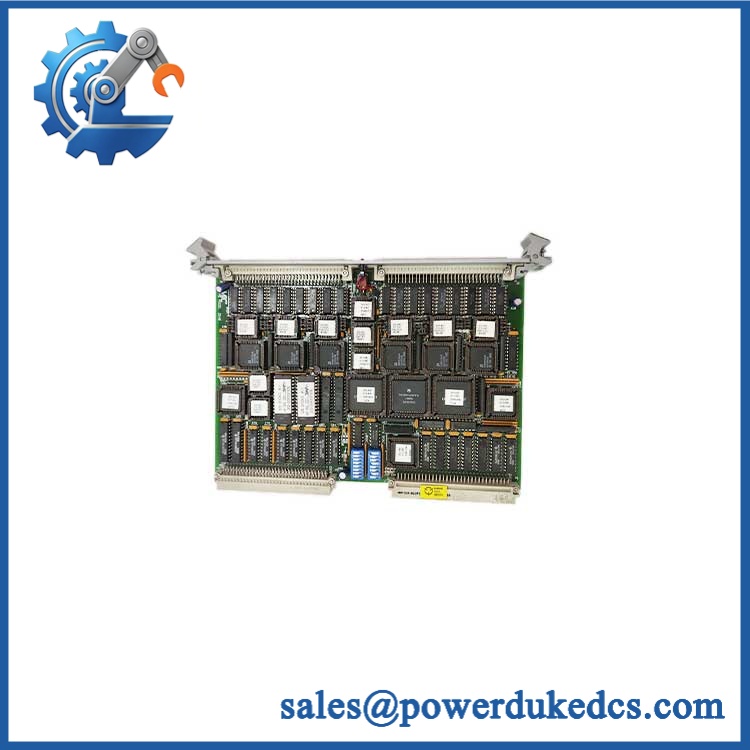
GE VMIVME-3215-000
Quality Assurance SOP
For surplus GE VMIVME-3215-000 inventory, QA should focus on identity verification first because publicly available descriptions for this exact part number are inconsistent.
- OEM anti-counterfeit visual inspection: Verify GE Fanuc / VMIC markings, exact model number, PCB identification, revision information, connector construction, and label consistency.
- Mechanical inspection: Check the PCB, card guides, connectors, mounting hardware, solder joints, and exposed components for cracks, corrosion, contamination, bent contacts, or unauthorized rework.
- Board identity verification: Compare the physical board against the customer’s installed unit, including connector count, connector position, switch or jumper configuration, and revision markings.
- Power-on self-test (POST): Install the board in a compatible VME chassis and monitor the host system for startup errors, bus faults, or abnormal status indications.
- VMEbus recognition test: Confirm that the host processor can address the board at the expected VMEbus location and that register access behaves normally.
- Digital I/O verification: Where the actual unit is confirmed as a digital I/O variant, exercise each documented input and output point using a controlled test fixture and verify state transitions.
- Communication handshake verification: Confirm correct exchange between the VME host and the installed board through the documented register and bus interface.
- Configuration verification: Compare address settings, jumpers, and application mappings with the original configuration before final acceptance.
- Extended operating check: Run the board in a compatible test rack and monitor for intermittent bus errors, unexpected resets, unstable I/O states, or thermal abnormalities.
- Final traceability check: Record model number, hardware revision, serial or identification data where available, test date, functional results, and shipment condition.
For , the safest procurement practice is to treat the VMEbus digital I/O identification as provisional until the physical board revision is confirmed. Current online records are contradictory, and one source appears to reuse specifications from another VMIVME model rather than providing a clean model-specific datasheet.



 Start Chat