
Description
- Brand: GE Fanuc / VMIC
- Full Model Number: VMIVME-7750-740000
- System / Series Family: VME-7750 VME Single Board Computer
- Core Function: 6U VMEbus single-board computer for embedded control, data acquisition, and industrial computing
- Top 3 Hardcore Specs: Intel Pentium III up to 1.26 GHz / Up to 512 MB PC133 SDRAM / Dual 10/100Base-TX Ethernet
- VME Interface: Tundra Universe II PCI-to-VME bridge
- Expansion: 1 × PMC site
- Flash Storage: Up to 1 GB CompactFlash
- Serial I/O: 2 × 16550-compatible serial ports
- Nonvolatile SRAM: 32 KB
- Stock Status: New Surplus / Factory Sealed — exact configuration and physical condition to be confirmed before quotation
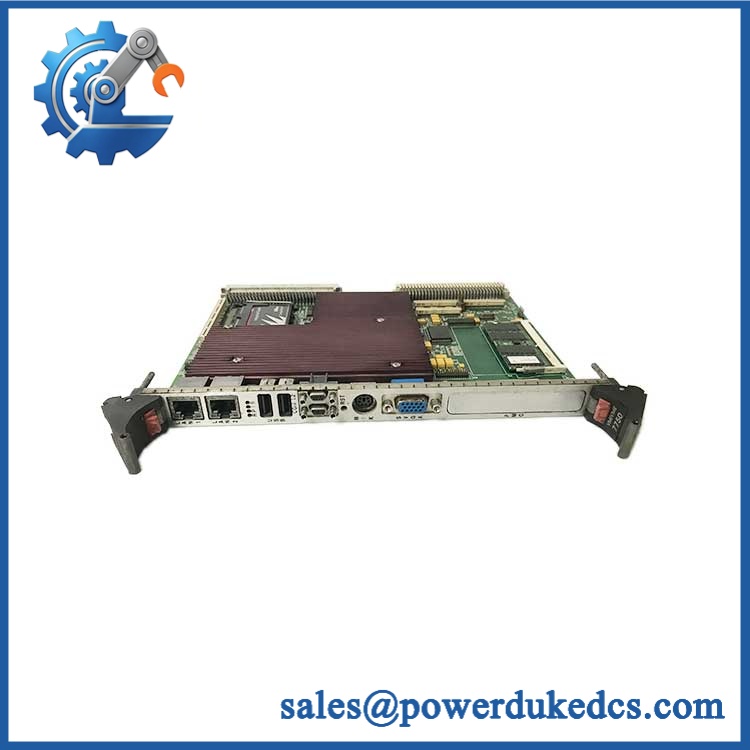
The VMIVME-7750 is documented as a 6U VME single-board computer with Pentium III processing, PC133 SDRAM, dual Ethernet, and a PMC expansion site.
GE VMIVME-7750-740000
Module 3: Technical Product Introduction
A failed VME processor can stop an entire legacy control computer even when the I/O cards and VME backplane remain serviceable. The GE Fanuc VMIVME-7750-740000 belongs to the VME-7750 family of single-board computers and is based on an Intel Pentium III processor architecture. The 740000 ordering configuration corresponds to the 1.26 GHz Pentium III version with 512 KB advanced transfer cache; the platform supports up to 512 MB of PC133 SDRAM and uses a 133 MHz system bus through the Intel 815E chipset.
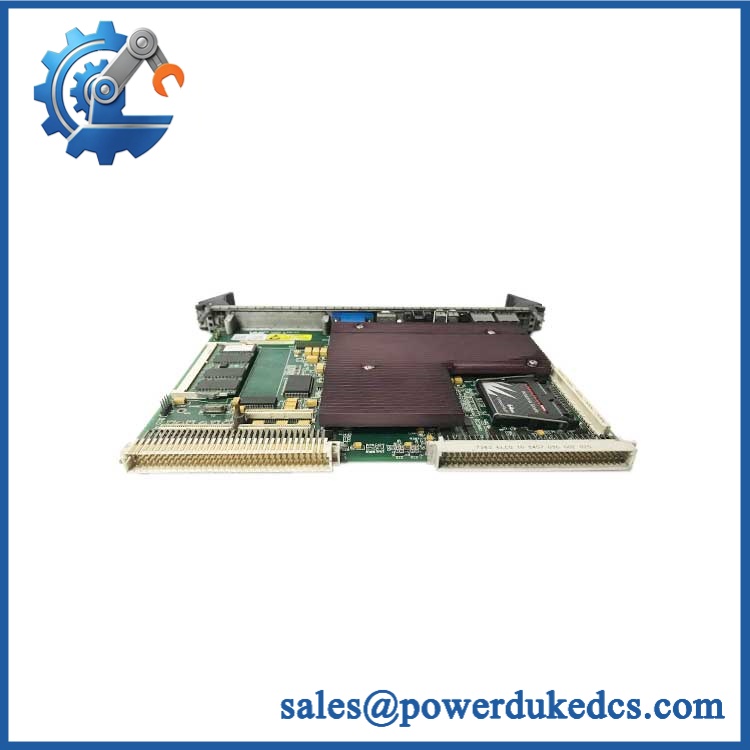
For a legacy VME application, retaining the original SBC architecture can avoid an extensive operating-system and application migration. The board provides dual 10Base-T/100Base-TX Ethernet, two 16550-compatible serial ports, a PMC expansion site, up to 1 GB of CompactFlash storage, and 32 KB of nonvolatile SRAM. Its VMEbus interface uses the Tundra Universe II PCI-to-VME bridge, while the system controller can operate as a VME slot-1 controller or be disabled when another board assumes that role.
Module 4: Application Scenarios & Field Realities
- In legacy VME control cabinets, the VMIVME-7750 can act as the main computing node while other VME cards handle specialized I/O, motion, acquisition, or interface functions. Before replacement, identify whether this board is configured as the VME system controller.
- For applications using local storage, the CompactFlash interface can hold the operating environment or application files. Do not replace the board and assume that the original software will automatically transfer; check the existing CompactFlash media and boot configuration first. The platform supports up to 1 GB of CompactFlash.
- Where legacy Ethernet equipment remains in service, the two Ethernet controllers support 10Base-T and 100Base-TX, with remote Ethernet boot capability documented for the platform. Confirm the existing network speed, cabling, IP configuration, and boot method before commissioning.
- For VME systems requiring nonvolatile application data, the onboard 32 KB NVRAM retains its contents when +5 V power is interrupted or removed. That makes the NVRAM contents part of the replacement risk assessment; preserve required application data before removing the original board.
Module 5: Migration, Compatibility & Installation Traps
Replacement Matrix
| Replacement Case | Classification | Engineering Requirement |
|---|---|---|
| VMIVME-7750-740000 replacing the identical configuration | Drop-in Replacement | Verify processor option, memory, CompactFlash, jumpers, VME slot, and software image |
| Another VMIVME-7750 configuration | Software Compatible — Verify First | Check CPU speed, SDRAM capacity, CompactFlash option, operating system, and application requirements |
| VMIVME-7751 or related VME SBC | Hardware Modification Required | Verify VME interface, I/O, software support, board dimensions, and system configuration |
| Modern PCIe/VPX computer replacing the | Hardware Modification Required | Engineer the VME interface, application migration, operating system, I/O, and mechanical changes |
Field Traps — Watch Out
740000 configuration matters: The VME-7750 family was available with multiple processor and memory configurations. The published ordering information identifies the 1.26 GHz Pentium III option separately from lower-speed versions. Do not substitute a generic without checking the complete ordering code.
VME slot-1 controller: The board can function as the VMEbus system controller, but that function can also be disabled when another board assumes system-controller responsibility. Record the original configuration before replacement.
Operating-system image: The platform supported Windows XP, Windows 2000, VxWorks, Solaris, QNX, LynxOS, and Linux. A replacement board may be electrically correct while still failing to boot because the CompactFlash image, BIOS settings, or application environment is wrong.
NVRAM handling: The 32 KB NVRAM retains information when +5 V power is removed. If the customer’s application uses this memory, establish a data-preservation procedure before removing the original SBC.
Serial-port cabling: The two serial channels use 16550-compatible interfaces and require the specified micro-DB-9 to standard DB-9 adapter arrangement. Do not assume a conventional DB-9 cable can connect directly to the front-panel interface.
GE VMIVME-7750-740000
Module 6: Quality Assurance SOP
The pre-shipment inspection for a GE Fanuc -740000 should concentrate on the exact processor configuration, VMEbus interface, memory, storage, and boot behavior:
- Part-number verification — Confirm the complete identification as and record serial number, board revision, processor designation, memory configuration, and manufacturing identifiers.
- OEM anti-counterfeit visual inspection — Examine GE/VMIC markings, PCB artwork, processor identification, memory devices, connectors, labels, and manufacturing details for inconsistent printing, altered labels, or unauthorized rework.
- Mechanical inspection — Check the 6U PCB, VME P1/P2 connectors, front-panel hardware, ejector handles, PMC area, CompactFlash interface, Ethernet connectors, and serial interfaces for damage or deformation.
- Memory verification — Confirm the installed SDRAM configuration and verify that the system BIOS correctly recognizes the available memory.
- Power-on self-test (POST) — Power the board using an approved VME test chassis and check BIOS startup, memory detection, processor identification, diagnostic indications, and normal boot behavior.
- VMEbus handshake verification — Install the SBC in a compatible VME test chassis and verify VMEbus initialization, system-controller behavior where applicable, and communication with the test backplane.
- Ethernet verification — Test both Ethernet interfaces at the applicable 10Base-T and 100Base-TX modes. Confirm link detection and controlled network communication.
- Serial-interface verification — Test both 16550-compatible serial channels using the correct adapter and a controlled loopback or terminal test. Verify expected data transmission and reception.
- CompactFlash verification — Where the supplied configuration includes CompactFlash, verify media recognition and controlled boot/read behavior without altering any customer application image.
- NVRAM verification — Confirm recognition of the 32 KB nonvolatile SRAM and, where the test procedure permits, verify retention behavior under controlled power interruption.
- PMC interface inspection — Inspect the single PMC expansion site for damaged contacts, contamination, or mechanical deformation. If a test PMC is available, verify correct enumeration and operation.
- Final inspection and packaging — Photograph the exact -740000 label, record processor/memory configuration and test results, protect the VME connectors and front-panel interfaces, apply appropriate ESD precautions, and package the board against mechanical shock and moisture.
The final QA record should connect the -740000 part number, 1.26 GHz processor configuration, memory verification, VMEbus test, Ethernet test, serial test, storage check, NVRAM verification, and final packing record to the exact unit shipped. This is a legacy computer board, so preserving the customer’s software image and VME configuration can be just as important as verifying the hardware itself.



 Start Chat