

Description
- Brand: GE
- Full Model Number: WES5123-1200
- System/Series Family: GE WES5123 Embedded Computing Platform
- Core Function: Embedded industrial computing and control platform for automation and real-time control applications
- Top 3 Hardcore Specs: Up to 2 GB DDR2 SDRAM; Dual Gigabit Ethernet; Dual SAS interface
- Stock Status: New Surplus — condition and packaging to be confirmed against the available unit
Technical Product Introduction
A failed embedded computer can stop the control application even when the field I/O and wiring remain intact. The GE WES5123-1200 provides an embedded computing platform with front-access SVGA, dual Gigabit Ethernet, RS232/422 serial connectivity, USB 2.0, SATA storage support, and optional 2.5-inch SATA hard-drive capability. The architecture also provides a PMC expansion site and 32 KB of NVRAM, making the unit suitable for applications that require local processing, storage, and industrial communications in a compact platform.
Memory capacity reaches 2 GB DDR2 SDRAM through one SODIMM socket, while the storage architecture supports two SATA connections and optional bootable CompactFlash up to 8 GB. Operating-system support documented for the platform includes Windows XP, Windows Vista, Linux 2.6.x, and VxWorks 6.x. Those details matter during replacement: an apparently identical chassis is not enough if the installed software image, storage device, or PMC configuration differs (verify the actual configuration before commissioning).
Application Scenarios & Field Realities
- For legacy industrial control computers, the WES5123-1200 can serve as an embedded processing platform where the application depends on Ethernet, serial communication, local storage, and an operating system rather than a conventional PLC CPU alone.
- Where long cable runs or electrically noisy environments are involved, the dual Gigabit Ethernet architecture provides two network interfaces for system-level connectivity. The actual network topology still depends on the application software and configured communication stack.
- In systems requiring local data storage, two rear SATA connections and an optional 2.5-inch SATA drive provide a practical path for local operating-system or application storage. Storage media should be checked separately before a replacement is commissioned.
- When legacy real-time software must remain in service, documented support for VxWorks 6.x is particularly relevant. A replacement should be evaluated against the existing boot image, device drivers, PMC hardware, and application dependencies rather than treated as a generic industrial PC.
Migration, Compatibility & Installation Traps
Replacement Matrix
| Replacement Type | Assessment |
|---|---|
| Drop-in Replacement | Not automatically confirmed |
| Software Compatible | Configuration-dependent |
| Hardware Modification Required | Not normally expected when replacing the same configured assembly |
| Firmware / OS Verification | Required before commissioning |
| Storage Configuration | Must match the existing application architecture |
| PMC Configuration | Verify installed PMC hardware and I/O requirements |
Firmware and operating-system mismatch: The WES5123-1200 platform supports multiple operating-system environments, including Windows and VxWorks. Installing a physically matching unit without checking the existing boot image, drivers, and application environment can result in a non-starting application.
Storage and expansion trap: Do not assume that every WES5123-1200 has identical storage or PMC hardware. The documentation identifies optional CompactFlash, an optional 2.5-inch SATA hard drive, and a PMC expansion site. Record the existing storage device, PMC configuration, and rear I/O arrangement before removing the failed unit.
ESD and installation note: Disconnect power and use appropriate ESD precautions before handling the board-level assembly. Confirm connector orientation and rear-I/O alignment before applying power.
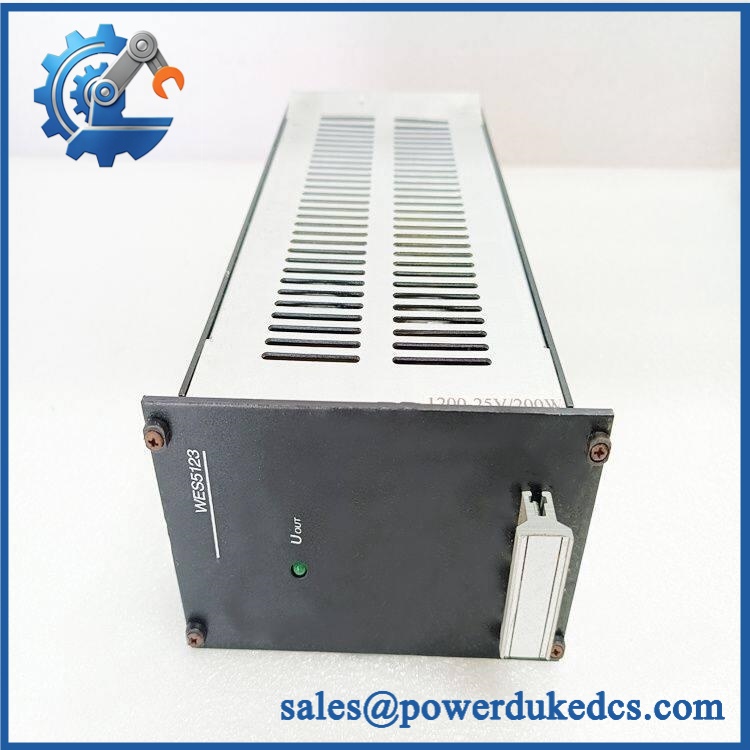
GE WES5123-1200
Quality Assurance SOP
Each available GE -1200 unit should pass a documented inspection sequence before shipment:
- OEM anti-counterfeit visual inspection: Verify GE markings, model identification, board labels, connector layout, PCB condition, and visible manufacturing identifiers.
- Physical condition inspection: Check connectors, mounting points, chassis surfaces, storage interfaces, PMC area, and visible components for damage or corrosion.
- Power-on self-test (POST): Apply controlled power and check startup behavior, indicator status, display output where applicable, and abnormal fault indications.
- Memory verification: Confirm installed memory is detected correctly and compare the detected configuration with the ex configuration.
- Ethernet interface check: Verify both Gigabit Ethernet interfaces establish link and communicate with the test network.
- Serial interface check: Verify the available RS232/422 interfaces using the appropriate loopback or communication test procedure.
- USB verification: Check accessible USB 2.0 ports for device detection.
- Storage interface verification: Check SATA connectivity where the supplied configuration includes storage hardware.
- Communication handshake verification: Confirm stable data exchange between the module and the designated test device or host.
- Final inspection: Record model number, visible serial information, test results, packaging condition, and shipment photographs before release.
specification includes dual Gigabit Ethernet, RS232/422 interfaces, USB 2.0, SATA connectivity, NVRAM, and a PMC expansion interface; the exact acceptance test should therefore follow the configuration of the individual unit rather than a generic PC checklist.




 Start Chat