

Description
- Brand — GE
- Full Model Number — WESDAC D20A
- System/Series Family — GE D20/D200 RTU
- Core Function — 32-point analog input peripheral for acquiring field analog signals and passing processed data to the D20 main processor
- Top 3 Hardcore Specs — Up to 32 analog inputs; 1 V, 5 V, or 10 V full-scale voltage ranges; WESDAC logic module with WESTERM termination interface
- Stock Status — New Surplus; actual legacy part number and hardware variant to be verified before shipment
Technical Product Introduction
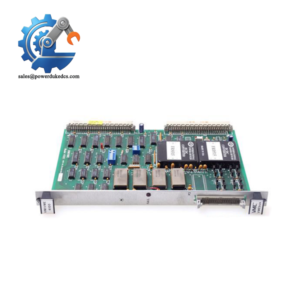
A failed analog input module can remove a large block of field measurements from a D20 RTU at once. The GE WESDAC D20A is the logic module used within the D20 analog-input peripheral, working with a corresponding WESTERM termination module rather than serving as a standalone terminal block. GE documentation specifies up to 32 analog inputs, with voltage inputs configurable around 1 V, 5 V, or 10 V full-scale, while adapter modules provide voltage or current input configurations. Field wiring and power terminations are made on the WESTERM side.
The important architectural distinction is the split between processing and termination. The WESDAC D20A handles acquisition processing and communication toward the D20 processor; the WESTERM D20A provides the field termination interface. GE’s D20/D200 documentation also describes the WESDAC peripheral as replaceable without disconnecting power from the peripheral, with the D20ME/ME II capable of downloading the required database parameters after installation. That makes the D20A particularly relevant to maintenance teams supporting installed D20/D200 RTU cabinets where preserving the existing I/O architecture is preferable to redesigning the entire acquisition layer.
Application Scenarios & Field Realities
- At electrical substations, the D20A can collect analog measurements that must reach the RTU processor for supervisory monitoring. With as many as 32 inputs, one peripheral can represent a substantial portion of a cabinet’s measured-point inventory.
- For legacy D20/D200 maintenance, the split-module construction matters. The WESDAC logic board plugs into the WESTERM termination assembly, so the technician should identify the installed termination style before ordering a replacement (compression, DB25, or barrier arrangements exist within the D20 family).
- Where analog scaling is already documented, the existing input configuration should be preserved rather than recreated from memory. GE documents 1 V, 5 V, and 10 V full-scale voltage ranges, including unipolar and bipolar configurations, with adapter modules used for individual voltage or current inputs.
- During an outage with the RTU still energized, D20 documentation specifically describes hot-swapping WESDAC peripherals from the WESTERM board without removing peripheral power. Even so, site ESD procedures and the plant’s switching rules should take priority before removal.
Migration Compatibility & Installation Traps
| Replacement Case | Classification | Engineering Guidance |
|---|---|---|
| Same WESDAC variant and matching WESTERM assembly | Drop-in Replacement | Appropriate when the legacy part number, termination arrangement, hardware revision, and system database are confirmed. |
| Different voltage or hardware variant | Software Compatible | Requires checking the configured input type, scaling, power arrangement, and D20 database parameters before commissioning. |
| Different D20 peripheral architecture or termination system | Hardware Modification Required | May require changes to wiring, termination hardware, scaling components, or cabinet configuration. |
Field Traps — Watch Out
Legacy part-number confusion: GE documentation identifies multiple WESDAC variants, including 511-0101 WESDAC Type 1 Version 1 and 511-0103 WESDAC HV2, with corresponding newer smart catalog prefixes. A request simply stating “WESDAC ” is therefore not enough to establish the exact electrical variant. Match the old module’s complete identification label before shipment.
Termination and scaling mismatch: The WESDAC module is only part of the peripheral. The WESTERM termination assembly carries the field wiring, and the input arrangement can involve scaling networks or input adapters. Moving a WESDAC board into the wrong termination configuration can produce incorrect measurement values even when the board physically fits.
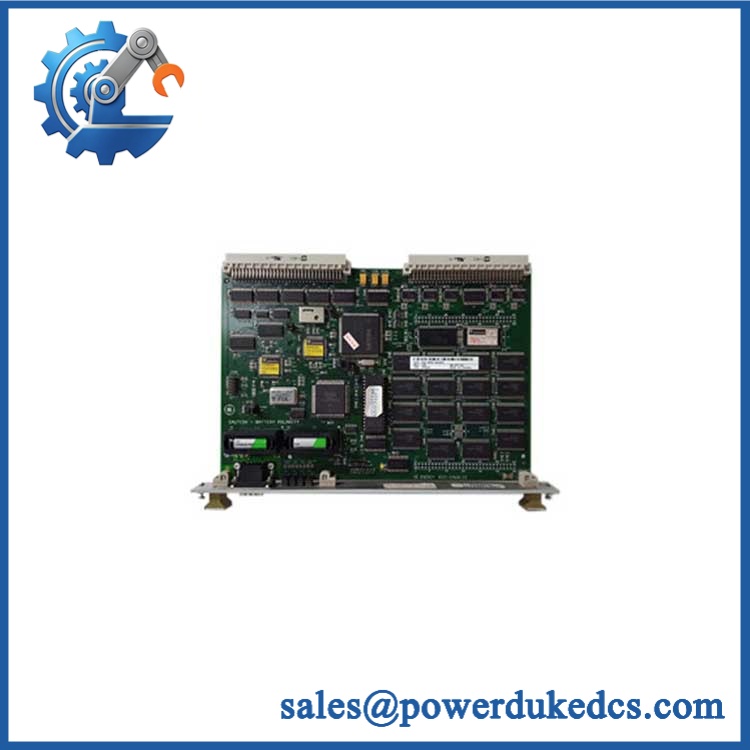
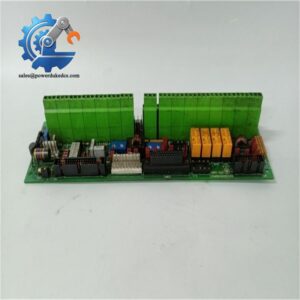
GE WESDAC D20A
Quality Assurance SOP
For New Surplus GE WESDAC stock, the pre-shipment process should be based on part identification and functional evidence:
- OEM anti-counterfeit visual inspection — Verify GE/WESDAC markings, legacy part number where present, board revision, connector condition, enclosure condition, fasteners, PCB appearance, and signs of rework or relabeling.
- Power-on self-test (POST) — Power the module in an approved D20 test arrangement and record startup behavior and available status LEDs, including ERR/RUN indications where fitted.
- Analog input verification — Apply controlled test signals to representative channels and compare the measured values against the configured input range and scaling.
- Communication handshake verification — Confirm the WESDAC establishes normal communication with the D20 processor and accepts the expected database/configuration parameters.
- Termination compatibility check — Verify that the tested WESDAC unit corresponds to the intended WESTERM termination arrangement and voltage variant.
- Final ESD inspection — Inspect connectors and board surfaces, install appropriate ESD protection, secure the module against movement, and photograph the final packed condition.
GE’s documentation defines the as a 32-point analog input interface module and identifies separate WESDAC and WESTERM functions. For procurement, the complete legacy part number and hardware variant should therefore be treated as mandatory identification data rather than relying on “” alone.



 Start Chat