

Description
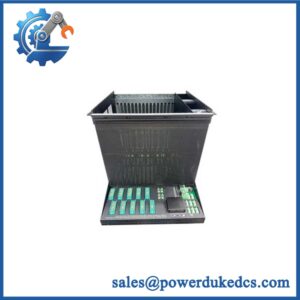
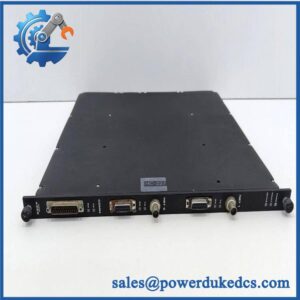
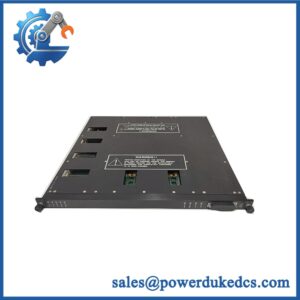
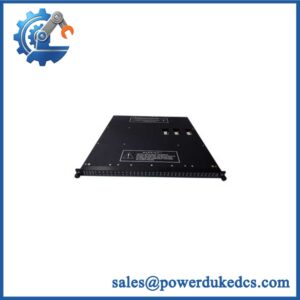
Unboxing & Physical Snapshot
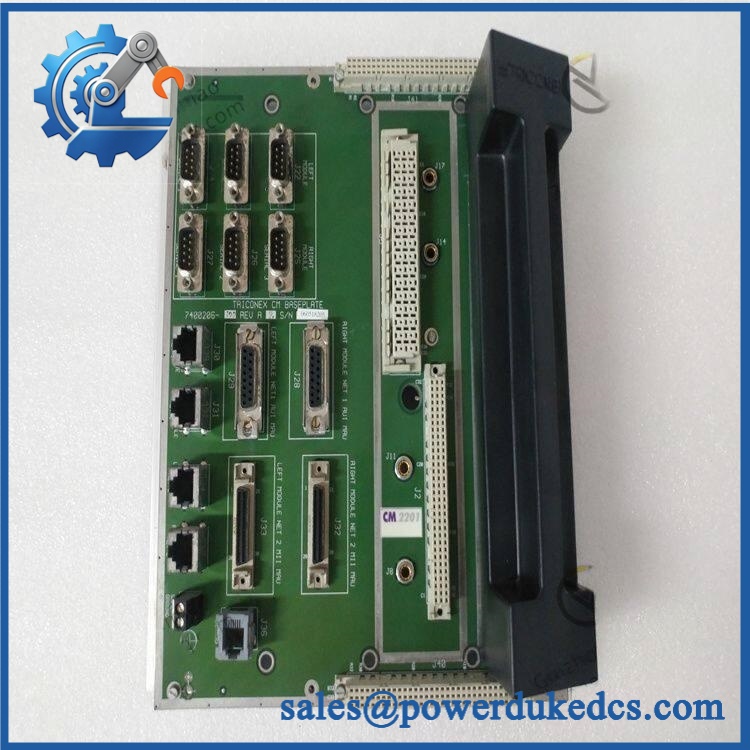
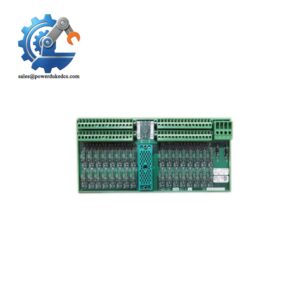
- Model & Brand: TRICONEX 2201
- Equipment type: Trident Communication Module Baseplate. The Trident planning documentation identifies model 2201 specifically as the communication baseplate, not a processor or digital output module.
- System: Triconex Trident Safety Instrumented System (SIS).
- Module capacity: Supports up to two Communication Modules (CMs) on one baseplate.
- Physical dimensions: Approximately 259 × 160 × 79 mm (10.2 × 6.3 × 3.1 in.) according to a current supplier listing; verify against the actual hardware before cabinet layout.
- Estimated net weight: Approximately 1.4 kg; another listing reports approximately 1.6 kg for a related 7400206-100 assembly. Use an actual scale measurement for freight records.
- Estimated shipping weight: Approximately 2–3 kg packed, depending on protective packaging and included interconnect hardware.
- What’s in the box: 2201 communication baseplate; compatible interconnect assembly and mounting/accessory hardware only if explicitly included with the inventory lot.
- Critical identification: Record the complete nameplate, assembly number, serial/date code, connector condition, and any associated CM modules before inventory release.
Product Introduction
Architecture hook: The TRICONEX 2201 forms the physical communication layer within the Trident architecture. It accepts up to two Communication Modules and provides the infrastructure through which Trident communicates with external host computers, DCS networks, open networks, other Trident systems, and Tricon systems.
Do not confuse the 2201 communication baseplate with the Communication Module itself. The Trident documentation identifies 3201 as the Communication Module and 2201 as its baseplate; each CM can provide three serial ports and Ethernet interfaces, depending on the installed configuration. This distinction is important during spare-parts receiving because a supplier listing that labels 2201 as a “processor” or “digital output module” is inconsistent with the Trident planning documentation.
Core Technical Specifications
| Parameter | Value |
|---|---|
| Manufacturer | Triconex |
| Platform | Trident SIS |
| Model | 2201 |
| Product Type | Communication Module Baseplate |
| Supported CMs | Up to 2 |
| Associated Communication Module | Triconex 3201 |
| Communication Architecture | Serial and Ethernet interfaces through installed CM |
| Serial Interfaces | Up to 3 per CM |
| Network Interfaces | Ethernet interfaces through installed CM |
| Dimensions | Approx. 259 × 160 × 79 mm |
| Approx. Weight | 1.4–1.6 kg, configuration-dependent |
| Operating Temperature | −20 to +70 °C |
| Storage Temperature | −40 to +85 °C |
| Relative Humidity | 5–95%, non-condensing |
| Vibration | 1 G, 10–150 Hz |
| Shock | 15 G, 6–11 ms |
| ESD | IEC 61000-4-2 testing referenced |
| Galvanic Isolation | 500 V DC for documented communication interfaces |
| Mounting | Trident chassis/baseplate installation |
| Firmware | Not normally applicable to the passive baseplate |
TRICONEX 2201
The environmental figures above are consistent with published Trident documentation and supplier technical records.
? Global Compliance & Industry Certifications
For a Triconex SIS component, certification must be tied to the exact hardware revision and complete installed system, not simply the 2201 model number.
- CE Mark: Verify the applicable Schneider Electric/Triconex declaration for the exact assembly and system configuration.
- UL/cUL: Verify the applicable North American certification for the specific hardware revision.
- IEC 61508 / SIL: The Trident platform is designed for safety-instrumented applications, but a baseplate should not independently be represented as a SIL-certified safety function. The certified safety claim belongs to the evaluated system/configuration.
- ATEX / IECEx: Verify the exact certified Triconex configuration before use in a hazardous location.
- Marine approvals: DNV or another classification approval should only be claimed when documentation explicitly covers the hardware and intended installation.
- EMC/environmental qualification: Trident documentation references IEC 60068 and IEC 61000 test methods for environmental and EMC performance.
For functional safety, maintaining the exact approved hardware revision is critical. Substituting a visually compatible baseplate without confirming the safety-system configuration can invalidate the engineering basis of the SIS.
Verify specific lot certifications with OEM.
? Long-Term Storage & Asset Preservation Guide
- Protect the backplane connectors. Keep the mating connectors covered against dust and oxidation. Do not allow metal particles or conductive debris to enter the communication-module sockets.
- Use ESD-controlled packaging. Store the baseplate in its original protective packaging or suitable static-control material; avoid ordinary plastic bags that can accumulate electrostatic charge.
- Control humidity and corrosion. Maintain a clean, dry storage environment, preferably below 60% RH, with no condensation. This is particularly important around connector contacts and the plated backplane interfaces.
Because the 2201 is a passive interconnect assembly, the principal long-term risks are contact oxidation, contamination, mechanical damage, and storage-induced corrosion rather than firmware obsolescence.
Physical Installation Prerequisites
- Install the 2201 only in the Trident chassis/baseplate architecture for which it was designed.
- Confirm the mechanical envelope and interconnect alignment before securing the baseplate.
- Ensure the mounting hardware is correctly installed and that no chassis distortion places stress on the backplane.
- Inspect all communication-module retaining mechanisms before insertion.
- Keep the backplane and connector surfaces clean and free from conductive contamination.
- Confirm grounding and cabinet bonding according to the Trident installation documentation.
- Maintain the manufacturer’s specified cabinet environmental conditions and airflow; do not impose an arbitrary 50 mm clearance requirement where the Trident mechanical documentation specifies the actual arrangement.
- Before commissioning, verify the installed Communication Module(s), network configuration, and redundant communication architecture against the approved SIS design.
Buyer’s FAQ
Q: What HS Tariff Code should be used for TRICONEX 2201?
A: The tariff classification should reflect its actual function as a communication-module baseplate for an industrial safety system. Do not classify it as a generic processor or digital output module. Obtain the technical description and confirm the destination country’s tariff schedule before issuing customs documents.
Q: What Country of Origin should appear on the commercial invoice?
A: Use the actual manufacturing origin supported by the physical nameplate, OEM records, or supplier declaration. The Triconex brand, current corporate ownership, and seller’s shipping location do not independently establish COO.
Q: Should the 2201 be insured during international shipment?
A: Yes, where the spare is operationally critical or difficult to replace. Protect the backplane connectors from impact and contamination, immobilize the assembly inside the carton, and photograph the part number, serial number, connectors, and physical condition before shipment.
Q: Does the 2201 have firmware pre-loaded?
A: No. The 2201 is a communication baseplate, not the programmable Communication Module. The Trident documentation identifies the 3201 as the Communication Module and the 2201 as its baseplate. Any firmware/configuration review should therefore focus on the installed CM and the complete Trident system configuration, not the passive 2201 backplane.



 Start Chat