

Description
Unboxing & Physical Snapshot
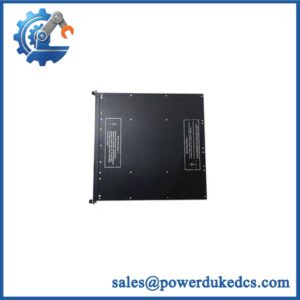
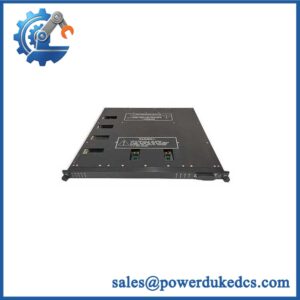
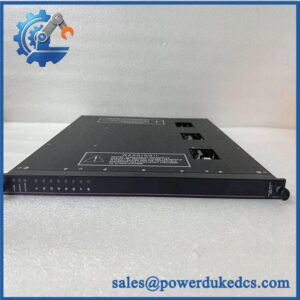
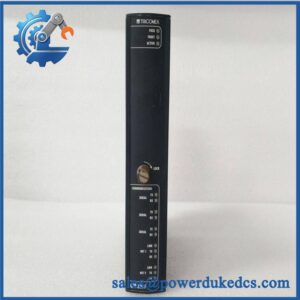
- Model & Brand: TRICONEX 2401S2
- Equipment type: Trident I/O chassis/base assembly — verify the exact suffix against the physical nameplate before release to stock.
- Platform: Triconex Trident Safety Instrumented System.
- Architecture: TMR (Triple Modular Redundant).
- Physical dimensions: Verify the exact 2401S2 mechanical drawing before cabinet fabrication or replacement planning.
- Estimated shipping weight: Approximately 2–4 kg packed, subject to the exact chassis assembly, mounting hardware, and packaging; weigh the actual unit for freight documentation.
- What’s in the box: 2401S2 chassis/backplane assembly and mounting hardware only if included in the inventory lot. I/O modules, termination assemblies, cables, and power supplies should not be assumed.
- Receiving inspection: Photograph the complete part label, chassis connectors, module slots, keying features, mounting points, serial/date code, and certification markings.
- Inventory warning: Do not confuse the 2401S2 chassis with individual Trident I/O modules or the separate I/O bus extender/termination kits.
Product Introduction
Architecture hook: The TRICONEX 2401S2 belongs to the Trident I/O chassis architecture, providing the physical backplane and mounting infrastructure for the Trident I/O modules. Unlike a processor or I/O card, its principal function is mechanical and electrical interconnection within the TMR system.
That distinction matters when maintaining legacy SIS inventory. A chassis can be physically intact while its backplane connectors, module keying, or mounting interfaces have degraded. Replacement should therefore include an inspection of the complete chassis assembly—not just a visual check of the enclosure.
Core Technical Specifications
| Parameter | Value |
|---|---|
| Manufacturer | TRICONEX |
| Platform | Trident |
| Model | 2401S2 |
| Product Type | I/O Chassis / Backplane Assembly |
| Architecture | TMR |
| Primary Function | Mounting and interconnection of Trident I/O hardware |
| Processor | Not integrated into the passive chassis |
| I/O Modules | Installed separately |
| Power Modules | Verify exact chassis configuration |
| Communication Modules | Verify permitted slot arrangement |
| I/O Bus | Trident triplicated architecture |
| Power Requirement | Determined by installed system hardware |
| Firmware | Not applicable to passive chassis |
| Dimensions | Verify OEM mechanical drawing |
| Weight | Verify actual assembly |
| Mounting | Trident cabinet/chassis installation |
| Operating Environment | Verify applicable Trident installation specification |
| Certification | Verify exact revision/system configuration |
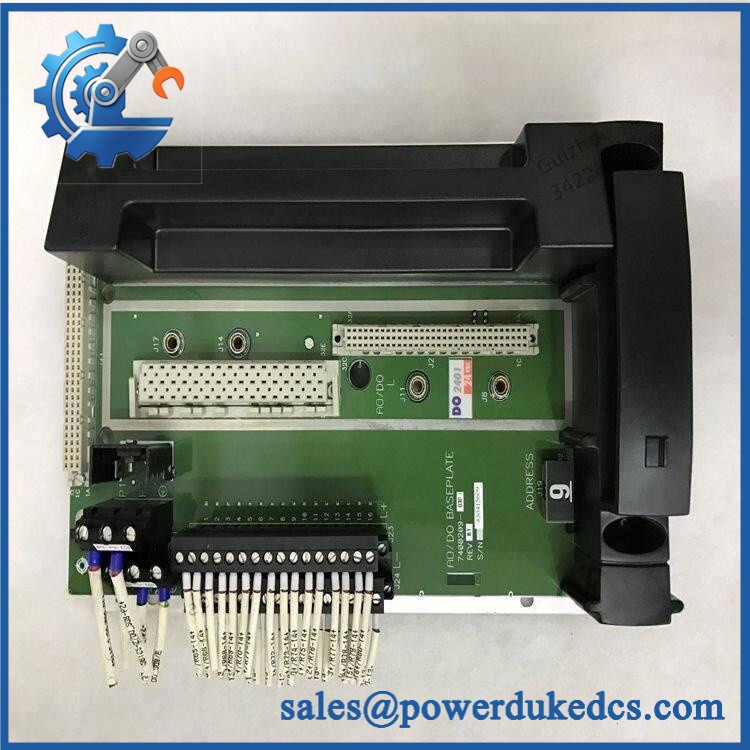
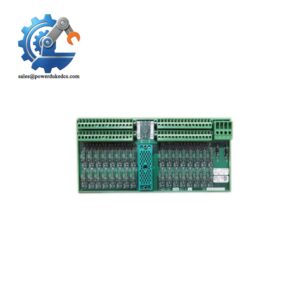
TRICONEX 2401S2
Do not populate missing dimensions or electrical ratings from another Trident chassis. The suffix S2 should be preserved exactly in the asset register, and the physical label should be used to confirm the complete assembly identity.
? Global Compliance & Industry Certifications
For a Trident chassis, compliance is primarily established at the system and installation level.
- CE Mark: Verify the applicable Triconex/Schneider Electric declaration for the exact Trident configuration.
- UL/cUL: Verify the applicable North American listing and installation conditions.
- IEC 61508 / SIL: The chassis itself should not be assigned an independent SIL rating. The functional-safety claim applies to the evaluated Trident system and approved configuration.
- ATEX / IECEx: Do not assume hazardous-area certification from the Triconex brand or chassis number. Verify the complete certified installation.
- Marine approvals: DNV or other marine classification requires confirmation for the exact hardware and system.
- EMC: Follow the Trident system’s grounding, shielding, cabinet, and environmental requirements.
A chassis is part of the safety-system hardware boundary. Incorrect backplane hardware or an unapproved revision can affect module compatibility even when the replacement fits mechanically.
Verify specific lot certifications with OEM.
? Long-Term Storage & Asset Preservation Guide
- Protect the backplane connectors. Keep the chassis in its original packaging or an equivalent dust- and moisture-resistant package. Use connector protection where supplied.
- Maintain ESD control. Even though the chassis is not a programmable module, exposed electronic contacts should be handled using appropriate ESD precautions.
- Prevent mechanical distortion. Store the chassis flat and avoid placing heavy equipment on the backplane, mounting rails, or slot-keying features. Maintain relative humidity preferably below 60% RH.
Before installation, inspect the backplane contacts, module guides, keying features, mounting holes, and grounding points. Any corrosion or deformation should be treated as a receiving-quality issue rather than corrected by force.
Physical Installation Prerequisites
- Install the 2401S2 only within the approved Trident chassis arrangement.
- Confirm the cabinet cutout, mounting-hole pattern, chassis orientation, and service-access dimensions from the applicable OEM mechanical drawing.
- Inspect the backplane before installing I/O modules.
- Verify that all module-slot keying features are intact and correspond to the intended Trident hardware.
- Maintain adequate clearance for module insertion/removal and cable routing; do not impose an arbitrary 50 mm clearance in place of the OEM requirement.
- Provide the required protective grounding and cabinet bonding.
- Keep I/O and communication wiring appropriately separated from high-energy power conductors.
- Confirm the Trident I/O-bus topology and termination arrangement before energization.
- After installation, verify every populated slot against the approved SIS hardware configuration before returning the system to operation.
Buyer’s FAQ
Q: What HS Tariff Code should be used for TRICONEX 2401S2?
A: Determine classification from its confirmed function as a Trident safety-system chassis/backplane assembly. Do not classify it as a processor or I/O module simply because it accepts those modules. Confirm the final HS code against the importing country’s tariff schedule.
Q: How should Country of Origin be documented?
A: Use the actual manufacturing origin supported by the physical nameplate, OEM documentation, or supplier declaration. The seller’s warehouse location and Triconex brand ownership are not sufficient evidence of COO.
Q: Should shipping insurance be purchased?
A: For a legacy SIS chassis, insurance is reasonable where replacement availability is limited or downtime exposure is significant. Protect the backplane and mounting structure from impact, immobilize the chassis inside the carton, and photograph the condition before shipment.
Q: Does the 2401S2 contain the latest firmware?
A: No firmware should be expected in the passive chassis/backplane itself. Firmware belongs to applicable Trident processor or intelligent module hardware. For asset control, record the chassis revision separately from the firmware revisions of the modules installed in it.



 Start Chat