

Description
- Brand: TRICONEX
- Full Model Number: 3009
- System/Series Family: Tricon v11 Safety Instrumented System
- Core Function: Main processor module executing the Tricon controller application and system diagnostics within the TMR architecture
- Top 3 Hardcore Specs: Dual-core 800 MHz QorIQ P1021; 256 MB DRAM; 2 MB battery-backed SRAM
- Stock Status: Verify current New Surplus, Factory Sealed, or Fully Tested Refurbished condition before order
Module 3: Technical Product Introduction
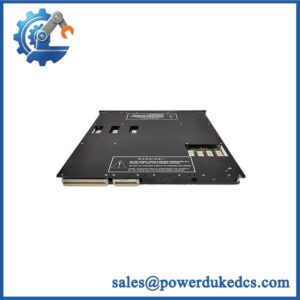
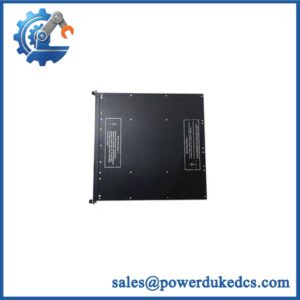
A main-processor failure affects the control architecture at a much deeper level than an individual I/O fault. The TRICONEX 3009 is the main processor module used with Tricon v11.x systems, executing the user control program and system diagnostics while participating in the controller’s fault-tolerant TriBus architecture. Schneider Electric’s security notification specifically identifies Model 3009 as a Triconex Main Processor, and the Tricon v9–v11 planning documentation identifies it as the processor for v11.x systems.
Its documented processor architecture is based on a dual-core QorIQ P1021 running at 800 MHz, with 256 MB DRAM, 2 MB battery-backed SRAM, and 128 MB Flash PROM. The processor also incorporates the clock/calendar function and a battery-backed timekeeping arrangement. TriBus is specified as a 32-bit CRC-protected bus with 32-bit DMA and full isolation; supported Tricon chassis include 8110 and 8100-series platforms, with higher-speed infrastructure available on the 8120E chassis. This places the 3009 firmly in the v11-generation controller architecture rather than the earlier 3006/3007/3008 processor families.
Module 4: Application Scenarios & Field Realities
- Inside a Tricon v11 main chassis, the 3009 serves as the primary processing element responsible for application execution and controller diagnostics. It is installed as a Main Processor rather than as a general-purpose communications card; Tricon documentation separately identifies communication modules such as the TCM and EICM.
- During a brownfield migration from an older Tricon generation, the processor generation must be checked before ordering. The documented compatibility boundary is significant: 3008 is associated with v9.6–10.x, while 3009 is specified for v11.x systems. A similar-looking processor is therefore not a safe substitute merely because it fits the chassis.
- When replacing one processor in a redundant controller arrangement, node identification and firmware revision require attention. Schneider’s technical application guidance instructs engineers replacing a 3009 to set the new processor’s node number to match the removed module and to install the appropriate MP9 firmware group for the target controller version.
- For maintenance on a live SIS cabinet, the processor should be treated as a safety-system asset rather than an ordinary PLC CPU. The system diagnostic environment distinguishes 3009 Main Processors using status indicators such as Pass, Fail, Active, Maint1, and Maint2, which should be recorded before and after the replacement.
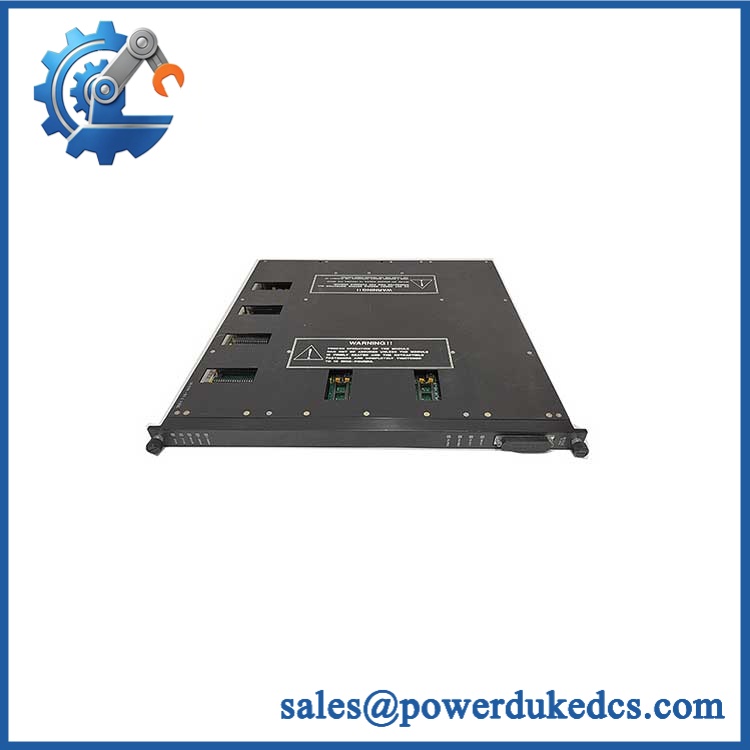
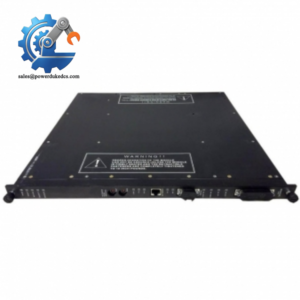
TRICONEX 3009
Module 5: Migration, Compatibility & Installation Traps
Replacement Matrix
Exact 3009 with matching Tricon v11.x configuration: Drop-in Replacement
When the replacement matches the installed hardware type, firmware family, node configuration, and approved Tricon project, the processor can generally be exchanged within the supported Tricon architecture.
3009 with different firmware revision: Software Compatible / Firmware Update Required
The hardware model may match while the installed firmware does not. Schneider’s upgrade documentation specifies different MP9 firmware group builds for particular Tricon v11.x releases, so the target controller version must be established before release.
3008 or earlier Main Processor substituted for 3009: Hardware Modification Required
The processor generations are tied to different Tricon controller versions. The planning guide identifies 3008 with v9.6–10.x and 3009 with v11.x.
⚠️ Field Traps (Watch Out)
Firmware mismatch: A physically correct 3009 can still be unsuitable if its firmware group does not match the target Tricon controller release. Before removal, record the existing MP firmware information and controller version; after installation, verify the approved MP9 firmware group. Schneider’s documented v11.x upgrade procedure provides specific firmware-group mappings.
Node-address mismatch: The replacement processor must retain the correct node identity. Schneider’s application note explicitly instructs engineers installing a new 3009 Main Processor to set its node number equal to the processor being replaced. Failure here can prevent the replacement from integrating correctly with the controller architecture.
Generation mismatch: Do not classify 3009 as a universal Tricon CPU. The published system guide places 3009 in v11.x, while 3008 covers earlier v9.6–10.x systems. Match the processor to the controller generation before procurement.
Module 6: Quality Assurance SOP
Pre-Shipment QA Protocol for TRICONEX 3009
- Step 1 — Identity Verification: Confirm TRICONEX marking, Model 3009 designation, serial information, hardware revision, firmware revision, and any available production-code information.
- Step 2 — OEM Anti-Counterfeit Visual Inspection: Examine the nameplate, barcode, PCB markings where accessible, connectors, front-panel legends, fasteners, module housing, and evidence of unauthorized repair.
- Step 3 — Mechanical Inspection: Check the chassis mating connector, ejector/retractable fasteners, PCB edge interface, enclosure, and mounting hardware for cracks, deformation, corrosion, contamination, or bent contacts.
- Step 4 — Configuration Record: Record the original controller version, processor node number, firmware group/build, and diagnostic status before the test unit is released for field replacement.
- Step 5 — Power-On Self-Test: Install the processor in an approved compatible Tricon test chassis and verify normal initialization with the expected Pass, Active, and other status indications.
- Step 6 — Memory and Processor Diagnostics: Run the approved Tricon diagnostic routine to verify processor initialization, memory integrity, clock/calendar operation, and internal diagnostic status.
- Step 7 — TriBus Verification: Confirm correct processor participation in the Tricon communication architecture and verify that no TriBus diagnostic faults are generated under controlled test conditions.
- Step 8 — Firmware Verification: Confirm the installed firmware group/build corresponds to the target Tricon v11.x controller version and record the exact revision in the QC report.
- Step 9 — Node-Address Verification: Verify the configured node number against the original processor record before final release. This is a mandatory brownfield replacement checkpoint.
- Step 10 — Final QC Record: Record model, serial number, hardware revision, firmware revision, node number, diagnostic results, physical condition, test date, and final QC disposition before packaging.
Technical Verification Note: Schneider Electric’s Tricon v9–v11 planning documentation identifies Model 3009 as the Main Processor for Tricon v11.x systems, with a dual-core 800 MHz QorIQ P1021, 256 MB DRAM, 2 MB battery-backed SRAM, and 128 MB Flash PROM. Schneider’s application guidance also specifies that a replacement 3009 should retain the original node number and use the MP9 firmware group applicable to the target Tricon version.



 Start Chat