

Description
-
Brand Triconex / Invensys
- Full Model Number TRI-GP 3101S2
- System/Series Family Triconex Tri-GP v2/v3
- Core Function Main processor module executing the safety application and coordinating TMR I/O processing
- Top 3 Hardcore Specs Motorola MPC860A 32-bit 50 MHz | 16 MB DRAM | 25 Mbps CRC-protected TriBus
- Stock Status New Surplus — verify Tri-GP version, hardware revision, firmware, and battery condition before shipment
Module 3: Technical Product Introduction
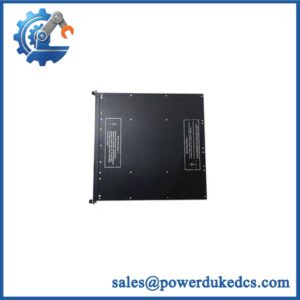
A failed main processor in a Tri-GP controller is not simply a CPU-board problem. The 3101S2 is the Main Processor Module for the Triconex Tri-GP platform, with three processor modules operating as separate channels in parallel. Each processor executes the control application while exchanging data with the other processors through the fault-tolerant TriBus and managing its associated I/O channel through the I/O processor. The Tri-GP v2 documentation explicitly identifies 3101S2 as the Main Processor Module, with 2101S2 as its corresponding baseplate.
At board level, the specification is quite specific: a Motorola MPC860A 32-bit processor at 50 MHz, 16 MB DRAM, 6 MB Flash PROM, 8 KB CRC-protected NVRAM, and a 25 Mbps TriBus using CRC-protected 32-bit data with DMA. The module also provides a 10Base-T TriStation 1131 Ethernet interface and an RS-232/RS-485 Modbus port. Its logic power requirement is approximately 8 W maximum from a redundant 24 VDC architecture.
Module 4: Application Scenarios & Field Realities
- Inside a Tri-GP safety controller, 3101S2 forms one of the three independent processing channels. The three MPs operate in parallel and exchange processor, diagnostic, and control information over TriBus; disagreement is evaluated using the TMR voting architecture.
- For process plants using TriStation 1131, the processor’s dedicated Ethernet interface provides the engineering connection used for application download and diagnostic access. The same MP also exposes a Modbus serial interface that can support direct DCS communication under the configured system architecture.
- Where redundant field I/O is installed, each main processor controls its corresponding I/O channel over a triplicated 2 Mbps HDLC I/O bus. During troubleshooting, a processor diagnostic should therefore be separated from a fault in the associated I/O channel, baseplate, or interconnect assembly.
- During an online spare replacement, the active and hot-spare concepts within the Tri-GP architecture require strict adherence to the approved maintenance procedure. The baseplate architecture allows the redundant processors and I/O paths to continue operating while a failed module is serviced, but the exact replacement sequence must follow the system’s approved maintenance documentation.
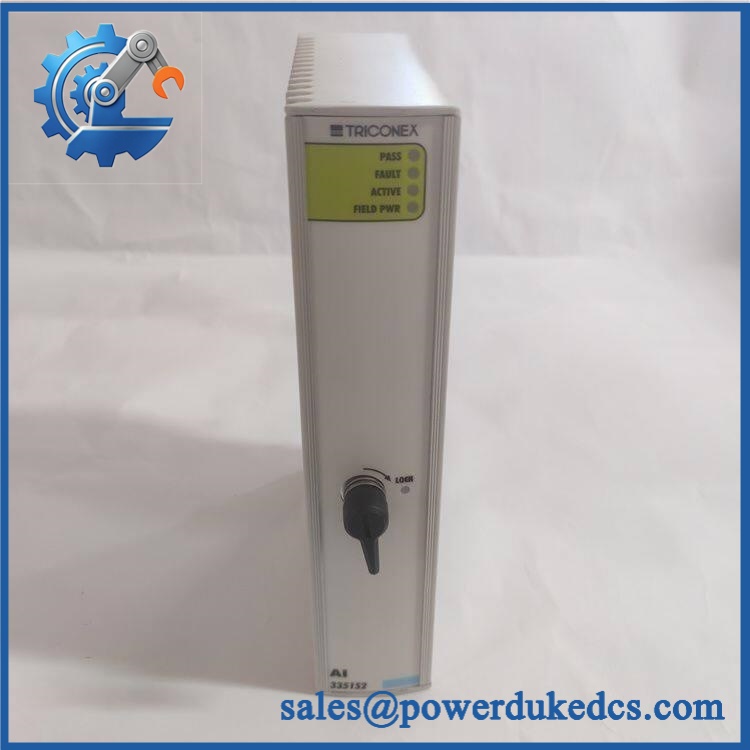
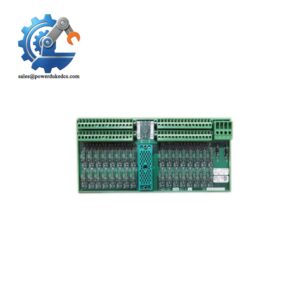
Triconex TRI-GP 3101S2
Module 5: Migration, Compatibility & Installation Traps
Replacement Matrix
| Replacement Status | Engineering Assessment |
|---|---|
| Drop-in Replacement | Yes, for a like-for-like 3101S2 replacement in a compatible Tri-GP v2/v3 installation using the same baseplate, firmware baseline, and approved system configuration. |
| Software Compatible | Generally yes for an exact hardware replacement, but verify Tri-GP firmware, TriStation configuration, retained parameters, and application revision before return to service. |
| Hardware Modification Required | Normally no for an exact 3101S2 replacement. Modification may be required when migrating between Tri-GP generations, processor families, or baseplate architectures. |
⚠️ Field Traps: Watch Out
Do not confuse 3101S2 with 5101S2. The Tri-GP product guide identifies 5101S2 as the Main Processor TriPak, while 3101S2 is the individual Main Processor Module contained in that assembly. The corresponding baseplate is 2101S2.
Verify the exact processor generation. The 3101S2 belongs to the Tri-GP v2/v3 architecture. It should not be treated as interchangeable with similarly numbered processors from other Triconex families simply because the front-panel format appears similar.
Check the battery condition. The MP uses 8 KB battery-backed NVRAM for retained variables, with the technical guide specifying a ½-AA lithium battery and a predicted 15-year life. Battery replacement is a controlled service activity; the guide warns that incorrect replacement can create an explosion hazard.
Confirm redundant 24 VDC power paths. The MP accepts redundant 24 VDC logic power, with a documented operating range of approximately 19.2–30 VDC and an 8 W maximum logic-power requirement. A weak supply or poor baseplate connection can produce processor faults that initially resemble a failed MP.
Module 6: Quality Assurance SOP
A surplus 3101S2 should undergo processor, memory, communication, and TMR-system verification before shipment. A simple power-up test does not establish suitability for a safety controller.
- OEM anti-counterfeit visual inspection: Verify Triconex identification, 3101S2 marking, board revision, connector geometry, front-panel labels, processor marking, memory devices, and manufacturing identifiers.
- Part-number and traceability check: Record the complete 3101S2 designation, hardware revision, serial number, firmware version, date code, and battery identification.
- Mechanical inspection: Examine the backplane connector, ejector mechanism, PCB, heatsink, front-panel interfaces, and mounting hardware for bent contacts, corrosion, contamination, cracks, or unauthorized rework.
- Power-on self-test (POST): Install the MP in an approved Tri-GP test arrangement and verify expected initialization, Pass, Active, Fault, mode, alarm, and communication indications.
- Processor verification: Confirm correct operation of the 50 MHz Motorola MPC860A control processor and associated I/O processor.
- Memory verification: Test the 16 MB DRAM regions used by the control application, SOE data, I/O data, diagnostics, and communication buffers. Verify NVRAM access separately.
- Flash verification: Confirm access to the documented 6 MB CRC-protected Flash PROM used for SX, IOX, and control-application storage.
- TriBus verification: Test the three processor channels through the 25 Mbps TriBus, confirming synchronization, data exchange, CRC integrity, and disagreement diagnostics.
- I/O-bus verification: Confirm processor communication with the associated I/O path over the triplicated 2 Mbps HDLC I/O bus.
- TriStation Ethernet test: Verify the 10Base-T RJ-45 engineering interface using the approved TriStation 1131 environment and confirm stable diagnostic/application communication.
- Modbus verification: Test the RS-232/RS-485 Modbus port with a controlled master device and verify representative register transactions where the installation uses this interface.
- Alarm-contact test: Verify redundant normally closed alarm contacts and confirm expected state changes during controlled fault conditions.
- Battery and retained-memory check: Verify NVRAM retention and document battery condition without performing unauthorized field battery replacement.
- TMR channel verification: Test the processor as part of a three-MP configuration and verify correct voting, synchronization, fault indication, and recovery behavior.
- Communication handshake verification: Confirm TriBus, I/O-bus, Ethernet, and configured Modbus communications through the relevant test environment rather than relying on status LEDs alone.
- Extended-run test: Operate the processor under representative control-program, I/O, communication, and diagnostic loading while monitoring temperature, resets, bus errors, memory faults, and intermittent alarms.
- Final QC record: Document hardware revision, firmware, memory results, battery condition, TriBus test, I/O-bus test, Ethernet/Modbus results, alarm behavior, TMR validation, extended-run observations, traceability, and packaging status.
Technical Identification Note: The supplied TRICONEX TRI-GP 3101S2 designation is consistently associated with the Tri-GP Main Processor Module. The Tri-GP v2 documentation specifies a Motorola MPC860A at 50 MHz, 16 MB DRAM, 6 MB Flash PROM, 8 KB NVRAM, 25 Mbps TriBus, 2 Mbps HDLC I/O bus, redundant 24 VDC power, and approximately 8 W maximum logic power. The same documentation identifies 2101S2 as the associated Main Processor Baseplate and requires three 3101S2 processors for the triplicated controller architecture.



 Start Chat