

Description
- Brand: Triconex / Invensys
- Full Model Number: TX3008 — marketed; official Tricon documentation identifies Model 3008
- System/Series Family: Tricon v9.6 and later
- Core Function: Main processor module executing the Tricon safety application, diagnostics, I/O processing, and communication functions
- Top 3 Hardcore Specs: Motorola MPC860 32-bit 50 MHz processor; 16 MB DRAM; 25 Mbps TriBus
- Memory: 16 MB DRAM + 32 KB battery-backed SRAM + 6 MB Flash PROM
- TriBus: 25 Mbps; 32-bit CRC; 32-bit DMA; fully isolated
- I/O Interface: RS-485, 375 kbaud
- Communication Interface: RS-485, 2 Mbps
- Diagnostic Port: Optically isolated RS-232; 500 VDC isolation
- Logic Power: 10 W
- System Requirement: 3 main processors per Tricon main chassis
- Stock Status: New Surplus or Fully Tested Refurbished; exact board revision to be confirmed
Module 3: Technical Product Introduction
A Tricon main processor is not a conventional single-CPU PLC card. The Model 3008 forms one of the three processor positions in the Tricon TMR architecture, with each processor independently executing the user control program and communicating with its I/O subsystem. Official Tricon documentation states that Model 3008 Main Processors are available for Tricon v9.6 and later systems, and that three MPs are installed in the main chassis. The manufacturer’s published architecture identifies the processor as a Motorola MPC860, 32-bit, 50 MHz device with dedicated I/O and communication processing.
Memory and bus architecture are the figures worth checking when qualifying an old spare. The 3008 provides 16 MB DRAM, 32 KB battery-backed SRAM, and 6 MB Flash PROM; its TriBus operates at 25 Mbps with 32-bit CRC protection and 32-bit DMA. The I/O interface uses isolated RS-485 at 375 kbaud, while the communication interface uses RS-485 at 2 Mbps. A dedicated diagnostic connection is provided through an optically isolated RS-232 interface with 500 VDC isolation. Published logic power is 10 W.
Module 4: Application Scenarios & Field Realities
- Inside a Tricon v9.6 or later main chassis, the 3008 is one element of the three-processor majority-voting architecture. One processor cannot simply be treated as an independent replacement controller; the complete chassis must maintain the required processor population and diagnostic relationships.
- During a processor replacement after a diagnostic fault, the important field check is the module’s PASS, FAULT, and ACTIVE status together with the COM and I/O activity indicators. Tricon documentation states that persistent processor faults are diagnosed and the affected module can be replaced without treating the other processors as failed.
- For legacy process shutdown and critical-control systems, the 3008 carries the user-written control program while also handling diagnostics, I/O data, sequence-of-events information, and communication buffers. That makes memory integrity and TriBus health relevant during bench testing, not merely during the final system checkout.
- When integrating legacy communications, the processor exposes separate diagnostic, communication, and I/O interfaces. The published architecture specifies RS-485 at 2 Mbps for the communication interface and 375 kbaud for the I/O interface, so a generic serial-interface test is not enough to establish correct system operation.
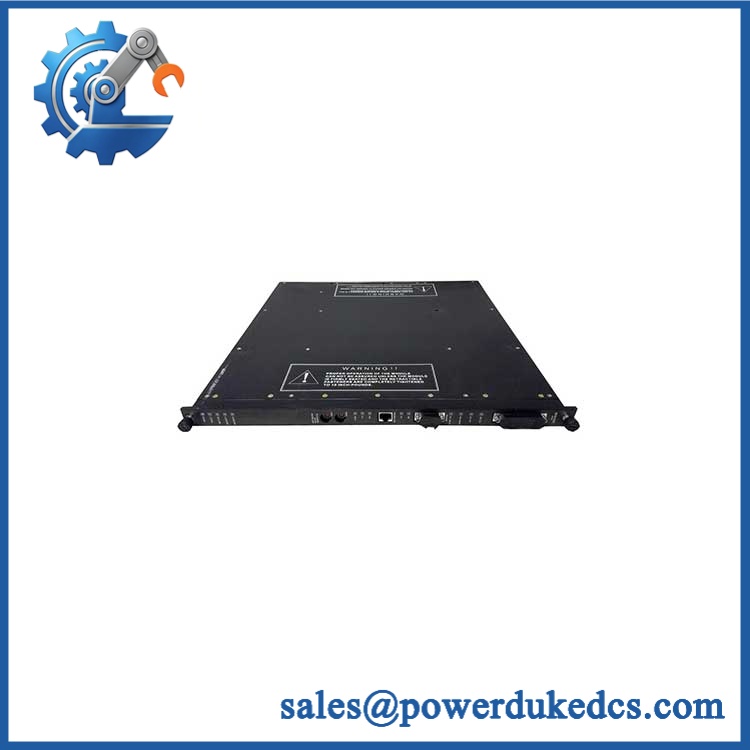
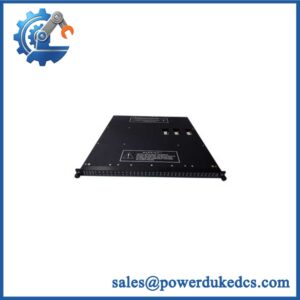
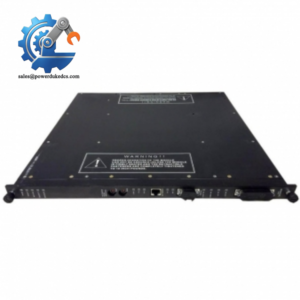
TRICONEX TX3008
Module 5: Migration, Compatibility & Installation Traps
Replacement Matrix
Replacement classification: Drop-in Replacement only when the installed system is a compatible Tricon Model 3008 configuration and the replacement hardware revision, firmware environment, chassis, and system version are appropriate.
Software compatibility: Configuration and firmware verification required. The processor executes the application and participates in the Tricon diagnostic architecture. Preserve the existing control-program and system configuration procedures; do not treat a processor swap like replacement of a passive I/O card. Official documentation limits Model 3008 availability to Tricon v9.6 and later.
Cross-model replacement: Hardware and system-version verification required. Earlier Tricon processor generations are not automatically equivalent. The official product guide distinguishes Model 3008 from the 3006/3007 processor architecture used in earlier Tricon releases.
Field Traps — Watch Out
1. Verify the product identity before purchase. The supplied inventory designation is TX3008, but the official Tricon documentation I could verify identifies the component as Model 3008 Main Processor. A reseller listing uses “TX3008,” while the manufacturer-oriented technical references use “3008.” For asset records, customs descriptions, and replacement orders, compare the physical nameplate and board marking with the installed unit rather than relying on the TX prefix alone.
2. Three processors are required in the main chassis. Do not evaluate a replacement as an isolated CPU. The Tricon architecture calls for three Model 3008 MPs in the main chassis, with independent execution and hardware majority voting. A processor that passes a standalone power test can still be unsuitable if its revision or system configuration does not match the other MPs.
3. Protect the backed-up SRAM data path. The 32 KB SRAM is battery-backed. During long storage, battery condition and retention status should be checked before the processor is put into service. This is especially important for surplus units whose storage history is unknown.
4. Do not infer modern specifications from the part number. A current reseller page claims figures such as 333 MHz processing and 256 MB RAM for “TX3008,” but those specifications conflict directly with the Tricon technical documentation for Model 3008, which specifies a 50 MHz Motorola MPC860 and 16 MB DRAM. The official 3008 data should take precedence for engineering qualification.
Module 6: Quality Assurance SOP
Pre-Shipment Inspection Protocol for TRICONEX TX3008 / Model 3008
- OEM identity inspection: Record the complete board marking, including 3008 or TX3008 designation, hardware revision, serial number, manufacturer label, and any additional assembly number.
- Model verification: Confirm that the hardware corresponds to the Tricon Model 3008 architecture rather than a different Tricon processor generation. Official documentation identifies Model 3008 for Tricon v9.6 and later.
- Mechanical inspection: Examine the PCB, front-panel indicators, card-edge/backplane contacts, mounting hardware, connectors, and enclosure surfaces for corrosion, contamination, deformation, cracked components, or unauthorized repair.
- Battery inspection: Verify the condition and installation of the battery supporting the 32 KB SRAM; record battery age or traceability where available.
- Power-on self-test (POST): Install the processor in a compatible Tricon test chassis and verify startup diagnostics, including the PASS, FAULT, and ACTIVE indicators.
- Processor diagnostic verification: Confirm that the module completes its fixed-program memory, static RAM, TriBus, TriClock, I/O-communication-processor, and handshake diagnostics without persistent faults.
- TriBus verification: Confirm communication with the companion processors over the 25 Mbps TriBus and verify expected CRC-protected communication behavior under the applicable test procedure.
- I/O communication test: Verify the processor’s RS-485 I/O interface at the documented 375 kbaud operating point using a compatible Tricon test environment.
- Communication-bus test: Verify the RS-485 communication interface at the documented 2 Mbps rate and confirm stable exchange with the applicable communication subsystem.
- Diagnostic-port test: Exercise the isolated RS-232 diagnostic interface and verify expected communication through the designated diagnostic connector.
- Memory verification: Exercise DRAM, backed-up SRAM, and Flash-related diagnostics using the appropriate Tricon engineering/test tools rather than attempting generic memory checks alone.
- Thermal observation: Operate the processor under representative diagnostic and communication loading while monitoring for abnormal heat generation, intermittent resets, bus errors, or unstable processor status.
- Three-MP system test: Where the test bench permits, operate three processors together and verify correct majority-voting, synchronization, and diagnostic behavior before releasing the spare for critical service.
- Final QC record: Record exact board designation, revision, serial number, battery condition, POST result, TriBus result, I/O-bus result, communication test result, diagnostic-port result, test duration, and inspector approval.
- ESD-controlled packaging: Protect the processor and backplane interface in an ESD-safe package with mechanical cushioning and moisture protection.
Procurement note: The technically defensible identification is Triconex/Invenys Model 3008 Main Processor for Tricon v9.6 and later. The submitted TX3008 designation appears in reseller inventory, but the official Tricon documentation I could verify uses 3008, and it specifies 50 MHz MPC860, 16 MB DRAM, 32 KB battery-backed SRAM, 6 MB Flash PROM, 25 Mbps TriBus, 375 kbaud I/O RS-485, 2 Mbps communication RS-485, and 10 W logic power. Those figures should be used for engineering and purchasing until the physical nameplate confirms otherwise.



 Start Chat