

Description
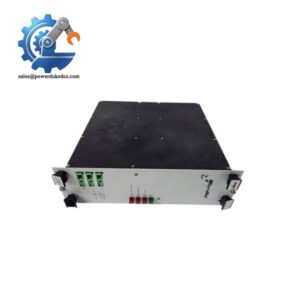
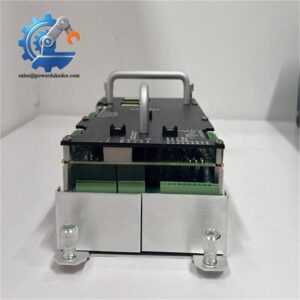
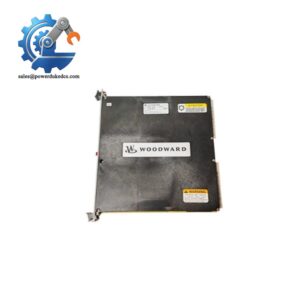
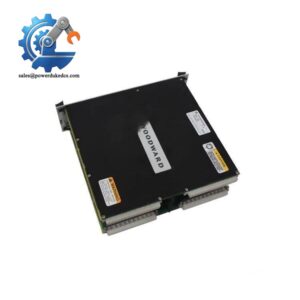
- Model & Brand: Woodward 1751-6058
- Product Type: 4-channel MPU transformer isolation module
- System Family: MicroNet Simplex / MicroNet Plus and associated turbine-control architectures
- Primary Function: Isolates four magnetic-pickup speed signals between field devices and the control/protection system
- Internal Components: 4 × 1691-1082 isolation transformers
- Board Dimensions: Approx. 25 × 245 × 261 mm reported by a current supplier record; verify against the actual unit before cabinet or freight planning
- Estimated Shipping Weight: Approx. 1.2–1.8 kg packed; supplier records vary, so confirm actual packed weight before freight quotation
- What’s in the Box: 1751-6058 module; ESD shielding; rigid cushioning; mounting/accessory hardware only when specifically included
- Field Signal: Magnetic pickup unit (MPU) speed signal
- Typical Host Interface: Analog Input Field Terminal Module / compatible Woodward speed-input architecture
- Hazardous-Area Handling: OEM documentation includes Class I, Division 2 / Zone 2 wiring precautions
- Storage Priority: ESD protection, low-condensation environment, protected transformer and connector interfaces
Woodward’s MicroNet Simplex & MicroNet Plus Manual 26166V2 identifies 1751-6058 as the 4-Channel Transformer Isolation Module and states that each module contains four 1691-1082 isolation transformers.
Product Introduction
Speed-signal integrity is often the first casualty when MPU wiring shares a noisy turbine cabinet. Woodward 1751-6058 addresses that interface problem with four independent transformer-isolated channels for magnetic-pickup signals. The module is used with the Analog Input FTM to provide MPU speed signals to the Digital Speed Sensor Module while also isolating the customer overspeed-protection devices from the control-system circuitry. Woodward’s manual explicitly identifies this function and the four-transformer construction.
For maintenance teams, 1751-6058 is a physical signal-interface component, not a programmable I/O processor. The correct procurement decision therefore depends on transformer-module identity, channel count, host FTM architecture, wiring method, and hazardous-location requirements. Woodward also warns that the module must be wired using the applicable Class I, Division 2 methods and that component substitution can affect suitability for Class I, Division 2 or Zone 2 applications (a compliance point that should remain in the asset record).
Core Technical Specifications
| Parameter | Value |
|---|---|
| Manufacturer | Woodward |
| Part Number | 1751-6058 |
| Product Type | 4-Channel MPU Transformer Isolation Module |
| Application | Turbine speed-input signal isolation |
| Number of Channels | 4 |
| Transformer Count | 4 × 1691-1082 |
| Signal Source | Magnetic Pickup Unit (MPU) |
| Primary Host Interface | Analog Input FTM / Digital Speed Sensor architecture |
| Isolation Method | Transformer isolation |
| Memory | None identified |
| Firmware | None identified |
| Processor | None |
| Power Requirement | Passive transformer interface; no standalone firmware-controlled power specification established |
| Physical Dimensions | Approx. 25 × 245 × 261 mm reported by supplier data; verify actual assembly |
| Shipping Weight | Supplier-dependent; verify before freight calculation |
| Hazardous Location | Class I, Division 2 / Zone 2 wiring provisions referenced by Woodward |
| Installation | MicroNet control cabinet / approved Woodward FTM architecture |
| Related Protection Function | Overspeed protection signal isolation |
| Environmental Data | Verify exact host-system installation specification |
Woodward’s manual is the authoritative source for the four-channel transformer architecture and hazardous-location installation warning. The dimensional and shipping figures above are procurement estimates and should not replace the actual Woodward mechanical drawing.
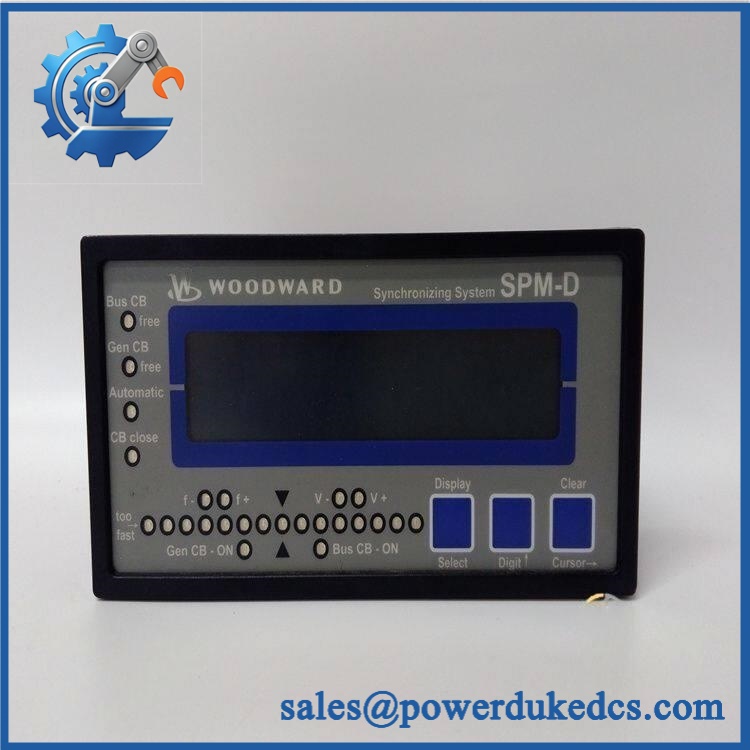
Woodward 1751-6058
🚨 Global Compliance & Industry Certifications
- CE Mark: Do not claim independent CE marking for the 1751-6058 unless the exact hardware and assembly documentation supports it. The relevant conformity assessment may apply to the complete Woodward control system.
- UL/cUL: Do not claim independent UL/cUL listing without revision-specific manufacturer evidence.
- ATEX / IECEx: Do not advertise ATEX or IECEx certification for the bare module unless the exact part and installation assembly are covered by an OEM certificate.
- Class I, Division 2: Relevant installation classification. Woodward’s manual expressly requires Class I, Division 2 wiring methods and warns that component substitution may impair suitability for Class I, Division 2 or Zone 2 applications.
- Zone 2: Relevant where the complete installation is approved for that hazardous-location classification; the board alone should not be treated as proof of Zone 2 certification.
- Marine Approvals: No DNV, ABS, or Lloyd’s Register approval was established for the individual 1751-6058 from the records reviewed.
- EMC: Evaluate the full MicroNet cabinet and field wiring arrangement rather than assigning a standalone EMC claim to the transformer module.
Why this matters: An MPU transformer interface may sit directly in the signal path used for speed measurement and overspeed protection. In a hazardous location, using a substitute transformer or altered wiring scheme can create both a protection-system problem and a certification issue.
Verify specific lot certifications with OEM.
🚨 Long-Term Storage & Asset Preservation Guide
Keep the module in ESD shielding and rigid packaging. The transformer assembly and connector interfaces should remain protected from dust, moisture, impact, and uncontrolled handling. Do not stack heavy spares on the module.
Control humidity below 60% RH where practical. No condensation should be permitted. Transformer isolation itself is not a reason to ignore storage moisture; connector oxidation and PCB contamination can still produce intermittent signal faults after installation.
Do not disturb the transformer assembly during warehouse inspection. Woodward specifies four 1691-1082 isolation transformers inside each module. Keep the original labels and transformer identification intact, and record any visible revision or assembly markings in the asset file.
After long storage or cold transportation, allow the sealed package to stabilize at room temperature before opening. Inspect transformer bodies, solder joints, terminal interfaces, and connector contacts before applying the unit to a live speed-input circuit.
Physical Installation Prerequisites
- Host Architecture: Install only within the Woodward control architecture for which 1751-6058 is specified.
- FTM Compatibility: Confirm the associated Analog Input FTM and Digital Speed Sensor path before installation.
- Power Isolation: Treat the module as a controlled maintenance item; isolate the cabinet before accessing wiring unless the approved installation procedure explicitly allows otherwise.
- Hazardous Location: Woodward requires applicable Class I, Division 2 wiring methods; comply with the authority having jurisdiction.
- No Improvised Substitution: Woodward specifically warns that component substitution may impair Class I, Division 2 or Zone 2 suitability.
- MPU Wiring: Verify the four individual speed-sensor circuits against the approved drawing before disconnecting anything.
- Shielding: Preserve the original cable shielding and grounding arrangement; do not create additional ground paths without an engineering basis.
- Clearance: Keep enough cabinet space around the module for connector access and safe cable routing. The actual cabinet drawing takes precedence over a generic clearance value.
- Cooling: Preserve the host cabinet’s designed airflow path; the transformer module should not be buried beneath cable bundles.
- Grounding: Follow the complete MicroNet cabinet grounding arrangement.
- ESD: Use a grounded wrist strap and ESD-safe work surface during handling.
- Final Verification: Confirm all four MPU channels are mapped correctly before returning speed monitoring or overspeed protection to service.
Buyer’s FAQ
Q1. What HS Tariff Code should be used for Woodward 1751-6058?
Do not assign a final HS code from the part number alone. This is a dedicated transformer isolation module used within industrial turbine-control equipment, and classification can vary according to how the importing jurisdiction treats transformer assemblies, control-system parts, and complete electrical apparatus. Have the customs broker review the technical function, invoice description, and destination tariff schedule.
Q2. What Country of Origin documentation should accompany the shipment?
Use the actual manufacturing origin supported by supplier or manufacturer records. A shipment departing from the United States does not by itself establish COO. For audit retention, keep the commercial invoice, packing list, COO statement or certificate where applicable, exact part-number photograph, and serial/lot information.
Q3. Can 1751-6058 be hot-swapped?
Do not assume that it can. Woodward’s manual places this module inside a safety-relevant signal path and explicitly gives power-off and hazardous-location precautions for electrical connection and disconnection. Follow the approved MicroNet maintenance procedure before removing or reconnecting it.
Q4. Does a New Original 1751-6058 include the latest firmware pre-loaded?
No firmware should be expected. The 1751-6058 is a four-channel transformer isolation module built around four 1691-1082 transformers, not a programmable CPU or digital controller. The relevant acceptance criteria are transformer-channel integrity, correct wiring, isolation performance, and compatibility with the host FTM.
Q5. What warranty, shipping, and compliance controls should be required?
The quotation should state the exact 1751-6058 part number, physical condition, revision or assembly identifiers where available, warranty period, return procedure, and pre-shipment inspection scope. Because Woodward documents Class I, Division 2/Zone 2 installation implications, retain the applicable certification evidence and do not accept an undocumented substitute component.


 Start Chat