

Description
- Brand: Woodward
- Full Model Number: 9907-186
- Lifecycle Status: Legacy; current production status not independently confirmed
- Core Function: GS10 generator load-sharing module
- Top 3 Technical Specs: 24 VDC supply; ±3 VDC speed-setting input; 0.5–4.5 VDC analog or PWM signal compatibility
- Stock & Condition: New Surplus / Tested Refurbished; physical stock confirmation required; emergency dispatch subject to cutoff
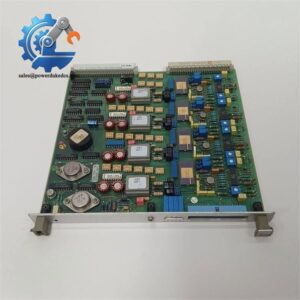
Current supplier references consistently identify 9907-186 as a Woodward GS10 Load Sharing Module, with applications involving generator load distribution and both isochronous and droop operating modes. Published supplier data also associates the unit with a 24 VDC supply and analog/PWM signal inputs.
Module 3: Obsolescence & Supply Chain Deep Dive
A failed 9907-186 can interrupt coordinated generator operation because the module participates in load-sharing control between generator sets. Current technical listings identify it as a GS10 load-sharing module supporting isochronous and droop modes, with compatible analog and PWM signal inputs. The part remains listed by multiple independent suppliers, but the available evidence does not establish a current OEM production status. For a plant carrying legacy generator controls, that distinction matters: residual inventory can disappear even while the installed control system remains fully serviceable.
For TCO, replacing the 9907-186 while retaining the existing GS10 control arrangement is typically less disruptive than changing the complete generator control package. Existing governor interfaces, load-sharing wiring, operating parameters, and commissioning procedures can remain largely intact when the replacement matches the installed configuration. The economic benefit comes from avoiding generator downtime, synchronization work, rewiring, and control-system validation. —One procurement note is important here: Woodward itself instructs users to match the part number and revision on the control nameplate when obtaining configuration files, so a revision mismatch should be treated as an engineering issue before installation.
Module 4: Compatibility & Replacement Matrix (Crucial for Buyers)
| Purchase / Migration Case | Compatibility Assessment | Typical Switch Effort |
|---|---|---|
| Replace 9907-186 with the identical 9907-186 configuration | Drop-in Replacement | 1–3 hours, subject to generator shutdown and commissioning procedure |
| Replace with another 9907-186 revision | Software Compatible — Revision Verification Required | 2–4 hours |
| Substitute another GS-series load-sharing module | Software Compatible / Engineering Review Required | 2–8 hours |
| Change from analog to a different control-signal architecture | Hardware Modification | 4–16+ hours |
| Migrate the load-sharing system to a modern generator controller | Hardware Modification + Configuration Conversion | Several days to weeks |
The 9907-186 is consistently described as a GS10 load-sharing module, with support for isochronous and droop load-sharing and analog or PWM signal inputs. Supplier records differ on some detailed electrical values, so procurement should use the exact nameplate and approved Woodward documentation for final acceptance.
Field Traps — Watch Out
Configuration Revision: Woodward states that control configuration files are associated with the unit’s part number and revision, and directs users to cross-check the control nameplate before installing configuration files. Do not approve a replacement solely from the base number 9907-186.
Signal Type: Verify whether the installed application uses the appropriate analog or PWM load-sharing input arrangement. Current supplier specifications identify 0.5–4.5 VDC or PWM signal compatibility and a ±3 VDC speed-setting input; those interfaces should be matched to the existing generator-control wiring.
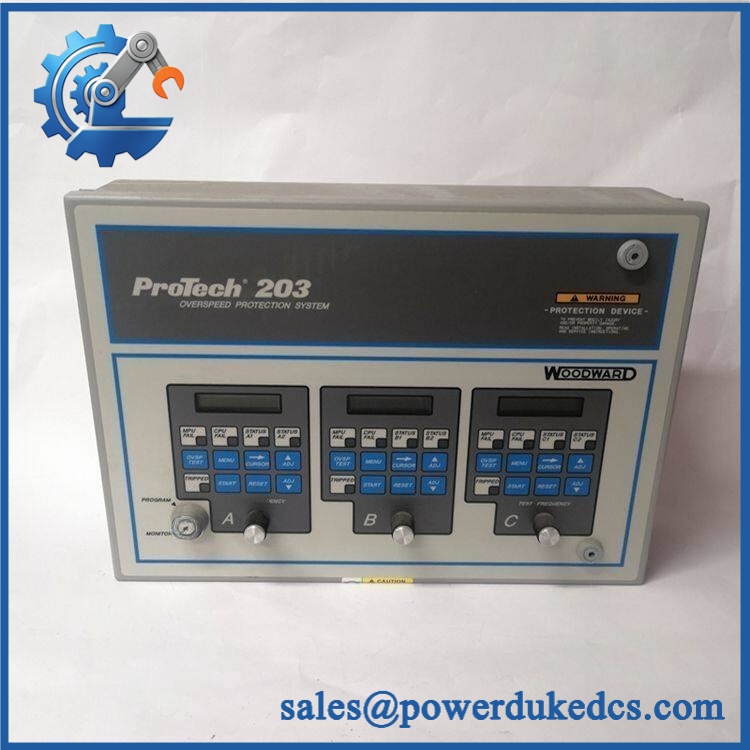
Woodward 9907-186
Module 5: Quality Assurance & Testing SOP
1. Part Identity Verification
Record the complete 9907-186 part number, hardware revision, serial number, manufacturer markings, and available date or lot information. Photograph the nameplate before testing.
2. OEM Anti-Counterfeit Visual Inspection
Inspect labels, terminal blocks, PCB markings, connector geometry, fasteners, enclosure construction, and manufacturer identification. Compare physical details against verified Woodward GS10 hardware.
3. Mechanical Inspection
Check mounting hardware, terminals, connectors, PCB condition, component seating, insulation, and enclosure integrity. Reject units with corrosion, impact damage, overheated components, cracked solder joints, or unauthorized modifications.
4. Electrical Pre-Test
Verify grounding continuity, supply-path integrity, connector condition, and unintended shorts. Confirm the power-input arrangement before energization.
5. Power-On Self-Test (POST)
Apply a controlled 24 VDC supply where this matches the verified unit specification. Check startup behavior, status indications, abnormal-current conditions, and stable internal operation. Current independent specifications identify 24 VDC as the module supply.
6. Load-Sharing Input Test
Inject controlled representative analog or PWM signals according to the installed configuration. Verify correct signal recognition and stable module response.
7. Speed-Setting Input Test
Where supported by the test setup, verify the specified speed-setting input range and response. Current supplier references identify a ±3 VDC speed-setting input for the 9907-186 configuration.
8. Load-Sharing Mode Verification
Test representative isochronous and droop operating modes on an approved generator-control simulator or controlled test bench. Confirm correct response to changing load-sharing conditions without connecting an unverified unit directly to a live generation bus.
9. Output Signal Verification
Measure the applicable load signal and related control outputs under defined test conditions. Record commanded versus measured values and check for drift or unstable response.
10. Extended Burn-In
Operate the module under representative signal and power conditions. Monitor supply stability, signal response, temperature rise, intermittent faults, and unexpected resets.
11. Final QC Record
Document part number, revision, serial number, input type, measured electrical values, operating-mode results, burn-in performance, inspection findings, and final QC disposition. Package using ESD-safe protection.
Module 6: Procurement & Lifecycle FAQ
Q1. Is Woodward 9907-186 genuinely in stock, and what is the cutoff for emergency shipping?
Current independent supplier pages continue to show 9907-186 as available, including listings marked in stock. However, these are supplier inventory claims rather than OEM-confirmed real-time stock. For an emergency requirement, require physical-stock confirmation, warehouse location, and the same-day dispatch cutoff before releasing the PO.
Q2. How do you guarantee the condition and authenticity of obsolete or surplus 9907-186 units?
Require exact part-number and revision verification, nameplate inspection, PCB and connector checks, controlled 24 VDC power-up, analog/PWM signal testing, load-sharing mode verification, output measurement, and documented burn-in. A functional test record should accompany the unit.
Q3. Are there firmware or configuration compatibility issues I should warn my engineers about before issuing the PO?
Yes. The most important control is part-number and revision matching. Woodward explicitly states that configuration-file selection depends on the part number and revision shown on the control nameplate. Engineering should therefore compare the proposed spare against the installed unit before applying any configuration.
Q4. Can another or GS-series module replace 9907-186?
Not automatically. Similar Woodward modules can differ in signal interfaces, application configuration, and load-sharing functions. The replacement should be checked against the installed generator controller, governor interface, signal type, and operating mode before approval. Current references specifically associate 9907-186 with load-sharing applications.
Q5. What warranty and return terms should procurement require?
Specify a written functional warranty and RMA procedure covering power-up, signal recognition, load-sharing response, output behavior, and stable operation under the agreed test conditions. The PO should also define exclusions for incorrect wiring, incompatible configuration, improper supply voltage, and generator-side faults.

 Start Chat