

Description
- Model: 3BHL000986P0006
- Brand: ABB
- Series: ABB power electronics / drive components
- Core Function: Stores and filters DC energy in power-electronic circuits
- Type: High-voltage DC capacitor
- Key Specs: 4 µF capacitance; 2,800 VDC rated voltage; 70 A current rating
- Maximum Voltage: 4,500 V
- Condition: New condition reported by current supplier listings
Current product records identify this reference as an ABB capacitor, not a control or communication module. Some third-party pages incorrectly describe it as an I/O, analog-output, or control board, so those descriptions should not be used for purchasing decisions.
Product Introduction
ABB 3BHL000986P0006 is a high-voltage DC capacitor used in ABB power-electronics equipment. Available component records identify it as a 4 µF, 2,800 VDC capacitor with a 70 A current rating, with a maximum voltage listed as 4,500 V.
For maintenance teams, this is not a casual like-for-like component. Voltage rating, capacitance, current capability, physical dimensions, terminal arrangement, and the original equipment circuit all need to match. One supplier lists approximately 0.1 kg and another source lists 0.28 kg, so use the actual shipping record for logistics rather than assuming either value is the official net weight.
Key Technical Specifications
| Parameter | Specification |
|---|---|
| Manufacturer | ABB |
| Part Number | 3BHL000986P0006 |
| Product Type | High-voltage DC capacitor |
| Capacitance | 4 µF |
| Rated DC Voltage | 2,800 VDC |
| Maximum Voltage | 4,500 V |
| Current Rating | 70 A |
| Application | Power electronics / drive equipment |
| Country of Origin | Switzerland, according to supplier records |
| Dimensions | Approx. 2.2 × 12.4 × 12.6 cm, supplier-reported |
| Reported Weight | Approx. 0.1 kg; other listing reports 0.28 kg |
| Mounting | Confirm from equipment drawing |
| Terminal Configuration | Confirm from actual unit |
| Operating Temperature | Not verified from a primary ABB datasheet |
| Storage Temperature | Not verified |
| Lifecycle | Legacy / specialized spare; confirm availability |
| Condition | New condition reported by current listings |
| Warranty | Supplier-specific; confirm before purchase |
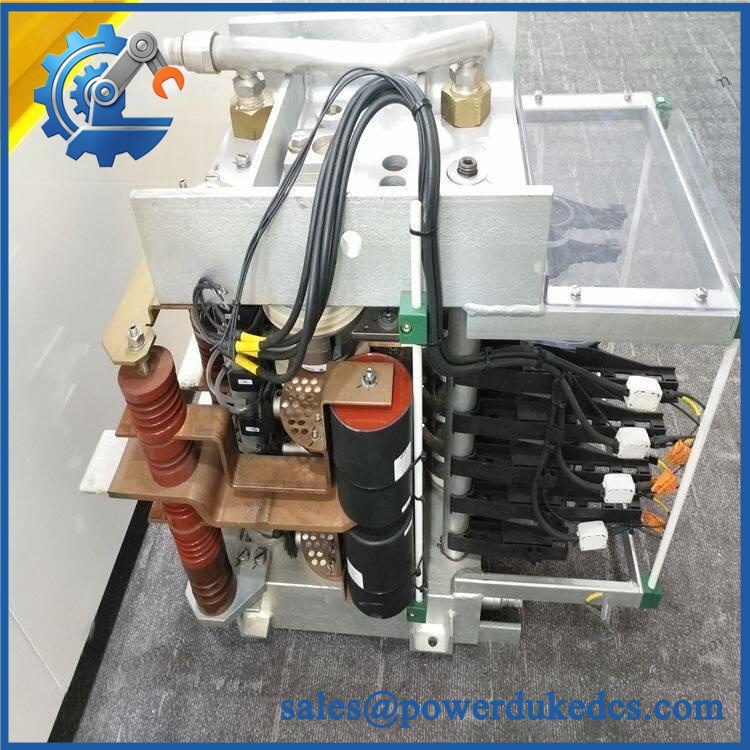
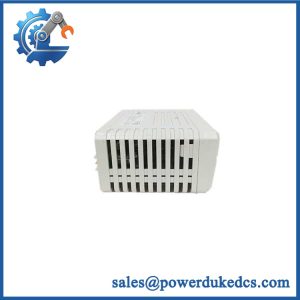
ABB 3BHL000986P0006
The strongest available product evidence describes the part specifically as a 4 µF / 2,800 VDC / 70 A capacitor.
Do not substitute the conflicting online claims that call this an analog-output board, IGBT module, or communication module. The available evidence is inconsistent, and the capacitor identification is substantially better supported.
Installation & Configuration Guide
Estimated replacement time: 45–90 minutes
⚠️ High-voltage capacitor warning: A capacitor can retain dangerous electrical energy after the equipment has been switched off. Only qualified electrical personnel should perform replacement work.
Stage 1 — Pre-Installation: 15 minutes
- Notify production about the planned shutdown.
- Put the equipment into a safe state.
- Disconnect and isolate all power sources.
- Apply the required lockout/tagout procedure.
- Wait for the discharge period specified by the equipment manufacturer.
- Verify the DC bus is discharged with an appropriate rated meter.
- Wear suitable electrical PPE and use ESD protection when handling the component.
Prepare:
- Properly rated multimeter
- Insulated tools
- ESD wrist strap
- Safety gloves/PPE appropriate to the equipment
- Cable/terminal labels
- Camera
- Original drive schematic
- Capacitor specification
- Lockout/tagout equipment
Do not rely on elapsed time alone to prove the capacitor is discharged.
Stage 2 — Remove the Existing Capacitor: 15–20 minutes
- Confirm isolation from all energy sources.
- Verify the DC bus voltage is within the safe limit specified by the equipment manual.
- Photograph the original capacitor label.
- Photograph terminal polarity and cable arrangement.
- Mark each connection.
- Remove the mechanical retaining hardware.
- Disconnect the terminals using the correct insulated tools.
- Remove the capacitor without damaging adjacent components.
Check for:
- Swelling
- Leakage
- Cracks
- Terminal discoloration
- Heat damage
- Corrosion
- Loose mounting hardware
⚠️ Never short capacitor terminals with a screwdriver to discharge the component.
Stage 3 — Install the Replacement: 15–20 minutes
- Verify 3BHL000986P0006 against the original part.
- Confirm capacitance: 4 µF.
- Confirm rated voltage: 2,800 VDC.
- Confirm polarity and terminal arrangement.
- Check physical dimensions and mounting.
- Install the capacitor according to the equipment drawing.
- Secure the mechanical fixing.
- Reconnect the electrical terminals.
- Verify terminal tightness using the equipment manufacturer’s specified torque.
The electrical values are not optional details here. A capacitor with the wrong voltage or capacitance can affect the DC-link circuit and may create a serious equipment fault.
Stage 4 — Re-Energization & Testing: 15–30 minutes
Before power-on:
- Confirm correct polarity.
- Confirm all terminals are secure.
- Inspect for loose hardware.
- Verify the DC bus circuit against the schematic.
- Confirm the replacement capacitor is physically secure.
- Remove tools from the cabinet.
Then:
- Restore power according to the approved drive procedure.
- Monitor DC-link charging.
- Check for abnormal current or alarm conditions.
- Observe capacitor and adjacent components for abnormal heating.
- Run the equipment at controlled load.
- Record the measured operating values.
Do not immediately apply full production load after replacement.
A staged startup provides more useful diagnostic information if another component in the DC-link circuit is also damaged.
Quality Inspection SOP
1. Incoming Inspection
Verify:
- ABB label
- Part number: 3BHL000986P0006
- Manufacturer marking
- Serial/batch information, where present
- Capacitance marking
- Voltage marking
- Terminal condition
- Housing condition
- Leakage or swelling
- Packaging condition
Photograph the actual capacitor before storage.
2. Electrical Inspection
Before installation, verify the component against the approved specification.
Check, where appropriate:
- Capacitance
- Insulation condition
- Terminal condition
- Polarity marking
- Physical integrity
Use test equipment suitable for high-voltage capacitor components.
Do not apply a generic 500 V insulation test simply because it appears in a standard spare-parts SOP. The correct test method depends on the capacitor construction and ABB equipment requirements.
3. Live System Test
After installation:
- Verify DC-link charging.
- Check drive diagnostics.
- Monitor abnormal current.
- Check operating temperature.
- Confirm normal drive operation.
- Monitor the system under controlled load.
A Test Report should include:
- Part number
- Serial/batch number
- Equipment ID
- Test date
- Technician
- Measured values
- Final result
4. Configuration Verification
This component does not have a conventional firmware configuration like a PLC CPU.
The relevant checks are electrical and mechanical:
- Capacitance
- Voltage rating
- Polarity
- Terminal arrangement
- Mounting
- Circuit position
5. Final QC and Packaging
For unused inventory:
- Protect terminals.
- Use suitable protective packaging.
- Prevent mechanical shock.
- Keep the component dry.
- Record the part number and stock date.
For high-voltage capacitors, terminal protection during storage is especially important.
Spare Inventory Recommendation
This is a good example of where buffer stock should be based on failure impact, not consumption alone.
| Inventory Situation | Suggested Policy |
|---|---|
| Critical drive with long downtime cost | Min 1 / Max 1 |
| Several identical drives | Min 1 / Max 2 |
| High failure history | Min 1 / Max 2 |
| Low-use application | Min 0 / Max 1 |
| Long supplier lead time | Keep 1 tested spare |
| EOL concern | Review last-time-buy |
| Multiple plants | Centralize common spare stock |
| Unknown storage history | Inspect before critical use |
A capacitor may have low annual consumption but still deserve one spare if failure stops a major drive.
The carrying cost of one small component is usually easier to justify than an emergency shutdown, expedited freight, or an extended lead time for a specialized 2,800 VDC part.
Technical Replacement Risks
1. Voltage Rating Mismatch
This is the first check.
The available product data specifies 2,800 VDC rated voltage and 4,500 V maximum voltage.
Never replace it with a capacitor based only on capacitance.
2. Capacitance Mismatch
The specified capacitance is 4 µF.
Even a small-looking capacitance difference can change the electrical behavior of a power-electronic circuit.
Check the complete circuit design before substitution.
3. Current Rating
The available listing specifies 70 A.
Do not interpret this as permission to operate the component at 70 A continuously under every installation condition. The actual allowable current depends on circuit design, ripple conditions, temperature, and the manufacturer’s specifications.
4. Wrong Component Identification
This part has a surprisingly messy online footprint.
One supplier identifies it as a capacitor, while other websites incorrectly label the same part number as an analog board, IGBT module, or control module.
Trust the physical ABB marking and the equipment BOM over a generic supplier category.
5. Stored-Energy Hazard
A capacitor can retain dangerous energy.
Before touching terminals:
Isolate → lock out → wait according to procedure → measure → verify zero/safe voltage.
Do not skip the measurement step.
FAQ
1. What is ABB 3BHL000986P0006?
Available product records identify it as an ABB 4 µF high-voltage DC capacitor, rated at 2,800 VDC with a 70 A current rating.
It should not be confused with similarly labeled ABB control boards appearing on some third-party websites.
2. What are the main electrical specifications?
The strongest available listing gives:
| Parameter | Value |
|---|---|
| Capacitance | 4 µF |
| Rated DC voltage | 2,800 VDC |
| Maximum voltage | 4,500 V |
| Current rating | 70 A |
These values should be checked against the original equipment documentation before installation.
3. Can I replace it with another 4 µF capacitor?
Not automatically.
You need to match more than capacitance:
- Rated voltage
- Current/ripple capability
- Physical dimensions
- Terminal configuration
- Polarity
- Temperature characteristics
- Mechanical mounting
- Approved application
A generic 4 µF capacitor is not necessarily an acceptable substitute.
4. Is 3BHL000986P0006 a control board?
No reliable evidence supports treating it as a generic control board. Current product records identify it as a capacitor, while several third-party pages incorrectly categorize the reference as an analog board or other module.
For purchasing, use high-voltage DC capacitor as the product category unless the actual ABB documentation for your equipment states otherwise.
5. Is ABB 3BHL000986P0006 still available?
Current supplier listings show stock or availability, but inventory varies by supplier. One listing currently reports 187 units, while another lists the item as available for backorder.
For critical inventory, confirm actual physical stock rather than relying on a web quantity.
6. Is the capacitor New Original?
Some current supplier records list the item as New.
For procurement, ask for:
- Actual product photos
- ABB label
- Batch/serial information
- Country of origin
- Test or inspection record
- Warranty
- Packing photos
If the supplier offers used or refurbished stock, it should be stated clearly on the quotation.
7. What should I keep in stock?
For a critical ABB drive or power-electronics system, 1 tested spare is a sensible starting point.
Do not build a large stock position without checking equipment lifecycle. For a specialized component, a controlled last-time-buy can make sense when the host drive is expected to remain in service for years.


 Start Chat