

Description
- Model: PM858
- Part Number: 3BSE093350R1
- Brand: ABB
- Series: AC 800M
- Core Function: Executes control logic for AC 800M systems
- Type: Processor / CPU module
- Key Specs: MPC866 processor; 33 MHz clock; 16 MB RAM; CPU redundancy support
- Condition: New Original (New Surplus), non-refurbished
Part-number note: ABB’s current official hardware selector identifies the standard PM858K01 as 3BSE082895R1, while third-party listings identify 3BSE093350R1 as PM858-C. The technical data below uses ABB’s official PM858 platform data where applicable. The exact suffix and package should be confirmed from the nameplate before ordering.
Product Introduction
ABB PM858 is an AC 800M processor unit built around an MPC866 CPU. It serves as the control-system processing core, executing application logic and communicating with I/O and control-network equipment. ABB specifies 33 MHz processing, 16 MB memory, and CPU redundancy support for the PM858 platform.
For maintenance teams, the important detail is the exact ordering code. The supplied 3BSE093350R1 reference is listed by third-party sources as PM858-C, while ABB’s current standard PM858K01 reference is 3BSE082895R1. That distinction matters when replacing an installed controller—do not order from the “” name alone.
Key Technical Specifications
| Parameter | Specification |
|---|---|
| Manufacturer | ABB |
| Model | |
| Supplied Part Number | 3BSE093350R1 |
| Product Family | AC 800M |
| Product Type | Processor Unit / CPU |
| Processor | MPC866 |
| Clock Frequency | 33 MHz |
| Memory | 16 MB RAM |
| RAM Available for Application | 7.147 MB |
| Flash PROM | 4 MB |
| Performance | 0.36 ms / 1,000 Boolean operations |
| CPU Redundancy | Supported |
| Redundancy Switchover | Max. 10 ms |
| Power Supply | 24 V DC, 19.2–30 V DC |
| Power Consumption | 210 mA typical / 360 mA max. |
| Ethernet Ports | 2 × RJ45 |
| Ethernet Speed | 10 Mbit/s |
| RS-232C Ports | 2 |
| Protection Class | IP20 |
| Operating Temperature | 0 to +55 °C |
| Storage Temperature | −40 to +70 °C |
| Relative Humidity | 5–95%, non-condensing |
| Dimensions | 119 × 186 × 135 mm |
| Weight Including Base | 1.2 kg |
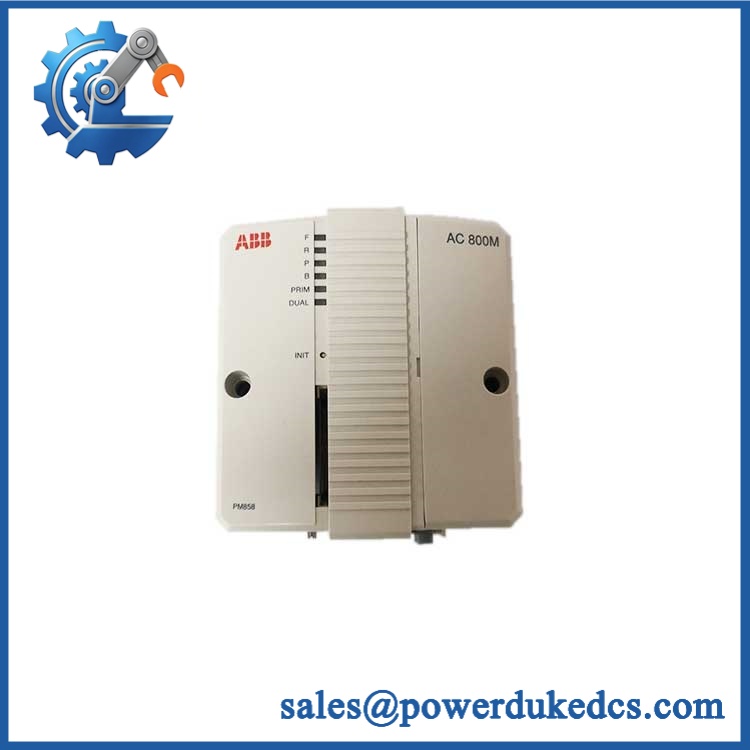
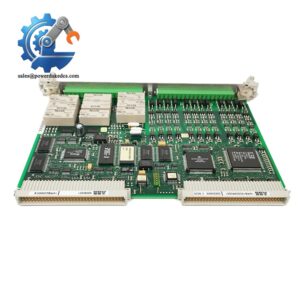
ABB PM858 3BSE093350R1
These specifications are from ABB’s official documentation and hardware selector. The 3BSE093350R1 suffix should still be checked against the actual nameplate, because ABB’s current selector uses 3BSE082895R1 for PM858K01.
Installation & Configuration Guide
Stage 1: Pre-Installation — About 10 minutes
⚠️ Safety first. This is a CPU module in an industrial control system. Follow the site’s shutdown and electrical isolation procedure.
- Notify the control-room and production teams.
- Confirm whether the AC 800M system is operating in redundant or non-redundant configuration.
- Back up the current Control Builder project before removing hardware.
- Record the controller firmware revision.
- Photograph the CPU position, cables, LEDs, and baseplate.
- Record the Ethernet address and network connections.
- Wear an ESD wrist strap before handling the CPU.
ABB documents the as supporting CPU redundancy, with a maximum switchover time of 10 ms in redundant configurations.
Stage 2: Remove the Existing CPU — About 5 minutes
- Verify that the replacement procedure is permitted for the installed redundancy architecture.
- If the system is not designed for online replacement, place the system in the required safe state and isolate power.
- Label communication and service cables.
- Photograph the existing CPU and TP830 baseplate.
- Release the CPU using the applicable ABB mounting mechanism.
- Remove the controller carefully.
- Inspect the baseplate and connector contacts.
Do not assume that every installation supports live replacement. The redundancy architecture and installed accessories determine the procedure.
Stage 3: Install the Replacement — About 5-10 minutes
- Check the complete part number: 3BSE093350R1.
- Compare the nameplate with the removed CPU.
- Confirm the hardware revision.
- Check the baseplate compatibility.
- Install the CPU using the ABB slide-and-lock mechanism.
- Reconnect Ethernet and service connections.
- Check the controller’s physical seating.
- Verify the Ethernet address and network configuration.
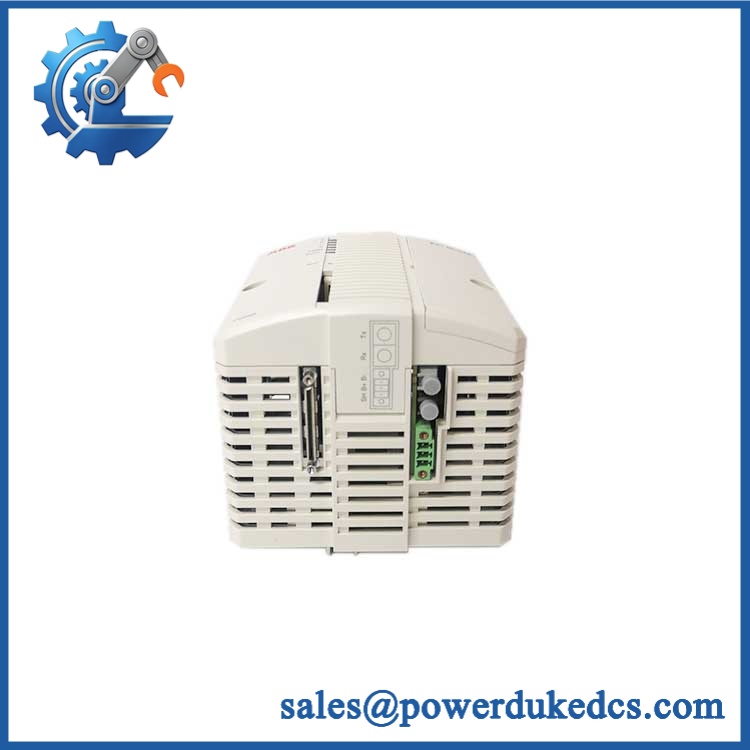
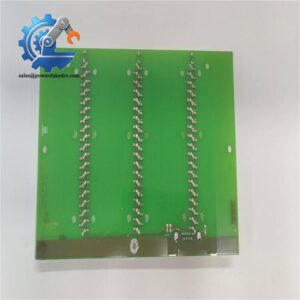
ABB PM858 3BSE093350R1
ABB specifies two RJ45 Ethernet ports and two RJ45 serial interfaces on the baseplate.
Stage 4: Power-On & Testing — About 10-15 minutes
- Check all connections.
- Confirm the correct 24 V DC supply.
- Energize the controller according to the site procedure.
- Observe CPU status LEDs.
- Connect with Control Builder.
- Confirm the detected controller type.
- Check firmware revision.
- Download or restore the approved project configuration where required.
- Verify CEX-Bus and I/O communication.
- Check HMI/SCADA communication.
- Confirm the controller reaches the expected operating state.
- Monitor the system for at least 30 minutes.
ABB states that the supports Control Builder configuration and provides Ethernet communication through its built-in ports.
Technical Pitfalls Before Replacement
1. Part Number Confusion
This is the big one for this item.
The supplied number is 3BSE093350R1. Current ABB documentation identifies PM858K01 as 3BSE082895R1, while a third-party listing identifies 3BSE093350R1 as -C.
❗ Do not treat these references as automatically interchangeable.
Send a nameplate photo before purchase if the installed controller is marked 3BSE093350R1.
2. Firmware Revision Mismatch
A replacement CPU can start correctly but fail to load the existing application if the software environment is different.
Before replacement:
- Record firmware revision.
- Back up the Control Builder project.
- Record controller configuration.
After replacement:
- Read the firmware.
- Check project compatibility.
- Verify the controller type before downloading.
3. Redundancy Configuration
supports CPU redundancy. ABB specifies a maximum switchover time of 10 ms in the relevant redundant configuration.
If the site uses redundant CPUs, do not remove one controller without confirming which CPU is primary and which is standby.
4. Ethernet Configuration
The baseplate provides two Ethernet ports. The hardware identity is associated with the Ethernet address on the baseplate.
Record the existing network information before replacement.
5. Power Supply Capacity
ABB specifies a 24 V DC supply with an allowed range of 19.2–30 V DC for the platform. Typical/max current is listed as 210/360 mA.
Check the total cabinet load—not only the CPU.
Quality Inspection & Test Process
1. Incoming Inspection
- Verify ABB nameplate.
- Check complete ordering code.
- Record serial number.
- Inspect PCB and housing for corrosion or repair marks.
- Check packaging.
- Verify included baseplate/accessories where applicable.
2. Live Functional Test
Use a suitable AC 800M test environment where available.
Test:
- Power-up sequence
- LED status
- CPU recognition
- Ethernet communication
- Control Builder connection
- Application loading
- I/O communication
- Redundancy behavior where applicable
Generate a Test Report with firmware and hardware information.
3. Electrical Checks
Where appropriate:
- 24 V DC supply verification
- Ground continuity
- Connector inspection
- Insulation testing according to the applicable ABB procedure
Do not apply a generic hipot test to an assembled CPU without checking the manufacturer’s test requirements.
4. Firmware / Configuration Verification
Record:
- Firmware revision
- Hardware revision
- Ethernet address
- Controller configuration
- Redundancy configuration
- Application backup status
5. Final QC and Packaging
- QC inspection completed
- ESD bag
- Protective cushioning
- Carton packaging
- QC Passed label and date
Test photos and available Test Reports can be provided to the customer for review.
Spare Inventory Recommendation
For a production-critical AC 800M controller:
- Min: 1 unit
- Max: 1–2 units
- Buffer stock: 1 unit on-site
- Reorder point: Supplier lead time + lead time variability
- Criticality: High when CPU failure can stop process control
- Slow-moving sites: Consider vendor-managed stock
- Lifecycle risk: Monitor AC 800M product lifecycle and plan a Last-time-buy when necessary
One spare CPU is often enough for a single critical installation. More than that should be justified by installed-base size and failure history.
Frequently Asked Questions (FAQ)
1. What is ABB 3BSE093350R1?
It is identified in third-party listings as a -C processor/controller module for ABB AC 800M systems. ABB’s official documentation describes the as an MPC866-based CPU with 33 MHz clock speed, 16 MB RAM, Ethernet communication, and CPU redundancy support.
2. Is 3BSE093350R1 the same as PM858K01 3BSE082895R1?
Do not assume they are the same ordering code.
ABB’s official selector identifies PM858K01 as 3BSE082895R1, while third-party sources list 3BSE093350R1 as -C. For a replacement order, compare the complete nameplate and system configuration rather than relying on “” alone.
3. Can be used in a redundant AC 800M system?
Yes. ABB’s official documentation states that supports CPU redundancy, with a maximum switchover time of 10 ms in the specified redundant configuration.
The exact replacement procedure depends on the installed redundant architecture.
4. What software is used to configure the ?
ABB identifies 800xA Control Builder as the configuration environment for the controller. The current ABB selector also specifies minimum platform versions for the configuration.
Check the installed System 800xA and Control Builder versions before replacing an older CPU.
5. Can I hot-swap the ?
Do not assume it.
The CPU’s replacement method depends on the system architecture and installed hardware. ABB documents online replacement and hot-swap functions for certain AC 800M accessories and architectures, but that does not mean every installation can be physically removed while energized.
Follow the exact replacement procedure for the installed configuration.
6. What information should I provide when ordering?
Send:
- Full part number: 3BSE093350R1
- CPU nameplate photo
- Hardware revision
- Firmware revision
- Host AC 800M configuration
- Baseplate model
- Redundant/non-redundant architecture
- Required quantity
This is especially important here because current ABB documentation uses a different article number for .
7. Should I keep this CPU as buffer stock?
For a critical AC 800M controller, 1 unit of buffer stock is a sensible starting point.
If the installed base contains several controllers, calculate expected annual failures and supplier lead time before setting the Max level. That keeps working capital under control while reducing emergency procurement exposure.


 Start Chat