

Description
- Brand: ABB
- Full Model Number: SPAG 332 C
- Product Type: Numerical generator protection relay
- Series: SPACOM
- Core Function in System: Generator and prime-mover protection
- Protection Package: Two-stage overvoltage | Reverse power | Three-phase time overcurrent | Short-circuit | Two-stage directional earth fault
- Relay Modules: SPCP 3C2 | SPCJ 3C3 | SPCS 3C4
- CT Inputs: 1 A or 5 A
- Voltage Inputs: 100 V or 110 V rated
- Auxiliary Supply: 80–265 VAC/DC or 18–80 VDC
- Communication: Fiber-optic SPA bus
- Data Rate: 4,800 or 9,600 baud
- Service Temperature: -10 to +55°C
- Case Protection: IP54
- Relay Weight: 5.5 kg
- Condition & Lead Time: Stock condition subject to inspection; emergency dispatch available subject to order confirmation
ABB’s official legacy-product page identifies SPAG 332 C as a numerical generator protection relay for small and medium-sized power generators and their prime movers. ABB lists two-stage overvoltage, reverse power, three-phase overcurrent/short-circuit, and two-stage directional earth-fault protection among its functions. ABB also confirms that the C version includes a serial communication interface.
Module 3: Technical Intro & Downtime Impact
A generator protection relay failure can prevent a unit from returning to service even when the generator itself is mechanically sound. Loss of overvoltage, reverse-power, overcurrent, or directional earth-fault protection can block a controlled restart because the protection chain can no longer prove that the generator is operating within its permitted envelope. ABB SPAG 332 C was designed for small and medium-sized generators, including applications in hydro plants, thermal stations, stationary generating plants, and marine or offshore installations. The relay combines SPCP 3C2, SPCJ 3C3, and SPCS 3C4 protection modules in one assembly.
For MTTR, exact electrical-variant matching is critical. ABB specifies 1 A or 5 A current inputs, 100 V or 110 V rated voltage inputs, and auxiliary supply options of 80–265 VAC/DC or 18–80 VDC. The overcurrent low-set stage can be adjusted from 0.5–2.5 × In, while the high-set stage covers 0.5–20 × In. The reverse-power stage is adjustable from -2% to -20% of Pn, and the overvoltage low-set stage covers 0.80–1.60 × Un. These are configuration-dependent protection settings, not values to restore from memory or from another generator relay.
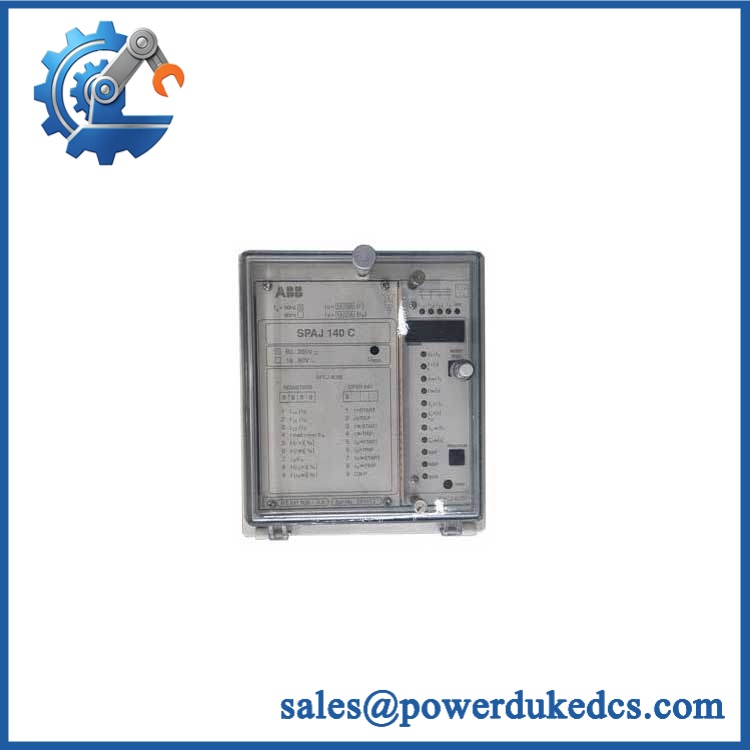
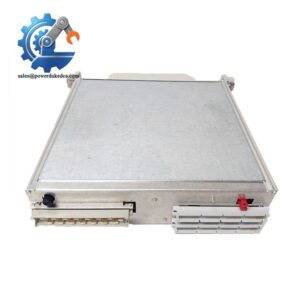
ABB SPAG 332 C
Module 4: Dynamic Emergency Swap & Configuration Guide
1. Pre-Swap Prep — Freeze the Protection Settings
At 3 AM, the dangerous assumption is that every SPAG 332 C is electrically identical. It is not. Before opening the cabinet, place the generator protection scheme into its approved maintenance state, isolate the applicable control and auxiliary circuits, and document the complete nameplate data. Record the 1 A/5 A CT rating, 100/110 V VT rating, auxiliary-supply range, frequency, protection settings, output assignments, SPA communication configuration, and module identifiers. Save photographs of the front-panel controls and rear connections.
2. Removal — Release the Legacy Relay Case Carefully
SPAG 332 C is a conventional panel/rack-mounted relay assembly rather than a DIN-rail card. ABB documents flush, semi-flush, projecting, and 19-inch mounting arrangements, with an ancillary 4U mounting plate recommended for 19-inch frames. After isolation and verification of safe conditions, disconnect the rear wiring and communication interface as required by the installed case arrangement. Release the retaining hardware and remove the relay while supporting its approximately 5.5 kg weight.
3. Installation & Configuration — Preserve the Original Protection Architecture
Install the replacement in the same case position and restore each current, voltage, auxiliary, trip, alarm, and communication connection according to the original wiring documentation. The three internal protection functions must remain correctly associated: SPCP 3C2 for overvoltage/reverse power, SPCJ 3C3 for overcurrent, and SPCS 3C4 for directional earth fault.
Then restore the validated settings. Verify the CT ratio and nominal voltage first, followed by pickup levels, operate times, inverse curve selection where used, directional-earth-fault characteristic, reverse-power threshold, and output logic. For a C-version relay, also restore the SPA-bus configuration and verify whether the interface uses a SPA-ZC 21 or SPA-ZC 17 bus connection module.
4. Power-On Self-Test (POST) — Prove Every Protection Function
Energize the relay under controlled conditions and check the front-panel indications and internal-fault status. ABB’s self-supervision system monitors the relay hardware/software, auxiliary supply, and internally generated voltages; an internal fault drives the IRF indicator and operates the self-supervision output.
Next, perform secondary-injection testing. Verify phase-current measurement, overcurrent pickup and timing, voltage measurement, both overvoltage stages, reverse-power operation, and directional earth-fault response. Do not release the generator until the relay returns expected indications, outputs, and communication status.
Module 5: Quality Assurance & Testing SOP
Every ABB SPAG 332 C should receive a complete protection-relay inspection before shipment.
- OEM anti-counterfeit visual inspection: Verify ABB branding, SPAG 332 C designation, relay-module labels, front-panel construction, switches, displays, terminals, and PCB workmanship.
- Exact variant verification: Confirm the 1 A or 5 A current-input rating, 100 V or 110 V voltage rating, auxiliary-supply module, and serial communication option.
- Mechanical inspection: Check the aluminum case, mounting hardware, terminal blocks, front panels, selector switches, controls, display windows, and evidence of corrosion, contamination, overheating, or unauthorized repair.
- Power-input verification: Confirm the installed supply module is SPGU 240A1 for 80–265 VAC/DC or SPGU 48B2 for 18–80 VDC, as applicable.
- Power-on self-test (POST): Energize the relay and verify startup status, front-panel indications, and IRF/self-supervision behavior.
- Current-injection test: Apply calibrated secondary currents and verify both low-set and high-set phase overcurrent stages.
- Voltage-injection test: Apply the applicable rated voltage and verify measurement response and both overvoltage stages.
- Reverse-power simulation: Apply controlled voltage/current phase relationships and verify the P<– stage against the configured threshold and delay.
- Directional earth-fault test: Simulate residual current and voltage and verify the Iφ> / Iφ>> stages with the configured
sin φorcos φcharacteristic. - Trip-circuit simulation: Exercise all applicable protection outputs and verify contact operation.
- I/O full-range simulation: Test external inputs, output relays, alarms, blocking signals, and configuration-dependent control paths.
- SPA communication test: For the C variant, verify serial communication at 4,800 and 9,600 Bd as applicable and confirm the optical bus connection.
- Self-supervision test: Confirm that an intentional internal diagnostic condition is correctly reported through the IRF indication and output supervision path.
- Extended stability test: Monitor the relay under sustained energized conditions for abnormal resets, drift, intermittent indication, or communication loss.
- Final QC record: Document serial number, protection-module identities, CT/VT ratings, auxiliary supply, settings, measured pickup values, operate times, communication tests, photographs, technician sign-off, and packaging condition.
Module 6: Maintenance & Reliability FAQ
1. Is ABB SPAG 332 C a direct drop-in replacement, or does it require a firmware flash?
The SPAG 332 C is a complete legacy protection relay, not a modern software-defined protection platform. ABB’s 1999 product documentation specifies dedicated analog relay modules and hardware-based settings, while the C designation adds the serial communication interface. A firmware flash should therefore not be assumed as part of a normal replacement. The critical issue is matching the CT/VT variant, auxiliary supply, protection configuration, and communication interface.
2. Is it safe to hot-swap SPAG 332 C while the generator is running?
No. Do not remove the relay from an energized generator protection circuit unless the exact plant procedure and equipment documentation explicitly authorize it. The device is connected to current transformers, voltage transformers, auxiliary power, protection outputs, and potentially an active SPA communication circuit. Isolate the relevant circuits and establish the approved protection bypass or maintenance condition first.
3. Will replacing SPAG 332 C cause my current protection settings to be lost?
Yes, the replacement should be treated as a configuration restoration task. Record every protection setting before removal, including overvoltage thresholds, operate times, reverse-power settings, overcurrent pickup and timing curves, directional earth-fault settings, output logic, and communication parameters. ABB documents these settings as adjustable relay parameters rather than factory-universal values.
4. What should I verify before commissioning the replacement?
Start with the exact electrical variant. Confirm 1 A or 5 A CT inputs, 100 V or 110 V voltage inputs, and the installed auxiliary supply. Then verify the three protection modules, secondary-injection results, output contacts, IRF behavior, and SPA communication. ABB specifies a -10 to +55°C service temperature range, IP54 enclosure protection, and a 5.5 kg relay weight.
5. What are the warranty terms if the unit fails after installation?
Warranty coverage should be stated on the quotation or sales order for the specific serialized relay. Retain the incoming inspection report, nameplate photographs, complete protection-setting backup, secondary-injection results, trip-output tests, SPA communication test, and commissioning report. For a generator protection relay, those records help distinguish a failed relay from CT polarity errors, VT wiring problems, incorrect settings, trip-circuit faults, or communication issues.



 Start Chat