

Description
Module 2: The 10-Second Procurement Snapshot
- Brand: ABB
- Full Model Number: SPDSI22
- Lifecycle Status: Active in ABB Symphony Plus catalog
- Core Function: Processes digital field inputs
- Product Type: Digital Input Module
- System Family: Symphony Plus HR Series
- Top 3 Technical Specs: 16 optically isolated channels; 24/48/125 VDC and 120 VAC; 5 VDC ±5% at 95 mA typical
- Input Configuration: Individually programmable
- Ambient Temperature: 0 °C to 70 °C
- Stock & Condition: New surplus / tested stock, subject to physical availability
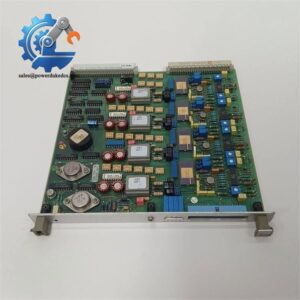
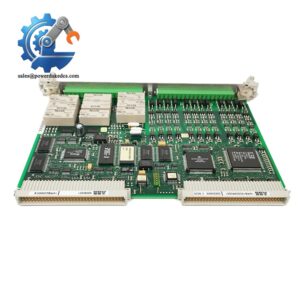
ABB’s current Symphony Plus catalog identifies SPDSI22 as an HR Series digital input module with 16 optically isolated channels. Each channel can be individually programmed for 24 VDC, 48 VDC, 125 VDC, or 120 VAC input.
Module 3: Supply Chain & Technical Deep Dive
A failed digital input card can leave an otherwise healthy control system unable to see field states. SPDSI22 addresses that specific I/O layer in a Symphony Plus controller, handling up to 16 digital field inputs with optical isolation between the field signals and control electronics. That makes the exact spare useful when a plant needs to preserve an existing I/O architecture rather than redesigning the cabinet.
The procurement advantage is flexibility at the input level. Unlike fixed-voltage variants in the same HR Series, each SPDSI22 channel can be programmed for four input voltage classes. ABB specifies 5 VDC ±5% at 95 mA typical for module power and an ambient range of 0 °C to 70 °C. For TCO analysis, compare the cost of the spare with rewiring, engineering hours, FAT/SAT work, and production downtime. A newer-looking card is not automatically the cheaper replacement.
Module 4: Migration, Compatibility & Field Traps
Replacement Matrix
| Replacement Type | Assessment | Engineering Action |
|---|---|---|
| Drop-in Replacement | Conditional | Match SPDSI22 and the existing Symphony Plus configuration |
| Software Compatible | Expected within the supported system architecture | Verify configuration and channel assignments |
| Hardware Modification | Not normally required for an exact match | Confirm rack position and termination |
| Cross-Reference Replacement | Requires engineering approval | Do not substitute SPDSI13/SPDSI14 solely by channel count |
⚠️ Field Trap 1: Input Voltage Selection
This is a universal-input digital module. That sounds simple. It is not.
Each channel can be configured for 24 VDC, 48 VDC, 125 VDC, or 120 VAC. Before removal, record the configuration of every channel. A replacement with incorrect channel settings can produce false ON/OFF states or prevent a field signal from being recognized.
⚠️ Field Trap 2: Do Not Confuse Related Modules
ABB lists SPDSI13 and SPDSI14 as separate 16-channel digital input modules with fixed 24 VDC and 48 VDC inputs respectively. SPDSI22 is different because its channels support multiple voltage classes.
Do not approve a cross-reference just because the card has 16 channels.
⚠️ Field Trap 3: ESD Handling
Use an ESD wrist strap and grounded work surface during replacement.
Keep the module in its antistatic packaging until installation. Avoid touching the card-edge contacts.
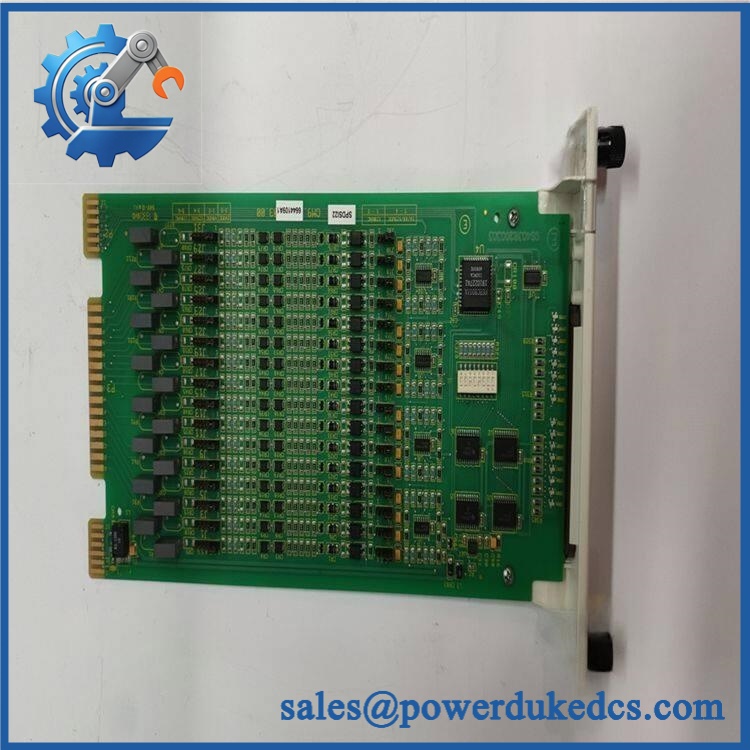
ABB SPDSI22
Module 5: Quality Assurance & Testing SOP
1. Incoming Identity Inspection
- Verify ABB identification.
- Confirm .
- Record serial number and hardware revision.
- Compare the product label with the purchase order.
- Inspect the housing and PCB.
- Check connectors and card-edge contacts.
- Look for corrosion, cracks, burn marks, or repair traces.
- Perform OEM marking and anti-counterfeit visual inspection.
2. Electrical Inspection
Before energizing:
- Inspect accessible power circuits.
- Check connector condition.
- Check for visible PCB contamination.
- Inspect for obvious short circuits.
- Verify grounding provisions.
- Confirm the test setup matches the applicable ABB system documentation.
ABB specifies module power of 5 VDC ±5% at 95 mA typical. Do not replace this value with a generic 24 VDC assumption.
3. Power-On Self-Test
Using an appropriate Symphony Plus test environment:
- Install the module in the approved rack position.
- Apply the specified system power.
- Check module recognition.
- Monitor diagnostic status.
- Verify controller communication.
- Record abnormal indications.
4. Digital Input Functional Test
Test the module as an actual 16-channel DI card:
- Simulate 24 VDC input signals.
- Verify channel state changes.
- Test applicable 48 VDC channels.
- Test applicable 125 VDC channels.
- Test applicable 120 VAC channels only with an approved test fixture.
- Confirm optical isolation behavior where the test system supports it.
- Record every tested channel.
The voltage range should follow the channel configuration recorded for the unit. Do not apply an arbitrary test voltage simply because the module is described as “universal.”
5. Environmental and Stability Check
Where the laboratory setup allows:
- Run repeated input transitions.
- Monitor diagnostic status.
- Check for intermittent channels.
- Monitor temperature rise.
- Record test duration.
- Generate a Test Report.
ABB’s catalog specifies 0 °C to 70 °C ambient operation for .
6. Final QA and Packaging
- Record exact model.
- Record hardware revision.
- Record serial number.
- Save functional-test results.
- Photograph the tested unit.
- Apply QC status.
- Seal in an ESD shielding bag.
- Add shock protection.
- Mark the outer package with the exact part number.
Test photographs and the available Test Report can be supplied for procurement review before shipment.
Module 6: Procurement-Driven FAQ
1. Is genuinely available, and can it ship quickly?
Availability depends on physical warehouse stock and product condition. Current supplier listings show inventory, but procurement should confirm the actual quantity, condition, location, and shipping cutoff before placing an urgent order.
For a shutdown spare, “available” should mean physically verified stock—not an unconfirmed sourcing promise.
2. How do you verify the condition of an ?
The unit is checked against the exact ABB identification before testing.
Inspection covers the label, PCB, connectors, card-edge contacts, corrosion, overheating, and repair evidence. Tested units should then undergo power-on verification and applicable digital-input simulation.
New surplus, new open-package, used, and refurbished conditions should be quoted separately.
3. Can replace SPDSI13 or SPDSI14?
Not as a blind substitution.
All three are 16-channel digital input modules, but SPDSI13 is specified for 24 VDC and SPDSI14 for 48 VDC, while provides individually programmable 24 VDC, 48 VDC, 125 VDC, and 120 VAC inputs.
If a cross-reference is being considered, verify the channel configuration and system engineering documentation.
4. Are there firmware compatibility issues engineers should check?
The more immediate concern is I/O configuration.
Before removing the existing module, record the channel voltage settings, field wiring, rack position, and controller configuration. If the replacement has a different hardware revision, verify that revision against the applicable ABB documentation before commissioning.
5. What should I confirm before ordering?
Give procurement these details:
- Quantity required
- New surplus or tested used condition
- Required shipping date
- Existing Symphony Plus controller/rack information
- Channel voltage configuration
- Required warranty period
- Whether a Test Report is required
That information reduces the chance of receiving a physically similar I/O card that cannot be installed as planned.



 Start Chat