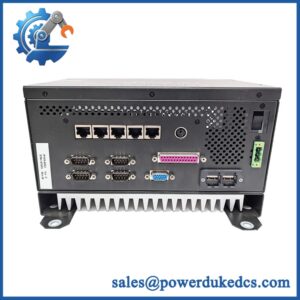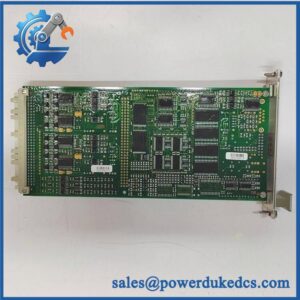
Description
-
Brand: ALSTOM
-
Full Model Number: I/OBE2 12004-104-00 V1.0.0
-
Lifecycle Status: Legacy equipment; verify current OEM support status before purchase
-
Core Function: I/O bus interface and extension for compatible ALSTOM control-system architectures
-
Top 3 Technical Specs: Part Number 12004-104-00; Version V1.0.0; SBS serial-bus interface and Eurocard-style board format, subject to verification against the installed assembly
-
Stock & Condition: Lot-specific availability; confirm physical stock, condition grade, board revision, test coverage, and dispatch commitment before PO release
Obsolescence & Supply Chain Deep Dive
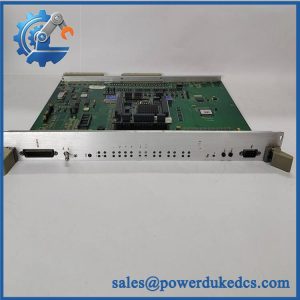
A failed interface board can delay the restoration of a legacy control system when an exact replacement is difficult to source. The ALSTOM I/OBE2 12004-104-00 V1.0.0 is identified in commercial product descriptions as an SBS serial-bus interface or extension board associated with remote I/O racks. Confirm its precise role against the installed rack documentation before procurement approval. Part-number accuracy matters: similar assemblies within the same equipment family may perform different functions and cannot be assumed interchangeable.
For an established industrial installation, sourcing a verified replacement can cost less than a complete control-system migration. Retaining the existing architecture may avoid new hardware, cabinet modifications, application engineering, shutdown planning, and extended commissioning. The total cost of ownership (TCO), however, depends on more than the purchase price. Compare the unit cost, inspection and testing evidence, warranty coverage, delivery lead time, installation labor, and potential downtime exposure. For surplus equipment, documented condition and traceable identification are particularly important. A lower initial price does not compensate for an unverified board that fails during commissioning.
Compatibility & Replacement Matrix
|
Evaluation Item |
Procurement and Engineering Guidance |
|---|---|
|
Replacement classification |
Conditional drop-in replacement only when the complete part number, hardware revision, firmware version, and installed rack requirements match |
|
Software compatibility |
Verify the controller configuration and supported firmware. Do not assume firmware flashing is required or permitted. |
|
Hardware modification |
Not normally expected for a verified like-for-like replacement, but connector, board dimensions, rack position, and electrical requirements must be checked |
|
Estimated replacement time |
Allow approximately 1–3 technician-hours for a straightforward, like-for-like exchange and initial diagnostics. This is a planning estimate, not a guaranteed completion time. |
|
Cost estimation |
Replacement board cost + technician labor + approved shutdown or restart costs + required post-installation checks |
|
Commissioning requirement |
Confirm bus communication, controller diagnostics, and the expected remote I/O data exchange before returning the system to service |
Field Traps to Check Before Ordering
Part-number and revision mismatch
Verify that the existing assembly is marked I/OBE2 12004-104-00 V1.0.0 or that the proposed revision is explicitly approved for the installed configuration. Do not treat a similar model number as proof of interchangeability. For example, the related I/OBUS2 12004-103-01 is listed as a separate bus-interface assembly, not an automatic substitute for the I/OBE2.
Rack configuration and bus communication
Check the rack type, slot assignment, connector layout, bus topology, and any applicable termination or addressing requirements against the OEM documentation. Preserve the original configuration records before removal. Do not assume that this board supports hot swapping; use an approved isolation and replacement procedure unless the OEM explicitly permits live exchange.
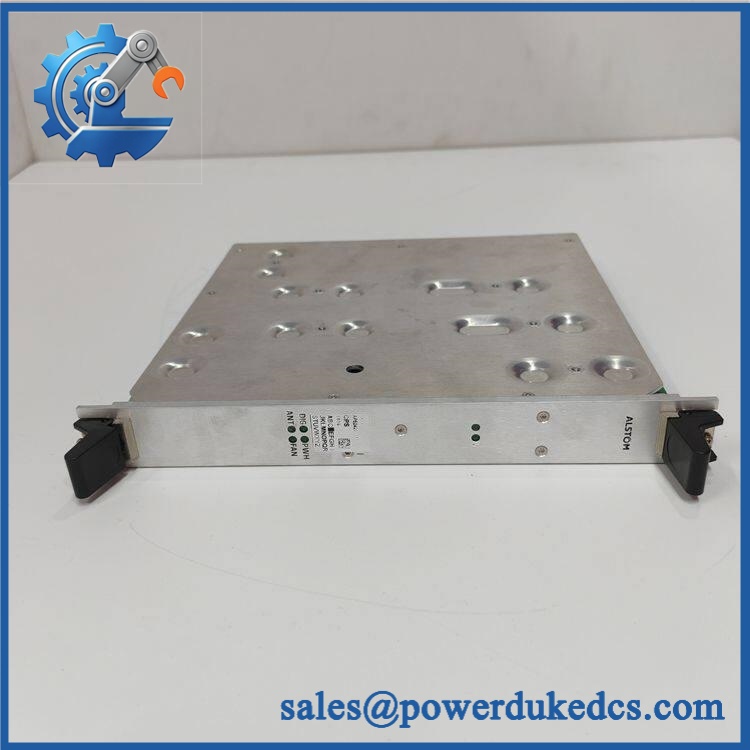
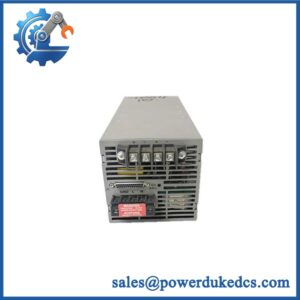
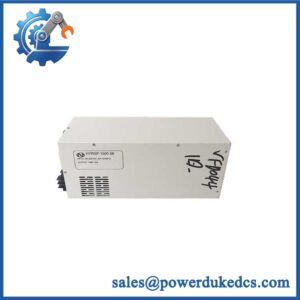
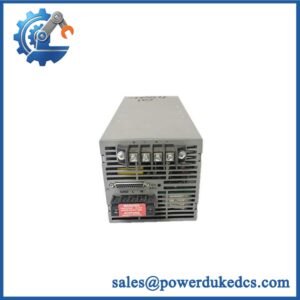
ALSTOM I/OBE2 12004-104-00
Quality Assurance & Testing SOP
Each unit should receive an inspection and test record appropriate to its actual condition. Testing must use compatible equipment and documented acceptance criteria.
|
QA Stage |
Required Action |
Acceptance Evidence |
|---|---|---|
|
Identification |
Record the model, part number, version, serial or lot identifiers where present, and PCB markings |
Photographs and inspection record |
|
Authenticity screening |
Inspect label consistency, PCB markings, connector workmanship, component placement, solder joints, and signs of unauthorized rework |
Visual inspection checklist; discrepancies referred for review |
|
Physical condition |
Check the PCB, edge connectors, mounting points, and components for corrosion, cracks, contamination, or mechanical damage |
Recorded condition grade and photographs |
|
Power-on test |
Where compatible test equipment is available, power the board using the OEM-approved procedure and electrical limits |
Startup observations and recorded test conditions |
|
Status indication |
Check RUN, ERR, or fault indicators where fitted, using the applicable front-panel legend and startup sequence |
Recorded LED states and diagnostic results |
|
Bus communication |
Verify communication with a compatible controller or test rack, including expected status updates and data exchange |
Communication test results |
|
I/O load testing |
Use suitable I/O simulation equipment or approved test fixtures to check the relevant signal and data paths |
Recorded test inputs, expected responses, and observed results |
|
Final inspection |
Recheck the connectors and identification, then apply suitable ESD protection and protective packaging |
Final inspection and packing record |
Testing limitation: A successful visual inspection does not prove functional operation. Where powered bench testing is unavailable, the unit’s test limitations must be disclosed before purchase. Do not connect a board of unverified electrical specifications to a live production system.
Procurement & Lifecycle FAQ
Is the ALSTOM I/OBE2 12004-104-00 V1.0.0 genuinely in stock, and what is the emergency-shipping cutoff?
Physical availability and dispatch timing must be confirmed against the actual allocated unit. For urgent orders, request a current stock confirmation, identification-label photographs, the earliest dispatch date, and the carrier pickup cutoff in writing. Same-day dispatch depends on stock allocation, order clearance, export documentation, packing requirements, and the available collection window.
How do you verify the condition and authenticity of an obsolete or surplus I/OBE2 board?
Request photographs of the actual board, identification labels, PCB markings, connectors, and visible component areas. The quotation should state whether the unit is new surplus, used, or tested refurbished, as applicable. Ask for the specific inspection and bench-test records available for that unit. Do not treat visual inspection or a supplier’s description alone as proof of OEM traceability.
Are there firmware or hardware compatibility issues to check before issuing the PO?
Yes. Confirm the complete part number, V1.0.0 designation, hardware revision, controller configuration, rack requirements, and bus-interface arrangement. Engineering should compare the proposed board with the existing installation and applicable OEM documentation. Obtain written confirmation before accepting a different revision or attempting a firmware change.
What warranty and return terms apply to the ALSTOM I/?
The warranty period and return conditions should be stated in the written quotation or pro forma invoice. Before releasing the PO, confirm the warranty start date, coverage for functional defects, dead-on-arrival reporting deadline, return-material authorization process, and any exclusions for installation damage or unauthorized modification. Terms should be agreed before shipment rather than assumed.
Is replacing the I/ more economical than upgrading the entire control system?
For an otherwise serviceable legacy installation, a verified like-for-like replacement may reduce immediate expenditure and avoid migration-related engineering work. The decision depends on spare availability, remaining equipment life, failure frequency, supportability, and downtime exposure. Compare the replacement’s landed cost and expected service period with the full cost of migration, including hardware, software engineering, commissioning, training, and the planned production outage.