

Description
Unboxing & Physical Snapshot
- Manufacturer: FANUC
- Model: A06B-6114-H211
- Module designation: SVM2-160/160i, two-axis Alpha i servo amplifier module. FANUC documentation maps A06B-6114-H211 directly to SVM2-160/160i.
- Application: Servo motor drive for FANUC i-series CNC architecture.
- Physical dimensions: Approximately 350 × 220 × 160 mm based on distributor-reported dimensions; verify the actual unit before freight booking.
- Estimated unit weight: Approximately 5.4 kg; one supplier reports 12 lb.
- Estimated packed shipping weight: Approximately 7–9 kg, depending on ESD protection, cushioning, carton, and accessories. Use the actual packed weight for the commercial invoice.
- What’s in the box: Servo amplifier module; mounting hardware and cables only if included with the specific lot; OEM documentation if supplied.
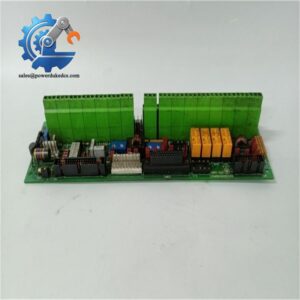
- Receiving inspection: Photograph the FANUC nameplate, serial number, revision markings, cooling fan, power terminals, connectors, and packaging before putting the unit into stock.
Product Introduction
Architecture hook: The A06B-6114-H211 is a high-power component of the FANUC Alpha i servo architecture, not a general-purpose variable-frequency drive. It is identified as the SVM2-160/160i dual-axis servo amplifier, with the L and M axes driving compatible FANUC servo motors. FANUC’s documentation specifically places this model within the SVM family used with i-series CNC systems.
The module requires correct pairing with the CNC, motor, feedback system, and DC-link power architecture. The SVM communicates with the i-series CNC through the FSSB interface; consequently, substitution based only on physical fit is unacceptable (the wiring configuration and motor compatibility must also be verified).
Core Technical Specifications
| Parameter | Value |
|---|---|
| Manufacturer | FANUC |
| Model | A06B-6114-H211 |
| Servo module | SVM2-160/160i |
| Number of axes | 2 |
| L-axis rated output current | 39 A |
| M-axis rated output current | 39 A |
| Rated input | 283–325 VDC |
| Rated input power | Approximately 13.5 kW |
| Motor architecture | FANUC Alpha i servo system |
| CNC communication | FSSB / fiber-optic interface |
| Cooling | Forced-air cooling |
| Internal fan | A90L-0001-0510 |
| External fan | A90L-0001-0508 |
| Approx. dimensions | 350 × 220 × 160 mm |
| Approx. unit weight | 5.4 kg |
| Installation | FANUC CNC servo amplifier cabinet/system |
| Hardware family | A06B-6114 SVM2 |
| Related unit specification | A06B-6114-C211 |
| PCB specification | A16B-2203-0675 |
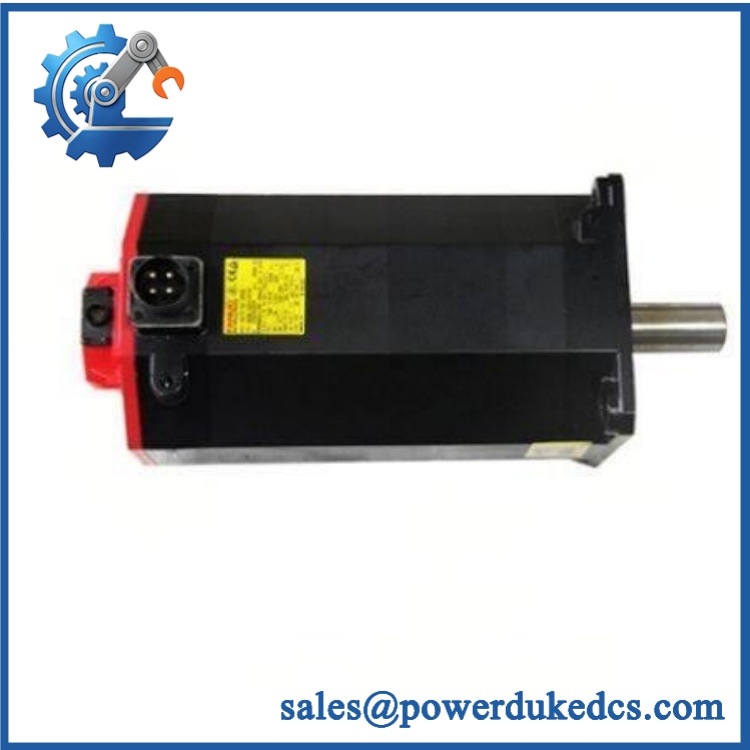
FANUC A06B-6114-H211
FANUC’s manual identifies A06B-6114-H211 as the SVM2-160/160i model and lists the corresponding unit and PCB specifications.
Power and thermal considerations
Do not size the cabinet cooling system from the motor output rating alone. The amplifier’s heat load varies with operating current, switching activity, ambient temperature, and cooling airflow.
The reported 283–325 VDC, 13.5 kW input rating and 39 A per L/M axis figures should be treated as equipment-selection data, not as a generic continuous-load calculation.
The cooling fans are maintenance items. FANUC-related service documentation identifies separate internal and external fan assemblies, and fan-stop conditions can generate dedicated servo amplifier alarms.
Global Compliance & Industry Certifications
For international trade records, certification status should be tied to the exact FANUC model, revision, and manufacturing lot.
- CE Mark: Verify the applicable FANUC declaration and product marking for the complete servo-system configuration.
- UL/cUL: Verify the exact certification record rather than assuming a listing from the model family.
- ATEX/IECEx: Do not assume hazardous-area certification. A standard FANUC CNC servo amplifier should not be represented as suitable for classified hazardous locations without explicit certification.
- Marine approvals: DNV/DNV GL, ABS, or other marine approval must be separately confirmed where required.
- EMC compliance: Evaluate the amplifier as part of the complete CNC cabinet because grounding, motor cables, filters, shielding, and cabinet construction affect system-level EMC performance.
- RoHS: Verify the applicable environmental compliance declaration for the specific manufacturing period.
This is high-energy motion equipment. A certification applicable to the complete installation matters because the servo amplifier, motor, DC bus, protective grounding, and cabinet form one electrical safety system rather than independent components.
Verify specific lot certifications with OEM.
Long-Term Storage & Asset Preservation Guide
Preserve the cooling system. Do not store the amplifier where dust, oil mist, corrosive vapors, or high humidity can enter the fan and heatsink assembly. The heatsink fins and fan path are part of the thermal-management system; contamination can produce excessive temperature rise after installation.
Keep the unit in ESD-protective packaging. Protect the fiber-optic interfaces, control connectors, power terminals, and PCB assemblies from static discharge and mechanical impact. Do not stack heavy equipment directly on the amplifier’s enclosure.
Treat this as a high-value electronic spare, not shelf-stable mechanical hardware. Record serial number, hardware revision, manufacturing/date code, previous operating status, and any service history. Before long-term deployment, inspect the cooling fans and DC-bus circuitry for contamination or deterioration (especially when the unit has spent years in uncontrolled warehouse conditions).
Physical Installation Prerequisites
- Install only within the FANUC servo cabinet/system specified for the SVM2-160/160i architecture.
- Confirm that the target CNC is compatible with the /160i before installation.
- Verify the connected servo motors and feedback devices against the FANUC system documentation.
- Confirm the DC-link voltage and cabinet power architecture before energization.
- Use the correct FSSB/fiber-optic communication connection; do not substitute ordinary copper communication wiring.
- Inspect the internal and external cooling fans before commissioning.
- Maintain unobstructed airflow around the heatsink and fan assemblies.
- Do not invent a cabinet clearance value; follow the FANUC cabinet/system installation manual for the actual enclosure.
- Ensure protective earth and cabinet bonding meet the FANUC installation requirements.
- Route motor and feedback cables according to FANUC’s specified separation and shielding practices.
- Apply lockout/tagout before removing the amplifier. The DC-link circuit can retain hazardous energy after incoming power is removed.
- After installation, verify all connectors, retaining hardware, cooling airflow, and alarm status before returning the CNC to production.
Buyer’s FAQ
Q: What HS tariff code should I use for the A06B-6114-H211?
A: Classification must be determined from the product’s documented function and the importing country’s tariff schedule. One commercial source currently lists HS 85437069, but that should be treated as a reference rather than a universally correct classification. Have the customs broker confirm the destination-country tariff code before shipment.
Q: Does FANUC’s Japanese origin determine the Country of Origin?
A: No. Brand nationality does not establish COO. Record the manufacturing origin from the actual nameplate, FANUC documentation, or supplier’s origin declaration for the specific unit.
Q: Should this servo amplifier be shipped with insurance?
A: Yes, particularly for international shipments. The unit is relatively heavy and contains sensitive electronic assemblies, cooling hardware, connectors, and power electronics. Photograph the nameplate and packaging before carrier handoff, and retain the packing record for any damage claim.
Q: Does a replacement contain the latest firmware?
A: Do not assume so. The amplifier’s hardware identity, CNC compatibility, and system configuration must be verified independently. Record the actual revision/date-code information and compare it with the installed CNC system before commissioning. FANUC’s documentation also identifies the corresponding A16B-2203-0675 PCB, so board-level identity should be preserved during asset inspection.
Lifecycle note: Treat as a controlled CNC motion spare. The model is documented as an /160i module, and its substitution must be based on motor, axis, CNC, feedback, power, and communication compatibility—not merely connector or enclosure similarity.


 Start Chat