

Description
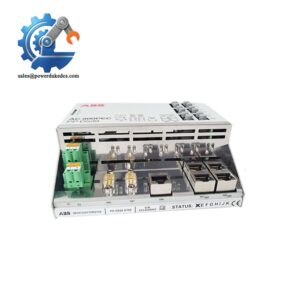
- Model: 8101-HI-TX-02
- Brand: General Electric (GE) / PAC8000
- Series: PAC8000 I/O
- Part Type: 8-Channel Analog Input Module with HART
- Core Function: Acquires 4-20 mA transmitter signals and provides HART variable/status information to the PAC8000 control system.
- Key Specs: 8 single-ended channels, 4-20 mA nominal range, 1-23 mA full signal range, 16-bit resolution, ±0.1% accuracy, 24 VDC bussed field power, open/short-circuit detection, and configurable filtering. The documented base catalog number is 8101-HI-TX; the buyer-supplied -02 suffix should be verified against the physical nameplate.
Product Introduction
Inside a PAC8000 node, the 8101-HI-TX occupies the standard analog-input position for conventional process transmitters using current-loop signaling. Eight independent single-ended channels accept 4-20 mA signals, while the HART function permits acquisition of digital transmitter variables and status information without adding a separate HART interface module.
For asset control, one detail deserves attention: the official module tables I reviewed identify the catalog number as 8101-HI-TX, while current commercial records also show 8101-HI-TX-02. Treat the “-02” suffix as a revision or ordering identifier requiring physical verification rather than silently treating it as a separate electrical model. The module is specified for 24 VDC ±10% bussed field power, with support for both 2-wire and 4-wire transmitters.
Core Technical Specifications
| Parameter | Value |
|---|---|
| Manufacturer | GE / PAC8000 |
| Buyer-Supplied Model | 8101-HI-TX-02 |
| Documented Base Catalog Number | 8101-HI-TX |
| Product Family | I/O |
| Module Type | Analog Input with HART |
| Number of Channels | 8 |
| Channel Configuration | Single-ended |
| Nominal Signal Range | 4-20 mA |
| Full Signal Range | 1-23 mA |
| Supported Transmitters | 2-wire or 4-wire |
| HART | Direct HART communication |
| HART Data | Variables and status reporting |
| Resolution | 16-bit unsigned |
| Accuracy | ±0.1% of span |
| Repeatability | 0.05% of span |
| Response Time, mA Mode | 27 ms maximum |
| Response Time, HART Mode | 0.75 s per channel |
| Line Fault Detection | Open <0.5 mA; short >23.5 mA |
| Output Voltage at 20 mA | 13.5 V minimum |
| Maximum Output Current | 32 mA |
| Alarm Functions | High, High-High, Low, Low-Low |
| Alarm Deadband | User-defined |
| Input Filter | Configurable |
| Input Dead Zone | User-defined |
| Fault Action | Disabled, upscale, or downscale |
| Channel-to-Channel Isolation | None |
| Channel-to-Railbus Isolation | 100 VAC |
| Field Circuit Classification | Non-incendive |
| Bussed Field Power | 24 VDC ±10% |
| 2-Wire Transmitter Current | 300 mA maximum |
| 4-Wire Transmitter Current | 60 mA maximum |
| Railbus Supply | 12 VDC |
| Railbus Current | 100 mA typical; 150 mA maximum |
| Module Key Code | A1 |
| Module Width | 42 mm |
| Module Weight | 200 g |
| Compatible General-Purpose Terminals | 8602-FT-ST, 8604-FT-FU, 8615-FT-FU |
| Compatible Non-Incendive Terminals | 8601-FT-ST, 8603-FT-FU, 8615-FT-4W |
The published data identify 8101-HI-TX as an 8-channel, 4-20 mA analog input module with HART, with 16-bit resolution, ±0.1% span accuracy, 0.05% repeatability, and a 27 ms maximum response time in mA mode. (GE technical data)
The physical specification is unusually useful for warehouse planning: the module is 42 mm wide and 200 g. Its field wiring, however, can add significantly more weight and volume when the compatible fused or screw-terminal assembly is shipped as a complete kit.
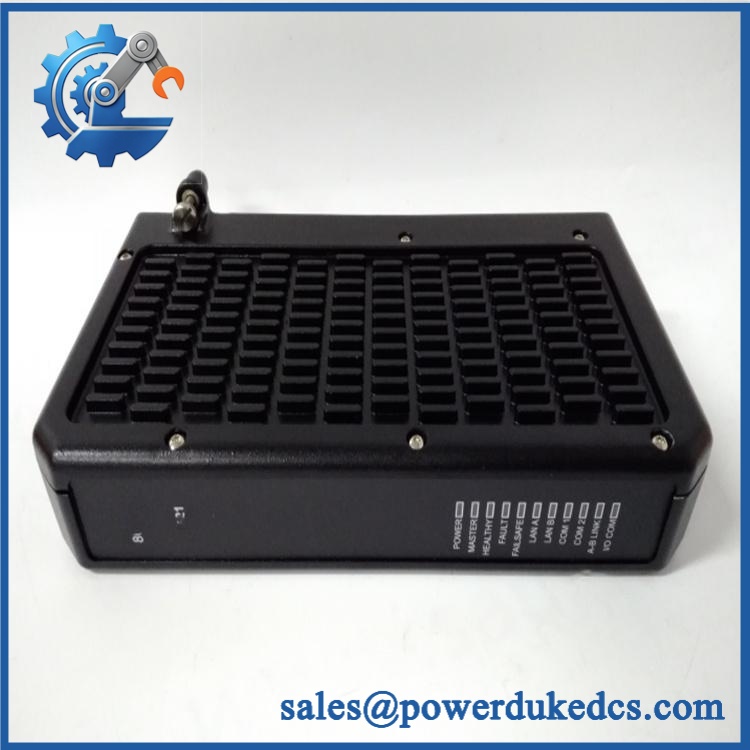
- GE 8101-HI-TX-02
Application Scenarios & Pain Points
Micro-case — a transmitter loop is healthy, but the control system reports a bad analog value. Start by checking the measured loop current and line-fault status. The module identifies an open condition below 0.5 mA and a short condition above 23.5 mA, providing a useful first diagnostic boundary.
For refinery and chemical-process instrumentation, the eight-channel density reduces cabinet slot consumption when many conventional 4-20 mA transmitters are concentrated in one remote I/O node. HART reporting also provides digital process variables and transmitter status through the same field connection.
Within water-treatment systems, 2-wire transmitters can use the module’s bussed field power arrangement, while 4-wire devices have a separate current allowance. Verify the transmitter wiring before making a replacement because the field-power demand differs between the two configurations.
At cabinets operating near 50°C, check the actual module and node temperature rather than relying on room HVAC temperature. The reviewed material establishes electrical and mechanical specifications, but the exact environmental limits should be taken from the applicable system installation specification for the specific revision.
🚨 Common Error Codes & Diagnostic Symptoms
The module has Power and Fault status indication plus individual channel status LEDs. No standalone numerical firmware fault-code table for the “-02” suffix was identified in the reviewed technical material.
Symptom/Code: Channel status indicates line fault / current below 0.5 mA → Diagnosis: Possible open transmitter loop, broken field conductor, loose terminal, failed transmitter output, or disconnected 2-wire circuit. → Action: Check field continuity, transmitter power, and terminal connections; replace the module only after the external loop is proven healthy.
Symptom/Code: Channel current above 23.5 mA → Diagnosis: The module’s short-circuit diagnostic threshold has been exceeded, indicating a potential wiring short, transmitter fault, or abnormal loop condition. → Action: Isolate the field circuit and locate the high-current condition before replacing the input module.
Symptom/Code: HART variables unavailable while 4-20 mA value remains correct → Diagnosis: Possible HART configuration problem, incompatible field device, excessive loop impedance, or module communication-channel fault. → Action: Verify transmitter compatibility and HART settings first; replace the module if the HART fault remains isolated to the channel hardware.
🚨 Cross-Reference & Lifecycle Migration
Catalog Identity
The official documentation reviewed identifies the module as:
8101-HI-TX — 8-channel analog input, 4-20 mA with HART
The buyer-supplied identifier is 8101-HI-TX-02. Because the “-02” suffix is not separately identified in the official module tables reviewed, retain the complete physical marking in the inventory record and do not remove the suffix during ERP normalization.
Related Modules
Do not confuse 8101-HI-TX with:
- 8103-AI-TX — 8-channel 4-20 mA analog input without HART
- 8102-HO-IP — 8-channel 4-20 mA HART analog output
- 8104-AO-IP — 8-channel 4-20 mA analog output
The documentation explicitly distinguishes these modules by signal direction and HART capability.
Firmware Requirement
The analog input module is not normally treated as a standalone application-firmware device like a controller. Configuration resides in the system/node environment.
After replacement, verify the module’s key code, channel configuration, HART settings, alarm thresholds, filtering, and field-terminal arrangement through the approved configuration process.
Lifecycle Status
Status: Active in current documentation
Recent module documentation lists 8101-HI-TX with lifecycle status Active.
For buffer stock, retain the exact “-02” physical identification where applicable. The active status of the base 8101-HI-TX catalog number does not independently prove that every suffix or production revision has the same commercial availability.
Field Engineer’s Tech Notes
Warning 1 — Do not confuse the 2-wire and 4-wire power requirements.
The module can support both transmitter types, but the bussed field-power current differs: published data specify up to 300 mA for 2-wire transmitters and 60 mA for 4-wire transmitters. Confirm the field-terminal wiring before energizing a newly installed loop.
Warning 2 — Do not assume HART communication failure means the analog channel failed.
A clean 4-20 mA value with missing HART data can originate in transmitter configuration, loop impedance, wiring, or host configuration. Test the digital layer separately before condemning the analog module (this saves unnecessary hardware exchanges).
Strict QA & Testing SOP
Step 1 — Identity check
Verify the complete marking 8101-HI-TX-02 and record the physical catalog number, revision, serial/date information, and module key code.
Step 2 — Mechanical inspection
Inspect the enclosure, front label, connector interface, retaining features, and PCB area for cracks, corrosion, contamination, or deformation.
Step 3 — ESD inspection and handling
Use a grounded ESD workstation and keep the module in shielding packaging whenever it is not under active inspection.
Step 4 — Field-terminal verification
Confirm that the intended terminal assembly matches the application. Published compatible assemblies include 8602-FT-ST, 8604-FT-FU, 8615-FT-FU, with 8601-FT-ST, 8603-FT-FU, and 8615-FT-4W listed for non-incendive wiring.
Step 5 — Railbus power test
On an approved test node, verify the module’s 12 V railbus supply and observe the published 100 mA typical / 150 mA maximum module current requirement.
Step 6 — Field-power test
Verify the 24 VDC ±10% bussed field supply and confirm the test fixture can support the applicable 2-wire or 4-wire load.
Step 7 — Analog injection
Inject controlled current values across representative points in the 4-20 mA range. Confirm correct channel scaling and verify that the 16-bit reading follows the applied signal.
Step 8 — Accuracy check
Compare measured values against calibrated instrumentation and verify the module’s expected ±0.1% of span accuracy criterion where the approved test procedure permits.
Step 9 — Fault simulation
Introduce controlled open and short conditions and confirm the expected diagnostic behavior around the documented <0.5 mA open threshold and >23.5 mA short threshold.
Step 10 — HART verification
Connect a compatible HART transmitter or simulator and confirm digital variable/status acquisition without disturbing the primary analog measurement.
Step 11 — Alarm and filter testing
Verify configurable high, high-high, low, and low-low alarm behavior together with filter and dead-zone settings.
Step 12 — Final documentation
Record channel test data, HART results, supply measurements, hardware identity, photographs, and inspector/date information.
Step 13 — Final packaging
Place the module in ESD shielding packaging, protect the connector surfaces, and use rigid cushioning suitable for international transportation.
Test videos are available for applicable units tested on a compatible node and approved field-signal simulator.
Buyer’s FAQ
Can I hot-swap the 8101-HI-TX-02?
Do not assume hot-swapping is permitted. The module is part of a remote I/O node and can be connected to externally powered field circuits. Follow the approved maintenance procedure, isolate the relevant field power, and place the node in its authorized maintenance state before removal.
How do I verify a New Original module?
Request photographs of the actual module label, including the complete 8101-HI-TX-02 marking, revision/date information, front LEDs, keying features, and connector interface. Confirm that the physical unit matches the procurement record rather than relying on a generic 8101-HI-TX photograph.
What HS tariff code should be used for global shipping?
The final HS/HTS classification depends on the destination country’s tariff schedule and the customs treatment of industrial analog I/O modules. A supplier database should not be treated as the legal classification.
For the commercial invoice, describe the item function clearly as an 8-channel 4-20 mA HART analog input module for industrial control equipment, then have the customs broker confirm the applicable national tariff code.
Does this module include the latest firmware pre-loaded?
The 8101-HI-TX is an I/O module whose operating behavior is primarily determined through the node/controller configuration. It should not be purchased on the assumption that a particular software revision is physically embedded in the module.
For a controlled replacement, confirm the module identity, key code, channel configuration, HART settings, and configuration baseline before commissioning.
What warranty should I expect?
Warranty depends on the supplier’s written commercial terms and the condition category of the unit. For procurement, obtain the warranty period, coverage conditions, test evidence, actual serial information, and return requirements before purchase. A third-party warranty should not be represented as a GE factory warranty unless separately documented.



 Start Chat