

Description
- Brand: GE Multilin / GE Energy
- Full Model Number: D20EME / 0526-21170-1
- System/Series Family: D20 RTU / D20 Substation Automation
- One-Sentence Core Function: Extended-memory module used with compatible GE D20 remote terminal units for retaining application and operational data
- Top 3 Hardcore Specs: D20 RTU architecture; plug-in memory expansion; application-specific compatibility with D20 processor hardware
- Stock Status: New Surplus / Fully Tested Refurbished — exact D20EME variant and memory configuration verified before shipment
Module 3: Commercial-Technical Deep Dive
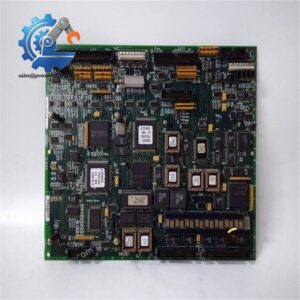
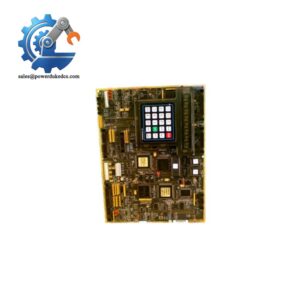
A D20 RTU can remain physically intact while a failed memory module prevents the controller from retaining or executing the expected application configuration. The GE D20EME 0526-21170-1 belongs to the D20 remote-terminal architecture and is identified as an extended-memory module associated with D20 controller hardware. Its role is storage expansion rather than field I/O: it works with the D20 processor environment to provide additional nonvolatile application/data capacity required by the installed substation automation configuration. For utility sites maintaining legacy D20 equipment, the exact memory-module revision matters because the RTU firmware and processor generation determine what memory hardware is supported.
The practical benefit is preserving the existing RTU application without changing the entire D20 platform. Memory compatibility is not simply a matter of physical connector fit. The installed D20 CPU revision, operating firmware, application database, and memory architecture must remain aligned. Because public references for the exact 0526-21170-1 suffix do not consistently expose a reliable memory-capacity figure, it would be unsafe to publish a specific MB or GB rating without verifying the physical label or GE hardware manual. — For a replacement project, the customer’s original module, processor revision, and current D20 configuration should therefore be treated as the primary acceptance criteria.
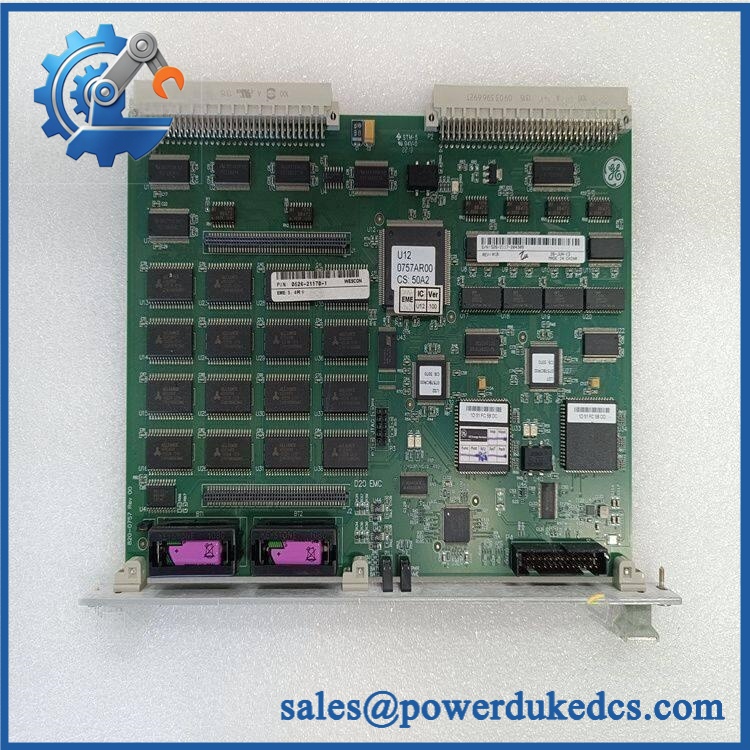
GE D20EME 0526-21170-1
Module 4: Compatibility & Installation Traps
Migration/Compatibility
- Replacement status: Configuration-specific memory module for compatible GE D20 RTU systems.
- Functional identity: D20EME Extended Memory Module; this is a storage component, not a D20 communication or analog I/O card.
- System family: GE D20 remote terminal unit / substation automation platform.
- Firmware requirement: Verify D20 processor firmware before replacement. Memory-module support can depend on the CPU and software generation.
- Logic rewrite: Normally not required for a like-for-like memory replacement, provided the correct D20 configuration is restored.
- Data migration: Back up the D20 application database and configuration before removing the existing memory module. Do not assume the replacement contains the site’s existing application.
⚠️ Field Traps (Watch Out)
- Memory-size and revision mismatch: Do not substitute another D20EME variant solely because it looks identical. The processor may reject an incompatible memory configuration or fail to retain the expected application.
- Configuration loss: A new memory module is normally blank or does not contain the customer’s current database. Preserve the original D20 application and configuration files before the maintenance window.
- Firmware compatibility: A processor firmware upgrade may be required in some migration scenarios, but it should never be performed simply because a replacement module was installed. Confirm the approved GE software combination first.
- Backplane handling: Inspect the module connector and mounting interface for oxidation or mechanical damage. A poor backplane connection can appear as a memory fault.
- ESD protection: Use grounded ESD controls when removing and installing the memory module.
Module 5: Quality Assurance SOP
Our pre-shipment inspection for a GE D20EME 0526-21170-1 focuses on module identity, memory integrity, and processor compatibility:
- OEM anti-counterfeit visual inspection — verify GE identification, designation, complete 0526-21170-1 number, revision markings, serial information, connector condition, and PCB construction.
- Part-number capture — photograph the front, rear, labels, and secondary identification markings before testing.
- Hardware-revision verification — compare the supplied module revision with the customer’s existing and processor information.
- PCB inspection — check contacts, solder joints, memory devices, connectors, contamination, corrosion, and evidence of thermal or mechanical damage.
- Memory-device inspection — verify the installed memory-device population and compare it with the expected configuration for the specific part number.
- Power-on self-test (POST) — install the module in a compatible D20 test platform and monitor processor initialization and diagnostic indications.
- Memory-detection test — verify that the D20 processor correctly recognizes the installed module.
- Read/write verification — perform controlled memory read/write testing over the supported address space using a dedicated test application.
- Retention test — remove controlled power according to the approved procedure and verify that retained data remains available after restart.
- Application-load test — where the test platform supports it, load a controlled D20 application/database and confirm correct processor access to the memory module.
- Processor handshake verification — verify stable communication between the memory module and the compatible D20 CPU hardware during startup and continuous operation.
- Extended observation — monitor initialization consistency, memory errors, diagnostic alarms, and temperature during controlled operation.
- Configuration record — document part number, revision, processor test platform, firmware version, detected memory configuration, read/write results, and photographs.
- Final QC review — cross-check every recorded identifier against the customer’s exact requirement.
- ESD packaging — protect the module and connector surfaces against ESD, moisture, dust, and mechanical impact before shipment.
Because public technical references do not provide a sufficiently reliable capacity specification for the exact 0526-21170-1 variant, the QA process should verify the physical memory configuration directly rather than inserting an unsupported numeric capacity into the product specification.
Module 6: CRO-Driven Buyer FAQ
1. Is GE 0526-21170-1 obsolete, and how do I verify authenticity?
The belongs to the legacy GE D20 RTU product family. Verify the complete 0526-21170-1 identifier, marking, hardware revision, memory-device population, connector layout, and physical condition. A photograph of the installed memory module and D20 processor label is the strongest pre-order reference.
2. What does do?
is an extended-memory module for compatible D20 RTU processor hardware. It provides additional storage capacity for the RTU’s application and operational data; it is not a standalone communication or field-I/O module.
3. Can I install 0526-21170-1 without backing up the D20 database?
That is not recommended. The replacement module should be treated as replacement hardware, not as a copy of the customer’s existing application. Preserve the D20 database, configuration, and software environment before removing the original module.
4. Does require a firmware update?
Not necessarily. Firmware compatibility should be checked against the installed D20 processor and existing system software before making any changes. A memory replacement alone is not a reason to upgrade a production RTU firmware image.
5. Can the be hot-swapped?
Do not assume live replacement is permitted. The module interfaces directly with the D20 processing hardware, and removing it can affect RTU operation or retained application data. Follow the applicable GE D20 maintenance procedure and the site’s approved LOTO and configuration-control process before removal.
6. What warranty and technical support should I expect?
Warranty duration should be stated on the quotation for the exact physical module supplied. Technical support should cover identification, processor compatibility, memory-detection testing, configuration-restoration guidance, and documented pre-shipment QA results. It should not substitute for utility RTU engineering, substation commissioning, or site change-control authorization.



 Start Chat