

Description
- Brand: GE / GE Energy
- Full Model Number: D20MIC10BASE-T / 820-0756
- System/Series Family: GE D20 / D200 RTU
- One-Sentence Core Function: Dual-channel 10BASE-T Media Interface Card providing the physical twisted-pair Ethernet connection for a D20/D200 Ethernet EME
- Top 3 Hardcore Specs: 10BASE-T Ethernet; 2 RJ45 channels; 10 Mbps Ethernet with twisted-pair cabling
- Stock Status: New surplus / fully tested refurbished, subject to exact hardware revision
GE’s D20/D200 documentation identifies the 10BASE-T MIC as the physical Ethernet interface used with the Ethernet EME. The 10BASE-T version provides two RJ45 connectors, while the MIC receives power and Ethernet signaling from the main EME through the interconnect cable.
Module 3: Commercial-Technical Deep Dive
A failed media interface can break SCADA Ethernet communications even when the D20 EME processor itself is still running normally. The GE D20MIC10BASE-T 820-0756 is the physical Ethernet interface card for GE D20/D200 systems using the Ethernet EME. The documented 10BASE-T version provides two RJ45 Ethernet channels for twisted-pair network connections, allowing the D20/D200 platform to communicate with its Ethernet network without replacing the main processing card. GE documentation explicitly distinguishes this MIC from the EME: the EME supplies the Ethernet capability, while the MIC provides the physical network interface.
The key maintenance advantage is targeted replacement. The D20/D200 architecture uses distributed processing, and the Ethernet MIC is a dedicated interface rather than the RTU’s primary CPU. The 10BASE-T format is designed for twisted-pair Ethernet and provides two independent physical channels; current technical references identify the interface as IEEE 802.3 10BASE-T with RJ45 connections and a nominal 10 Mbps data rate. (That bandwidth is legacy Ethernet, so the replacement is about preserving the installed RTU architecture—not upgrading network throughput.)
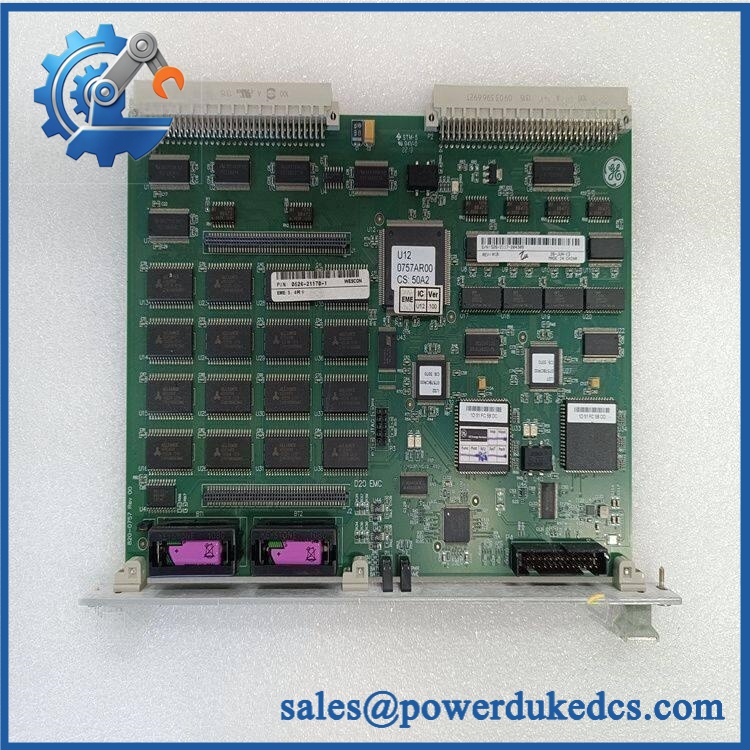
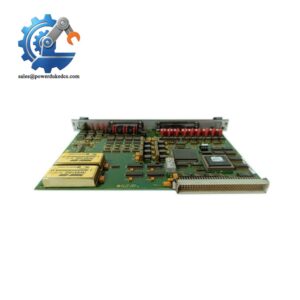
GE D20MIC10BASE-T 820-0756
Module 4: Compatibility & Installation Traps
Migration/Compatibility
- Replacement type: GE D20/ 10BASE-T Media Interface Card
- Model: D20MIC10BASE-T
- Part Number: 820-0756
- Primary system: GE D20 / RTU with Ethernet EME
- Firmware flash: Not normally applicable to the MIC itself
- Logic rewrite: Not required for a same-type physical interface replacement
- Drop-in status: Suitable when the installed D20/ system uses the corresponding 10BASE-T MIC architecture
- EME dependency: The MIC requires an Ethernet-capable D20/ EME and the appropriate interconnect path. GE documentation states that an Ethernet-enabled D20/ using the Ethernet EME requires a MIC.
- Physical interface: Two RJ45 connectors for the 10BASE-T implementation.
⚠️ Field Traps (Watch Out)
1. Do not confuse the MIC with the D20 EME.
The EME provides the Ethernet processing capability, while the MIC provides the physical Ethernet interface. Replacing the MIC will not correct a failed EME, VME-backplane problem, or application/configuration fault.
2. Confirm the Ethernet medium before ordering.
GE documents several D20/ MIC variants, including 10BASE-T, 10BASE2, and 10BASE-FL. A 10BASE-T MIC uses RJ45 twisted-pair connections; the 10BASE-FL version uses ST-style fiber connectors. These are not interchangeable merely because both are labeled “D20 MIC.”
3. Check both Ethernet channels.
The 10BASE-T MIC is a dual-interface module. Inspect both channel connectors, cable terminations, and link behavior before condemning the card. GE describes the MIC as a two-channel module, with the interconnect carrying both Ethernet signaling and power from the EME.
4. Do not expect modern Ethernet performance.
This is a 10BASE-T / 10 Mbps legacy Ethernet interface. The objective of replacement is system restoration and protocol continuity, not higher network bandwidth. Current technical listings also describe operation over twisted-pair cabling with connectors.
Module 5: Quality Assurance SOP
Each GE D20MIC10BASE-T 820-0756 unit should pass a documented pre-shipment inspection sequence:
- OEM anti-counterfeit visual inspection: Verify GE identification, D20MIC10BASE-T, 820-0756, board markings, connector arrangement, and manufacturing labels.
- Part-number verification: Match the complete number against the purchase order and installed D20/ BOM.
- Media-type verification: Confirm that the board is the 10BASE-T version and not the 10BASE2 coaxial or 10BASE-FL fiber variant.
- Mechanical inspection: Check the PCB, VME/interconnect interface, connectors, mounting points, and board surface for corrosion, contamination, bent contacts, cracks, or unauthorized repair.
- Interconnect inspection: Verify the EME-to-MIC cable interface and inspect the connector for damaged or recessed contacts.
- Power-on self-test (POST): The MIC is not an independent CPU. When installed in an approved D20/ test chassis, verify expected startup status and normal Ethernet interface operation.
- Link verification: Test both channels for Ethernet link establishment and controlled data transmission.
- Protocol handshake verification: With a compatible D20 EME/test system, verify Ethernet communication at the RTU level and confirm that the SCADA-side link remains operational.
- Channel isolation check: Verify both physical ports independently where the test fixture permits.
- Final QC: Photograph the part-number label, record both-channel test results, protect and backplane interfaces, and package the module in ESD-safe material.
Module 6: CRO-Driven Buyer FAQ
1. What is GE D20MIC10BASE-T 820-0756?
It is a dual-channel 10BASE-T Media Interface Card for GE D20/ RTUs. GE documentation states that the MIC provides the physical Ethernet interface for an Ethernet-enabled D20/ system, while the Ethernet EME provides the main Ethernet capability.
2. How many Ethernet ports does the 820-0756 provide?
The 10BASE-T MIC provides two Ethernet interfaces. GE’s D20/ technical documentation describes the 10BASE-T version as a dual-interface module.
3. Is compatible with 10BASE2 or 10BASE-FL systems?
No direct substitution should be assumed. GE documents separate MIC formats for 10BASE-T twisted pair, 10BASE2 coaxial, and 10BASE-FL fiber. The physical media, connector type, and associated network hardware differ.
4. Can the 820-0756 be hot-swapped?
Do not assume hot-swap capability from the part number. The MIC is connected to the D20/ Ethernet EME and chassis architecture, so replacement should follow the applicable GE RTU maintenance procedure and place the relevant equipment in the required maintenance state before removal.
5. What warranty and technical support are provided?
Warranty duration should be stated on the quotation for the exact inventory condition supplied. Technical support should cover part-number and media-type verification, D20/ compatibility checks, dual-port testing, inspection records, and replacement guidance within the documented RTU architecture. SCADA network reconfiguration, site cabling changes, and live substation commissioning remain the responsibility of qualified personnel.




 Start Chat