

Description
- Brand: GE Multilin
- Full Model Number: F650-G-N-A-B-F-2-G-1-HI-C-E
- Lifecycle Status: Active product family; exact configuration lifecycle to be verified
- Core Function: Feeder protection, automation, control, monitoring and metering
- Top 3 Technical Specs: F650 digital bay controller; 1 A or 5 A CT input family; 85–264 VAC / 88–300 VDC power supply family
- Protection Functions: 50/51, 50N/51N, 46, 67, 27, 59, 81, 79 and breaker-failure functions
- Communications: Serial and Ethernet communications; protocol availability depends on hardware/configuration
- Time Synchronization: IRIG-B and SNTP supported within the F650 platform
- Form Factor: Panel-mounted digital bay controller with modular construction
- Configuration: F650-G-N-A-B-F-2-G-1-HI-C-E
- Condition: New Original / New Surplus subject to actual inventory
- Stock Status: Physical stock confirmation required before PO
- Shipping: Emergency dispatch cutoff to be confirmed at order time
The GE Multilin F650 is a feeder protection, automation and control relay designed for feeder management and bay-control applications. GE’s current documentation identifies the F650 as a digital bay controller with protection, monitoring, metering, communications and programmable control functions.
Obsolescence & Supply Chain Deep Dive
The procurement risk with a configured is not simply finding an relay; it is obtaining the same ordering-code configuration. The requested -G-N-A-B-F-2-G-1-HI-C-E contains multiple configuration fields, so a visually similar with a different suffix can have different hardware, I/O, communications or protection options. GE’s documentation provides a formal ordering-code section for the family, making the complete catalog string the correct purchasing reference.
From a TCO perspective, an exact-configured replacement can preserve an existing feeder protection scheme without forcing a switchgear redesign or protection-study revision. The platform supports extensive protection functions, event recording, waveform capture, metering and SCADA communications, so replacing the relay rather than redesigning the protection system can limit engineering and commissioning work.For a critical feeder, however, procurement should compare the relay’s hardware version and firmware level before approving the spare (a newer software release does not automatically make every hardware configuration interchangeable).
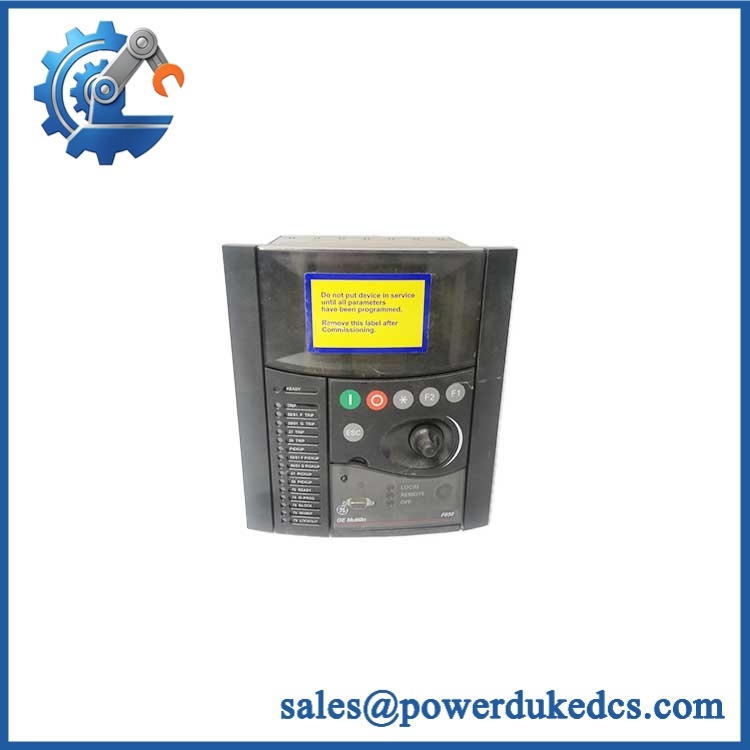
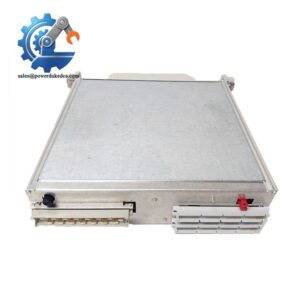
GE F650-G-N-A-B-F-2-G-1-HI-C-E
Compatibility & Replacement Matrix
| Replacement Scenario | Assessment | Engineering / Procurement Action |
|---|---|---|
| Same -G-N-A-B-F-2-G-1-HI-C-E configuration | Drop-in Replacement | Verify complete ordering code, hardware revision, wiring and configuration file |
| Different ordering-code suffix | Software Compatible / Hardware Verification Required | Compare each ordering-code field before substitution |
| Same hardware with different firmware | Software Compatibility Check Required | Verify firmware support, configuration-file compatibility and required EnerVista 650 Setup version |
| Different CT input configuration | Hardware Modification / Protection Review Required | Confirm 1 A vs 5 A CT requirements before installation |
| Different communications hardware | Hardware Verification Required | Confirm Ethernet, serial, fiber or other communication option |
| Like-for-like relay replacement labor | Approximately 2–4 hours | Includes isolation, removal, installation and basic commissioning |
| Protection-setting transfer and testing | Approximately 4–8 hours | Depends on setting complexity and site acceptance requirements |
| Alternate configuration engineering review | Approximately 4–12 hours | Requires comparison of hardware, I/O, communications and protection settings |
GE states that the uses modular construction and supports serial and Ethernet communications, while its protection platform includes a broad set of feeder protection and control functions.
Field Traps to Watch Out For
Ordering-code mismatch: Do not approve an replacement merely because the front panel says “.” The complete F650-G-N-A-B-F-2-G-1-HI-C-E code should be compared field by field with the existing relay.
CT rating: The platform supports 1 A and 5 A CT applications. The replacement must match the installed CT secondary rating and protection configuration. Applying the wrong CT configuration can invalidate protection settings and commissioning results.
Firmware and hardware relationship: GE currently provides firmware 9.20 and notes that /C650 hardware version 11 is required for that upgrade path. Older installations may use substantially earlier firmware generations, so engineers should verify the installed hardware version before planning a firmware update.
Setting-file compatibility: Preserve the existing configuration and settings before replacement. A new relay should not be placed into service merely because its model string appears similar; protection settings, I/O assignments, communications and logic must be validated.
Quality Assurance & Testing SOP
For a protection relay, visual inspection is only the first control point. QA should establish exact ordering-code identity, hardware condition and functional response before releasing the unit to a maintenance department.
- Part-number verification: Confirm the complete -G-N-A-B-F-2-G-1-HI-C-E ordering code.
- OEM identification inspection: Check GE Multilin labels, model markings, serial information and hardware identifiers.
- Configuration verification: Record every visible ordering-code field and hardware option.
- PCB and chassis inspection: Check for corrosion, contamination, damaged components, cracked housings and signs of overheating.
- Terminal inspection: Examine CT, VT, control-power, digital-I/O and output terminals for damage or contamination.
- Front-panel inspection: Check LCD, pushbuttons, LEDs, labels and front-panel condition.
- Power-supply verification: Confirm the applicable AC/DC supply range against the actual hardware configuration before energization.
- Power-on self-test: Energize the relay under controlled laboratory conditions and verify startup diagnostics.
- LCD/HMI test: Verify display operation, keypad response and access to diagnostic/status menus.
- Protection-function test: Inject representative current and voltage signals using a calibrated relay test set and verify applicable pickup/trip functions.
- Digital-input test: Simulate configured input states and confirm correct recognition.
- Digital-output test: Verify programmed output operation under controlled test conditions.
- Trip-circuit verification: Test applicable trip and breaker-control outputs without connecting to an energized breaker.
- Communication test: Verify the configured serial/Ethernet interface and applicable protocol.
- Time-synchronization test: Where configured, verify IRIG-B or SNTP time synchronization.
- Event-record test: Generate controlled test events and verify event capture and retrieval.
- Metering verification: Compare measured current, voltage, frequency and power quantities against the relay test-set values.
- Configuration backup: Save the tested configuration and retain it with the QC record where permitted.
- Final inspection: Recheck terminals, enclosure, display and identification labels after testing.
- ESD-safe packaging: Package the relay in appropriate protective material for shipment.
- QC record: Record complete ordering code, serial number, hardware version, firmware version, test date and test result.
GE’s documentation includes dedicated sections covering hardware, communications, protection, control, monitoring and maintenance, while GE currently publishes firmware and configuration resources through its product resource center.
Procurement & Lifecycle FAQ
Is the -E genuinely in stock, and what is the emergency-shipping cutoff?
Physical inventory should be confirmed before the PO is released. For an emergency requirement, request confirmation of the actual relay, complete ordering code, condition, hardware version, firmware version and warehouse release cutoff. A generic stock statement is insufficient for a configuration-specific purchase.
How do you verify the condition and authenticity of this relay?
The supplier should verify the complete ordering code directly from the relay label and record the serial number and hardware identifiers where available. Testing should include controlled power-up, display and diagnostic checks, I/O verification, communications testing and protection-function testing with a calibrated relay test system.
Are there firmware compatibility issues before issuing the PO?
Yes. The platform has multiple firmware generations. GE currently publishes firmware 9.20 and states that /C650 hardware version 11 is required for that upgrade path.Engineers should therefore record the existing relay’s hardware and firmware versions before transferring settings or planning an upgrade.
What warranty terms and return conditions should procurement request?
The quotation should specify the warranty period, warranty start date, DOA definition, return authorization process and remedy. Procurement should also require explicit identification of the condition: new original, new surplus, used, refurbished or repaired.
Can an?
Not automatically. The is a configurable feeder protection platform, and differences in CT inputs, I/O, communications and other hardware options can affect interchangeability. Compare the complete ordering code, hardware version, wiring, protection settings and communications configuration before approving an alternate unit.
:::



 Start Chat