

Description
- Brand: GE / GE Fanuc
- Full Model Number: IC600CB524M
- System/Series Family: GE Fanuc Series Six
- Core Function: Arithmetic control module for Series Six CPU assemblies
- Module Type: Arithmetic Control Module
- Processing Architecture: Bit-slice architecture
- Processor Technology: 4 × AM2903 bit-slice devices
- Status Indicators: RUN and CHECK LEDs
- Compatible CPU Families: Series Six Model 60, Model 600, Model 6000
- Interconnection: Ribbon-cable interface to logic control module
- Mounting: Series Six CPU rack
- Application: Legacy PLC arithmetic and instruction execution
- Stock Status: New Surplus / Fully Tested Refurbished — verify exact revision, mating logic-control module, and condition
GE Fanuc references identify IC600CB524M as an Arithmetic Control Module for the Series Six PLC family. Technical documentation describes the CB524 architecture as a bit-slice processing module using four AM2903 devices, with RUN and CHECK indicators for CPU operating and diagnostic status.
Module 3: Commercial-Technical Deep Dive
A Series Six CPU can show apparently healthy rack power and still fail to execute the user program when the arithmetic control section is defective. The GE Fanuc IC600CB524M performs the arithmetic and logical processing functions within the Series Six CPU architecture. GE technical references describe the module as a bit-slice design using four AM2903 devices, working with the associated logic-control hardware to generate system control and timing functions. The module is documented across the Series Six CPU family, including Model 60, Model 600, and Model 6000 configurations.
The practical ROI comes from preserving the installed CPU architecture rather than replacing an entire Series Six rack because of a single processing-board fault. The RUN and CHECK indicators provide immediate field-level diagnostic information: RUN indicates normal execution, while CHECK is associated with successful self-test and scan-health monitoring. The module connects to the logic-control module through a ribbon-cable interface, so board-level replacement must account for the paired control architecture. —The revision suffix matters; the Series Six family contains multiple arithmetic-control revisions, and a visually similar CB524 variant should not be assumed interchangeable without checking the installed CPU configuration.
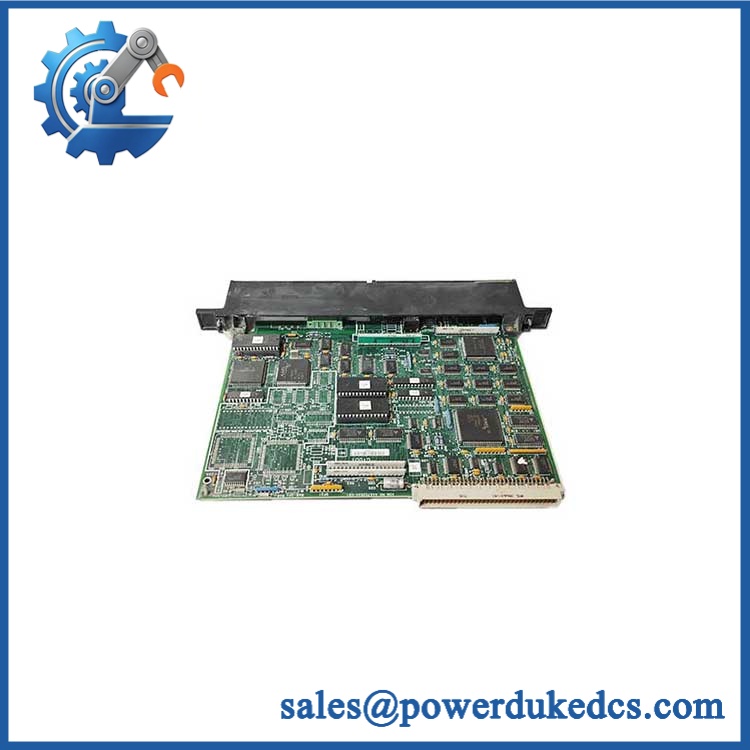
GE IC600CB524M
Module 4: Compatibility & Installation Traps
Migration/Compatibility
For an existing GE Fanuc Series Six installation specifying IC600CB524M, the preferred strategy is a like-for-like arithmetic control module replacement.
No conventional PLC program rewrite is caused by replacing the arithmetic-control board itself. The critical compatibility checks are the exact board revision, CPU model, paired logic-control module, rack/backplane configuration, firmware or system-memory arrangement, and ribbon-cable connection.
The IC600CB524 family exists in numerous revisions, including K, L, M, N, O, P, Q, R, S, T, U, V, W, X, Y, and Z listings. That revision spread is a strong reason to match the complete installed part number rather than ordering only by the base CB524 designation.
⚠️ Field Traps (Watch Out)
- Arithmetic board versus logic-control board: The CB524M is the arithmetic section of the CPU; it should not be confused with Series Six advanced-logic or I/O-control modules. Verify the rack position and board identity before removal.
- Revision matching: Multiple CB524 revisions exist. Do not assume that an older or newer suffix is interchangeable without checking the CPU manual and system revision.
- Ribbon-cable connection: The arithmetic module interfaces with the logic-control module through a ribbon cable. Inspect connector seating and cable condition carefully; a loose connection can mimic a defective processor board.
- RUN/CHECK interpretation: A lit CHECK indicator is meaningful only in the proper CPU operating context. Verify the full CPU state, rack power, memory, logic-control module, and clock behavior before condemning the CB524M.
- ESD and connector handling: The board contains multiple integrated processing devices and edge/backplane connections. Use controlled ESD procedures during removal and installation.
Module 5: Quality Assurance SOP
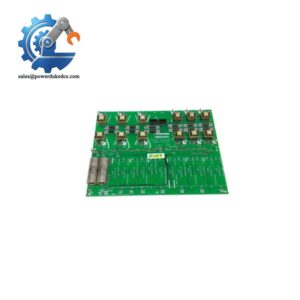
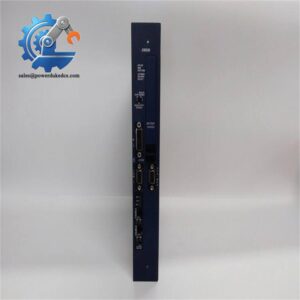
- OEM anti-counterfeit visual inspection — verify GE/GE Fanuc markings, complete IC600CB524M identification, board layout, faceplate markings, LEDs, connectors, and evidence of unauthorized modification.
- Part-number reconciliation — photograph the complete model number, revision marking, serial information, and every secondary identifier.
- Mechanical inspection — examine the PCB, edge connector, mounting hardware, ribbon-cable connector, LED window, and component surfaces for cracks, corrosion, contamination, or rework.
- CPU compatibility verification — confirm the intended Series Six CPU family and paired logic-control module before testing.
- Power-on self-test (POST) — install the board in an approved Series Six test rack and verify startup sequence and diagnostic behavior.
- RUN indicator verification — confirm that the module enters the expected execution state under a valid CPU configuration.
- CHECK indicator verification — verify the documented CHECK behavior during the CPU self-test and normal scan cycle.
- Arithmetic-operation test — execute representative arithmetic, logical, comparison, and data-manipulation instructions and verify correct results.
- Instruction-execution test — run a representative Series Six test program and confirm stable scan execution without watchdog or timing errors.
- Logic-module communication test — verify reliable exchange between the CB524M and the associated logic-control module through the ribbon interface.
- Extended stability observation — operate the CPU under representative program load and monitor for intermittent CHECK faults, scan instability, resets, or abnormal temperature.
- Final QC release — retain board photographs, revision information, CPU test results, diagnostic observations, and packaging inspection records.
For a legacy processor board, a power-up test is only a first check. The meaningful acceptance test is correct instruction execution with the intended Series Six CPU architecture and stable RUN/CHECK behavior.
Module 6: CRO-Driven Buyer FAQ
1. What is GE IC600CB524M?
It is a GE Fanuc Series Six Arithmetic Control Module. The board performs arithmetic and logical processing functions for Series Six CPU assemblies and uses a bit-slice architecture based on AM2903 devices.
2. Which PLC systems use ?
The CB524 arithmetic-control module is documented for GE Series Six CPU configurations, including Model 60, Model 600, and Model 6000 systems.
3. Is interchangeable with IC600CB524K or another CB524 revision?
Do not assume interchangeability. The family includes many revisions, and the exact suffix should be matched to the installed CPU hardware, logic-control module, and system documentation.
4. Can be hot-swapped?
Do not assume hot-swap capability. The board is part of the central CPU architecture and connects directly to the rack and associated logic-control hardware. Follow the Series Six shutdown, isolation, and board-replacement procedure before removal.
5. Does replacing the CB524M require PLC program rewriting?
Normally, replacing the arithmetic-control board does not require rewriting the application program. The original CPU configuration, memory, logic-control hardware, and system revision must still be preserved and verified before returning the controller to operation.
6. What do the RUN and CHECK LEDs indicate?
The RUN indicator is associated with normal CPU execution. The CHECK indicator is used for CPU self-test and scan-health diagnostics. A fault indication should be evaluated together with the complete Series Six CPU state rather than treating the LED alone as proof of board failure.
7. What warranty and technical support should I expect?
The quotation should clearly state whether the module is new surplus, unused, or tested refurbished and specify the warranty period. Technical support should cover exact revision identification, Series Six CPU compatibility, logic-control-module matching, diagnostic testing, and documented QC results. Legacy PLC program recovery, machine commissioning, and control-system modifications should remain separate engineering activities.


 Start Chat