

Description
SEO Titles
- GE IC660BBS103 | 8-Point Discrete I/O Block for Legacy Genius Bus Systems
- GE IC660BBS103 | New Original Genius I/O Block Available for Replacement Stock
- GE IC660BBS103 | 4 Isolated I/O Groups, 2 A Per Circuit
- GE IC660BBS103 | GE Fanuc Genius Replacement Module for 115V AC / 125V DC Applications
At-A-Glance Executive Brief
- Model: IC660BBS103
- Brand: GE / GE Fanuc
- Series: Genius I/O
- Part Type: 8-circuit isolated discrete I/O block
- Core Function: Provides field-level discrete input/output control over a Genius I/O network, with four electrically isolated pairs.
- Key Specs: 115 VAC / 125 VDC nominal operation; 8 circuits; up to 2 A RMS per AC output; 2 A resistive or 1 A inductive DC output; 15 A maximum block output; 250 VAC/VDC continuous isolation between groups and ground; 0–60°C operating range.
Product Introduction
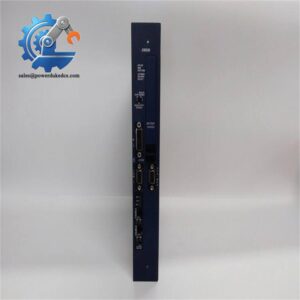
A failed Genius field block can stop a small portion of a production process while the control CPU itself remains healthy. In that situation, the GE IC660BBS103 provides a practical replacement path for legacy Genius I/O installations without changing the basic field architecture.
This module is an 8-circuit isolated Genius I/O block designed for nominal 115 VAC or 125 VDC field circuits. Four isolated groups divide the eight circuits into pairs, which is useful when field devices operate from electrically separate sources. The also differs from the IC660BBS101 family revision in an important way: it is the no-Failed-Switch-Diagnostic version, making it appropriate for applications where a manual switch can be wired in parallel with an output.
For legacy migration work, part-number verification matters more than visual similarity. (A similar-looking Genius block can have materially different electrical characteristics.)
Core Technical Specifications
| Parameter | Value |
|---|---|
| Manufacturer | GE / GE Fanuc |
| Product Series | Genius I/O |
| Model | |
| Module Type | 8-circuit isolated discrete I/O block |
| Nominal AC Voltage | 115 VAC |
| Nominal DC Voltage | 125 VDC |
| AC Operating Range | 93–132 VAC |
| DC Operating Range | 105–132 VDC |
| Number of Circuits | 8 |
| Isolation Arrangement | 4 isolated groups, 2 circuits per group |
| AC Output Current | 2 A RMS per circuit |
| DC Output Current | 2 A resistive / 1 A inductive per circuit |
| Maximum Block Output | 15 A |
| Block-to-Block Isolation | 1,500 V |
| Group-to-Ground / Group-to-Group Isolation | 250 VAC/VDC continuous |
| Transient Rating | 2,000 V peak for 10 seconds |
| Input Filter | 10–100 ms, configurable in 10 ms increments |
| AC Turn-On Delay | Approximately 0.5 cycle + 1 ms |
| DC Turn-On Delay | Approximately 1 ms |
| Control Power Requirement | 8 W maximum, block electronics |
| Operating Temperature | 0 to +60°C |
| Storage Temperature | −40 to +80°C |
| Relative Humidity | 5–95%, non-condensing |
| Weight | Approximately 1.8 kg / 4 lb |
| Failed-Switch Diagnostic | Not included |
The published Genius documentation identifies the as an 8-circuit isolated block and lists the 115 VAC / 125 VDC electrical ratings, isolation, environmental limits, and heat-dissipation figures.
Application Scenarios & Pain Points
A packaging line loses several actuator commands while the PLC processor remains online. Replacing the affected Genius block with an can restore high-voltage discrete field control where the installed configuration calls for the 115 VAC / 125 VDC isolated block family.
In utility and power-control panels, four isolated pairs can be useful when separate field power domains must remain electrically isolated. The design supports up to 250 VAC/VDC continuous isolation between groups and ground, subject to the installation requirements of the system.
At manufacturing sites running older Genius networks, the module can serve as a spare for aging field I/O rather than forcing an immediate control-system migration. The key purchasing check is the exact catalog number and circuit configuration—not simply whether the replacement is labeled “Genius I/O.”
For manual-switch applications, the absence of Failed Switch diagnostics is intentional. GE documentation describes the BBS103/BBS101 class for applications where a manual switch may be wired in parallel with a block output.
With sustained enclosure temperatures above 50°C, thermal margin becomes a maintenance consideration because the specified operating range ends at 60°C. Heat dissipation also varies with load; historical documentation cites up to 45.6 W when eight outputs operate at 2 A.
🚨 Common Error Codes & Diagnostic Symptoms
The does not use a universally applicable PLC-style numerical failure-code scheme that can be safely assigned to every Genius controller. Field troubleshooting therefore relies heavily on block status, circuit diagnostics, and Genius network diagnostics.
Unit OK LED Off / unexpected block shutdown → Diagnosis: Check block power, I/O power sources, wiring, and internal power-supply condition. A loss of I/O power or internal hardware failure can prevent normal block operation → Action: Verify field and control power; replace the block when the hardware fault is confirmed.
Output remains off under a valid command / overload indication → Diagnosis: The affected output circuit may have entered its electronic protection state because of short circuit, overload, or thermal stress → Action: Remove the field fault, reset the circuit according to the system procedure, and replace the module when the channel repeatedly trips without an external load fault.
Multiple channels lose I/O while the Genius network remains active → Diagnosis: Investigate pair-level loss of I/O power, terminal wiring, field supply separation, or internal block failure before replacing the controller → Action: Test the affected power pair and substitute a verified when the block itself is implicated.
🚨 Cross-Reference & Lifecycle Migration
Replacement and Revision Notes
The documented predecessor relationship is:
→ replaces IC660BBS101
Both belong to the 115 VAC / 125 VDC isolated Genius I/O family. The significant functional distinction is the absence of Failed Switch diagnostics on the BBS103.
Do not treat every IC660-series block as a direct electrical substitute. For example, the IC660BBD100 has a different electrical implementation even though it can occupy a similar Genius I/O role. Field documentation specifically notes differences between these block types.
Firmware / Configuration
A firmware flash should not be assumed simply because an is replacing an older BBS-series block. Genius block replacement normally requires verification of the block configuration, device address, circuit modes, filter settings, and host-controller configuration. Any change to the installed configuration should follow the original system documentation and commissioning procedure.
Lifecycle Status
Lifecycle: Obsolete / Discontinued by manufacturer
Current secondary-market references identify the as discontinued.
For plants still dependent on Genius I/O, that status has a direct inventory implication: maintain confirmed spare coverage for critical nodes, preserve the exact catalog number in the BOM, and consider a controlled legacy migration plan instead of waiting for a field failure to trigger procurement.
Field Engineer’s Tech Notes
Watch the terminal configuration before moving wires. The four isolated groups are electrically meaningful; do not assume every terminal shares a common reference. Confirm the field-power arrangement against the original wiring diagram before energizing the replacement.
Do not confuse “Genius compatible” with “electrically equivalent.” A BBD-series block or another BBS revision may communicate on the same general Genius architecture while having different voltage, current, diagnostics, or circuit behavior. (This is a common source of replacement mistakes in older cabinets.)
Handle the electronics using proper ESD precautions, especially when a terminal assembly is being reused with a replacement electronics assembly.
Strict QA & Testing SOP
For an industrial spare supplied as New Original, the recommended inspection sequence is:
1. Inbound identification
Verify the exact catalog number , manufacturer markings, nameplate data, revision information where present, and physical configuration.
2. Visual inspection
Check the housing, terminal interfaces, labels, LEDs, mounting features, and accessible circuit-board areas for cracks, corrosion, contamination, impact damage, or evidence of prior field use.
3. Documentation and traceability
Record serial or manufacturing identifiers when available. Photograph the unit and packaging so the shipped item can be correlated with the inspection record.
4. Electrical inspection
Verify that the module’s intended voltage family matches the purchasing specification: 115 VAC / 125 VDC. Check for abnormal resistance or visible evidence of shorted protection components before live testing.
5. Live Genius-system test
Where test equipment and a suitable Genius controller are available, install the block on a controlled test rig. Verify block recognition, status indication, configuration access, circuit response, and representative input/output operation.
6. Output protection verification
For an appropriate controlled test load, confirm expected circuit behavior and investigate abnormal overload, short-circuit, or thermal diagnostic responses rather than repeatedly stressing a suspect channel.
7. Burn-in / operational observation
Observe the tested unit under representative load and temperature conditions for stability before final release.
8. Final packaging
Use anti-static protection for the electronics, mechanical cushioning for the block and terminals, moisture protection where needed, and an external identification label tied to the QC record.
Test videos are available for qualifying inventory when a buyer requires visual evidence of inspection or live functional testing.
Buyer’s FAQ
Can the be hot-swapped?
Do not assume hot-swapping is permitted. A Genius I/O block carries field power as well as network connections, and the connected circuits can involve 115 VAC or 125 VDC. Follow the plant’s electrical isolation and lockout procedure before removal unless the specific system documentation explicitly authorizes energized replacement.
Is a New Original the same as a refurbished unit?
No. “New Original” should mean an unused OEM-manufactured unit, while refurbished or remanufactured stock has a different commercial and traceability profile. For obsolete Genius hardware, request photos of the actual unit, nameplate, packaging, and available traceability information before purchasing.
Does the BBS103 replace the BBS101?
Yes. Published product documentation identifies as the replacement for IC660BBS101. The BBS103 is specifically the version without Failed Switch diagnostics, so the original application still needs to be checked before substitution.
What warranty should I expect?
Warranty depends on the supplier and the physical condition sold. For an industrial spare, the purchase confirmation should state the warranty period, condition—such as New Original, New Surplus, or refurbished—and whether the warranty covers functional failure after installation. For obsolete parts, obtaining the warranty terms in writing is especially important.


 Start Chat