

Description
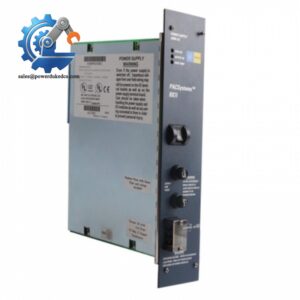
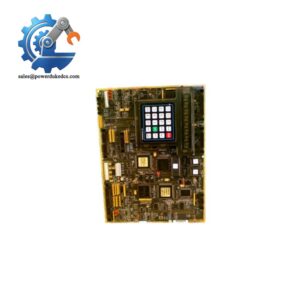
- Model & Brand: GE Fanuc / General Electric IC695CMU310
- Series: PACSystems RX3i
- Part Type: Max-ON Hot-Standby Redundancy CPU
- Physical Dimensions: Approximately 40.3 × 133.0 × 113.3 mm (W × H × D) for the CPU module envelope; confirm the actual unit and connector projection before cabinet drawings are finalized.
- Estimated Shipping Weight: Approximately 0.45–0.60 kg for a protected CPU shipment; actual packed weight should be used for freight calculations.
- What’s in the Box: IC695CMU310 CPU, ESD shielding bag, protective packaging, and applicable inspection/QC documentation. The IC698ACC701 lithium battery pack, auxiliary battery module, programming cable, and RX3i backplane are separate items unless explicitly included.
Product Introduction
The GE IC695CMU310 installs as the CPU of an RX3i Max-ON hot-standby redundant controller pair, with each redundant system built around its own RX3i backplane, power supply, and CMU310 processor. The two controllers exchange operating data through one or two dedicated Ethernet synchronization LANs, while the Max-ON software manages master selection, synchronization, program-equivalence checks, and diagnostic functions.
This is a legacy redundancy CPU, not a standard RX3i single-controller CPU. The module uses a 300 MHz processor with 10 MB battery-backed user memory and 10 MB nonvolatile flash user memory, together with RS-232 and RS-485 serial interfaces. Battery preservation is a real warehouse concern here (the memory-retention battery is a replaceable accessory, and its installation sequence matters).
Core Technical Specifications
| Parameter | Value |
|---|---|
| Manufacturer | GE Fanuc / General Electric |
| Model | IC695CMU310 |
| Series | PACSystems RX3i |
| Functional Type | Max-ON Hot-Standby Redundancy CPU |
| CPU Architecture | RX3i |
| Processor | 300 MHz |
| User Memory | 10 MB battery-backed RAM |
| Nonvolatile User Memory | 10 MB flash |
| Discrete Reference Memory | Up to 32 Kbits %I and %Q |
| Analog Input Reference | Up to 32 Kwords %AI |
| Analog Output Reference | Up to 32 Kwords %AQ |
| Program Blocks | Up to 512 |
| Maximum Program Block Size | 128 KB |
| Symbolic Memory | Up to 10 MB |
| Program Execution Speed | Approximately 0.195 ms per 1,000 Boolean contacts/coils |
| Floating Point | Yes |
| Embedded Serial Ports | 1 × RS-232, 1 × RS-485 |
| Serial Protocols | Modbus RTU Slave, SNP, Serial I/O |
| Redundancy Network | 1 or 2 dedicated Ethernet synchronization LANs |
| Backplane Support | RX3i PCI and 90-30-style serial buses |
| I/O Architecture | Up to 8 simplex Genius buses or 4 dual Genius buses; Ethernet I/O supported through applicable modules |
| Time-of-Day Accuracy | Maximum drift approximately 2 s/day |
| Elapsed-Time Accuracy | Approximately 0.01% maximum |
| Power Requirement | +3.3 VDC at 1.25 A nominal; +5 VDC at 1.0 A nominal |
| Approx. Backplane Power | About 10.25 W from nominal rail values |
| Operating Temperature | 0°C to +60°C |
| Battery | Lithium memory-retention battery required for retained RAM |
| Recommended Battery | IC695ACC302 or specified compatible battery pack |
| Configuration | Max-ON redundancy application |
| Firmware | Field-upgradeable |
| Hot Swap | Do not assume CPU hot removal |
| Lifecycle Position | Legacy / Obsolescence-Controlled |
The documented power figures of +3.3 VDC at 1.25 A and +5 VDC at 1.0 A correspond to approximately 10.25 W of nominal rail power before accounting for conversion losses and the exact rack conditions. Use the actual RX3i power-budget calculation for final cabinet thermal assessment rather than treating this arithmetic value as a measured consumption figure.
The CMU310’s redundancy behavior is equally important. GE describes the Max-ON architecture as using one or two dedicated Ethernet LANs between the two controller systems, with a transfer of control that can occur within approximately two to three CPU logic scans while I/O states are maintained. Max-ON is not intended for SIL 2 or SIL 3 applications.
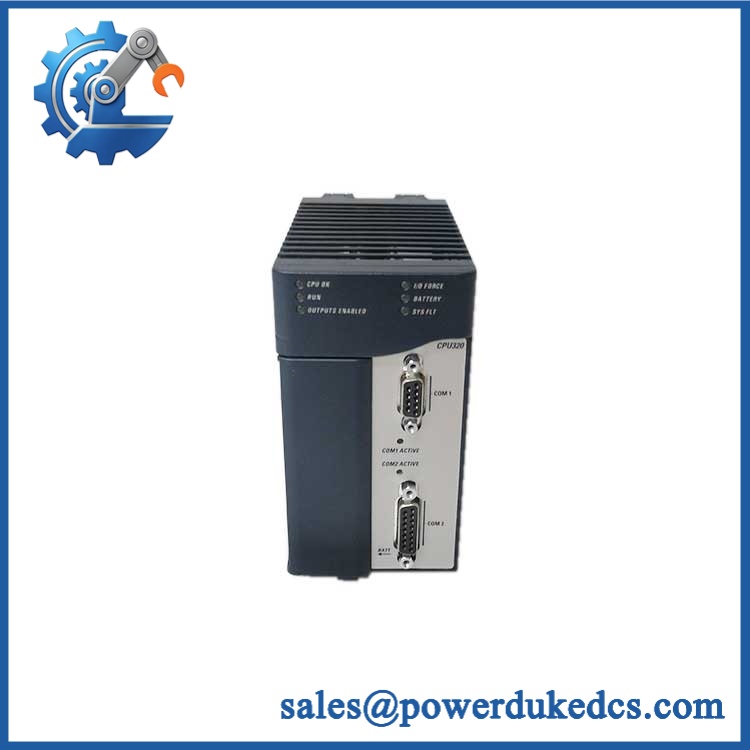
GE IC695CMU310
🚨 Global Compliance & Industry Certifications
The IC695CMU310 is a PACSystems RX3i CPU, so compliance documentation should be evaluated against the complete RX3i equipment configuration, including the backplane, power supply, expansion equipment, and installation environment.
- CE Mark: Verify the applicable PACSystems RX3i declaration for the hardware revision and installation.
- UL/cUL: Verify the specific RX3i system certification and permitted installation conditions.
- ATEX / IECEx: Do not assume the CMU310 has standalone hazardous-area approval. Certification for potentially explosive atmospheres requires the exact certified equipment configuration and applicable certificate.
- Marine / DNV GL: No standalone marine approval should be assumed without project-specific documentation.
- FCC / EMC: Applicable EMC requirements should be checked against the RX3i hardware and installation documentation rather than the CPU alone.
- Electrical Safety: The CPU’s isolation and backplane characteristics are part of a larger RX3i system design.
- Country of Origin: Obtain from manufacturing traceability or supplier documentation.
- HS Classification: Confirm with the destination-country customs broker.
For hazardous-area deployments, ATEX/IECEx certification matters because it defines equipment permitted for use in potentially explosive atmospheres and the associated installation conditions; a general UL control-equipment listing does not automatically provide that protection.
Verify specific lot certifications with OEM.
🚨 Long-Term Storage & Asset Preservation Guide
Keep the CMU310 in its ESD shielding bag until installation. Protect the backplane connector and front-panel serial interfaces from dust and mechanical impact; contact contamination on a legacy rack can create intermittent faults that are difficult to distinguish from a CPU problem.
The CPU uses battery-backed RAM, so battery condition belongs in the warehouse asset record. GE identifies IC695ACC302 as a recommended battery and provides a specific installation sequence: the battery should be connected only after the CPU is installed in a powered rack, after which the CPU can be powered down for normal battery-backed operation. Do not install the battery casually on a loose shelf unit.
For multi-year storage, maintain a dry warehouse with no condensation and target below approximately 60% RH where practical. Record the battery lot/date separately, inspect for swelling or leakage, and replace aged batteries through the approved procedure rather than storing a CPU with an unknown battery history.
Because the CMU310 is a legacy CPU, preserve the firmware revision and Max-ON application backup with the hardware record. A CPU without the matching redundancy software/configuration has limited value during an outage.
Physical Installation Prerequisites
Install the IC695CMU310 in the designated RX3i Universal Backplane and use the correct CPU slot arrangement specified by the Max-ON system design. The redundant system requires two complete RX3i control systems rather than two CPUs placed casually into one chassis.
The synchronization LANs deserve particular attention. GE’s Max-ON architecture uses one or two dedicated Ethernet LANs between the primary and standby systems. Do not connect those links to an ordinary plant LAN without verifying the network design and addressing requirements.
Provide the rack’s specified airflow and service clearance. There is no engineering basis for applying a universal 50 mm rule to every RX3i cabinet; use the actual GE installation drawing and account for adjacent power supplies, Ethernet modules, and expansion hardware.
Before power-up, verify the RX3i power supply, backplane, CPU seating, serial connections, and redundancy-network cabling. Where the memory-retention battery is required, follow GE’s battery installation sequence exactly.
Buyer’s FAQ — Logistics & Compliance Focus
Q: What HS Tariff Code should I use for ?
A: This is an industrial PLC redundancy CPU, but the final Harmonized System classification depends on the importing country’s tariff schedule and customs interpretation. Have the importer or customs broker confirm the final code before shipment.
Q: Does the export location determine Country of Origin?
A: No. COO should be supported by the manufacturer’s traceability or supplier documentation for the actual CMU310. Shipping location, warehouse location, or export port does not establish manufacturing origin.
Q: Does the include the latest firmware pre-loaded?
A: Do not assume it. GE documents the as field-upgradeable, with historical firmware releases including version 5.60 and earlier revisions. The correct firmware depends on the Max-ON application, programming environment, and installed RX3i configuration; verify the approved system baseline before upgrading or deploying a replacement.
Q: What should shipping insurance cover for this CPU?
A: Insure the controller for its documented commercial replacement value and retain pre-shipment photographs of the CPU label, serial number, connector condition, battery compartment, and packaging. Use ESD protection, rigid backplane-connector protection, moisture control, and internal cushioning so the CPU cannot shift or sustain connector damage during transit.



 Start Chat