

Description
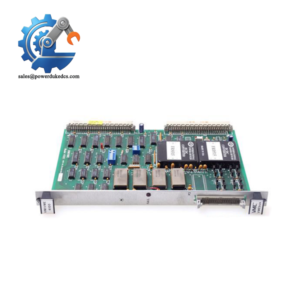
- Model & Brand: GE / GE Intelligent Platforms IC695PBM300, PACSystems RX3i PROFIBUS Master Module.
- Physical Dimensions: Approximately 3.5 × 13.5 × 13.6 cm (H × W × D) based on current technical listings. Published third-party dimensions vary, so use the actual module and cabinet drawing for final mechanical planning.
- Estimated Shipping Weight: Published unit-weight figures range around 0.15–0.36 kg, while some sellers quote approximately 0.5 kg. For freight booking, use the actual packed gross weight rather than a catalog estimate.
- What’s in the Box: Normally the IC695PBM300 module. The front network interface uses a 9-pin PROFIBUS connector; field cable, connector hood, terminating components, and documentation should not be assumed to be included unless listed on the commercial quotation.
- Physical Identity Check: Record the complete catalog number and revision suffix. Historical hardware revisions include AA, BA, BB, BC, and CC, with documented firmware and release differences.
Product Introduction
A PROFIBUS cabinet can continue operating at the PLC level while a fieldbus master gradually becomes the failure point: slave diagnostics accumulate, network status changes, and process data disappear from the controller. In that situation, the IC695PBM300 is the physical communication interface that must be checked, not just the downstream PROFIBUS instruments.
Mounted in an RX3i Universal Backplane, the module allows an RX3i CPU to exchange data with a PROFIBUS-DP network. It supports standard PROFIBUS data rates from 9.6 kbit/s through 12 Mbit/s, up to 125 DP slaves, and up to 3,584 bytes of input plus 3,584 bytes of output data. DP-V1 services include Read, Write, and Alarm messaging.
Core Technical Specifications
| Parameter | Value |
|---|---|
| Manufacturer | GE / GE Intelligent Platforms |
| Exact Part Number | IC695PBM300 |
| Product Family | PACSystems RX3i |
| Module Type | PROFIBUS-DP Master Module |
| Backplane | RX3i Universal Backplane |
| Maximum PROFIBUS Slaves | 125 |
| Maximum Input Data | 3,584 bytes |
| Maximum Output Data | 3,584 bytes |
| Maximum Data per Slave | 244 input bytes / 244 output bytes |
| Supported Data Rates | 9.6 kbit/s, 19.2 kbit/s, 93.75 kbit/s, 187.5 kbit/s, 500 kbit/s, 1.5 Mbit/s, 3 Mbit/s, 6 Mbit/s, 12 Mbit/s |
| PROFIBUS Functions | DP-V0 cyclic exchange; DP-V1 Read, Write, Alarm |
| Special Modes | Sync and Freeze |
| Network Connector | 9-pin PROFIBUS interface |
| Backplane Current | 440 mA at 3.3 VDC |
| Configuration Capacity | Approximately 9 KB slave configuration data |
| Required CPU Firmware | 2.9 or later, according to GE documentation |
| Configuration Software | Machine Edition Logic Developer-PLC 5.0 Build 3227 SP2 or later |
| PLC C Toolkit | Version 4.00 Build 50A1 or later |
| Operating Temperature | 0°C to 60°C |
| Storage Temperature | -40°C to 85°C |
| Approx. Module Weight | 0.15 kg published by one distributor; other listings vary |
| Module Position | One RX3i Universal Backplane slot |
GE’s technical documentation states the 440 mA at 3.3 VDC backplane consumption and the complete standard PROFIBUS baud-rate range. The same documentation limits total slave configuration data to approximately 9 KB, which is important when large slave configurations are being retained in an older installation.
Power-budget note: 440 mA at 3.3 V corresponds to roughly 1.45 W of backplane electrical input under the published current figure. Actual cabinet heat calculations should follow the applicable RX3i system documentation rather than assuming the electrical input is identical to dissipated heat.
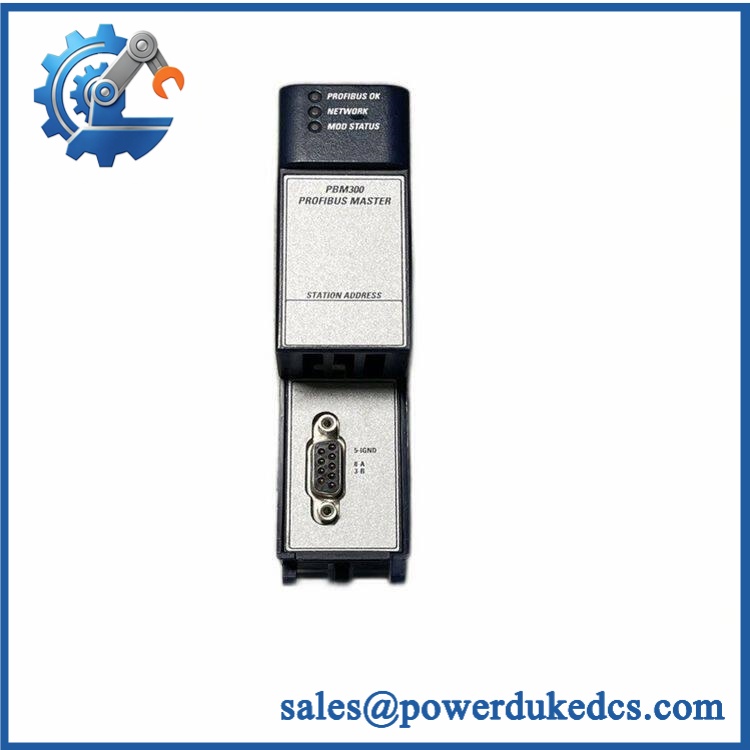
GE IC695PBM300
🚨 Global Compliance & Industry Certifications
For compliance-controlled inventory, certification claims must be tied to the exact product revision and installation configuration.
- CE: RX3i product documentation and market records identify CE-related compliance for the IC695PBM300 family.
- UL / cUL: Industrial listings identify North American safety approvals for the module family.
- ATEX: Some current technical listings associate the IC695PBM300 with ATEX hazardous-area use. Treat that as a certification-record question, not a blanket authorization for any hazardous location.
- IECEx: Do not claim IECEx certification unless the exact certificate and product marking have been verified.
- Marine approvals: DNV, ABS, or other marine approvals should also be verified against the exact hardware configuration and certificate before marine deployment.
For hazardous-area projects, certification is tied to the equipment’s evaluated construction, installation conditions, and area classification. ATEX requirements are governed in the EU by Directive 2014/34/EU for equipment intended for potentially explosive atmospheres.
Verify specific lot certifications with OEM.
🚨 Long-Term Storage & Asset Preservation Guide
Keep the PBM300 in ESD shielding packaging during inactive storage. The 9-pin PROFIBUS connector should remain covered and protected from dust, moisture, conductive debris, and unnecessary handling.
Control condensation rather than merely watching temperature. The documented storage range is -40°C to 85°C, but a module brought directly from a cold warehouse into a warm, humid control room can develop surface condensation. Let the sealed package equalize to room temperature before opening.
Track revision and firmware history as separate asset fields. Historical release records show the module family progressing through AA, BA, BB, BC, and CC revisions, with firmware releases changing over time. Do not merge these into a single generic “PBM300” stock record.
A good warehouse practice is to photograph the external label before opening factory packaging. Keep the anti-static bag, carton label, date/lot information, and inspection record together (this is useful when an auditor asks why a replacement is identified as one revision while the purchase order names only the family).
Physical Installation Prerequisites
The must be installed in an RX3i Universal Backplane. GE documentation specifies a host RX3i CPU with firmware 2.9 or later and Machine Edition Logic Developer-PLC 5.0 SP2 or later for configuration.
Before installation:
- Verify an available RX3i backplane slot and confirm the rack’s power budget can supply the module’s published 440 mA at 3.3 VDC requirement.
- Confirm the PROFIBUS connector, shield termination, bus cable, and termination arrangement against the plant’s PROFIBUS design.
- Keep sufficient clearance around the rack for heat transfer, connector access, and wiring service. Do not invent a universal 50 mm clearance value when the approved cabinet drawing provides a different requirement.
- Bond the cabinet and protective grounding system according to the site’s electrical standard.
- Handle the module with grounded ESD precautions.
- Match the programmed slot position with the physical slot assignment in the RX3i configuration.
- Confirm that all slave GSD information, node addresses, and diagnostic expectations correspond to the installed network.
Do not confuse PROFIBUS master identity with a generic network adapter. The PBM300’s configuration resources, station handling, diagnostic data, and firmware depend on the RX3i control architecture. GE also notes functional differences when migrating from older Series 90-30 PROFIBUS products, including changes in CommReq status information.
Buyer’s FAQ
Q1. What HS tariff code should be used for the ?
Industrial sellers publish different classifications for this module, including 8537101190 and 8517620050 in current listings. That variation is a warning not to copy a historical seller code directly onto a customs invoice.
The final HS/HTS classification should be confirmed by the importer or customs broker using the actual product function, destination-country tariff schedule, and applicable customs rules.
Q2. What should be shown for Country of Origin?
One current industrial listing identifies the Country of Manufacture as the United States for the family.
For a formal commercial shipment, verify COO against the physical unit and supplier documentation. Warehouse location, shipping origin, and manufacturing origin are not necessarily the same thing.
Q3. Is shipping insurance worthwhile for this module?
Yes, particularly for obsolete-system support where the replacement lead time may be much longer than the physical value of the module suggests. Public listings show the module itself can weigh only about 0.15–0.36 kg, yet the operational cost of losing a scarce PROFIBUS master can be substantial.
For claims protection, retain pre-shipment photographs, serial or revision information, carton condition, gross weight, packing-list details, and declared value.
Q4. Does the ship with the latest firmware?
Not necessarily. GE’s release history documents several historical hardware revisions and firmware levels: AA/BA with 1.00, BB with 1.02, and BC/CC with 1.04 in the referenced release record. GE also states that firmware upgrades are delivered indirectly through the host controller using WinLoader.
For an existing RX3i installation, specify the required hardware revision and verify the target CPU/software environment before purchase. A generic “latest firmware” statement is not sufficient evidence of compatibility.
Lifecycle & Asset-Control Note
The is now an older RX3i PROFIBUS communication platform, but GE/Emerson documentation still identifies it as an RX3i PROFIBUS Master module. Current supplier inventory also shows historical revision variants such as BC and CC, indicating that procurement records should preserve revision identity rather than treating all PBM300 units as interchangeable.
For sites dependent on PROFIBUS, maintain a revision-controlled spare and preserve the corresponding firmware/configuration documentation. That is more defensible for maintenance planning than storing a generic “PROFIBUS master” description.



 Start Chat