

Description
- Brand: GE Fanuc / General Electric
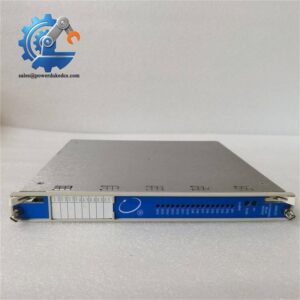
- Full Model Number: IC800SSI228RD2-EE
- Lifecycle Status: Discontinued / Obsolete Support
- Core Function: Dual-channel SSI master interface for absolute encoder feedback
- Top 3 Technical Specs: 2 independent SSI channels; programmable SSI clock; VersaMax I/O platform compatibility
- Stock & Condition: New Surplus / Tested Refurbished; Physical stock confirmation required; Emergency dispatch subject to cutoff
Published references identify IC800SSI228RD2-EE as a dual-channel SSI interface/master module for GE VersaMax systems, with the “-EE” version associated with European compliance. Reported specifications vary between secondary sources, so the exact datasheet revision should be checked before engineering release.
Module 3: Obsolescence & Supply Chain Deep Dive
A failed SSI interface can interrupt position feedback from absolute encoders and prevent a motion-control sequence from operating correctly. The GE IC800SSI228RD2-EE is identified as a two-channel SSI interface module used to bring encoder position data into a GE VersaMax control architecture. Secondary technical references describe programmable SSI timing, field-side encoder power, and isolation features, while also identifying the part as discontinued. For a plant still operating the installed platform, obtaining the exact legacy module can therefore be far faster than redesigning the encoder interface around a different PLC architecture.
The TCO calculation favors targeted replacement when the rest of the control system remains serviceable. A compatible module can avoid encoder rewiring, PLC program changes, panel redesign, application retesting, and a larger commissioning window. That matters most where a production stoppage is already costing more than the spare itself. Because published sources disagree on some electrical and environmental details, procurement should validate the exact IC800SSI228RD2-EE hardware revision and original installation requirements before PO approval — a small verification step that can prevent an expensive field mismatch.
Module 4: Compatibility & Replacement Matrix
| Purchase Approval Item | Assessment |
|---|---|
| Replacement Classification | Conditional Drop-in Replacement |
| System Family | GE VersaMax / compatible IC800 architecture |
| Software Compatibility | Existing VersaMax configuration; verify module configuration and I/O mapping |
| Hardware Modification | Normally not required for a same-model replacement |
| Estimated Physical Changeover | 1–3 hours |
| Commissioning / Validation | Additional time for encoder and PLC checkout |
| Cost Exposure | Typically far below replacing the complete PLC or motion architecture |
Field Traps — Watch Out
- SSI timing mismatch: SSI encoders depend on compatible clock and data timing. Verify the installed encoder’s clock requirements and configuration before energizing the replacement.
- Part-number variant confusion: Do not substitute IC800SSI228RD2, IC800SSI228RD2-CE, and solely because the numeric base is similar. Secondary sources associate different suffixes with different configurations or compliance versions.
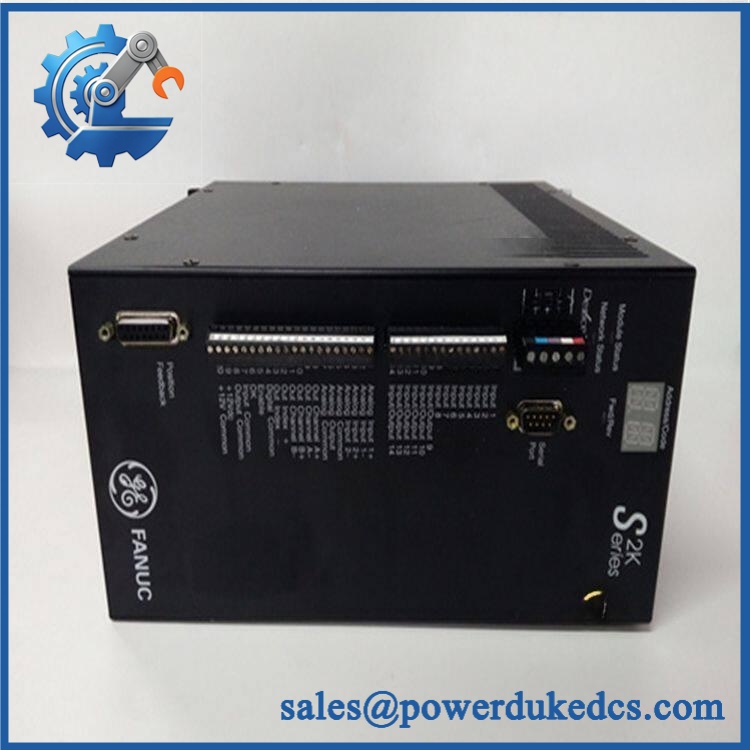
GE IC800SSI228RD2-EE
Module 5: Quality Assurance & Testing SOP
The module should be released only after identification, electrical inspection, and functional verification appropriate to an SSI interface.
- Incoming traceability: Record manufacturer marking, complete number, revision, serial information, and date-code data where available.
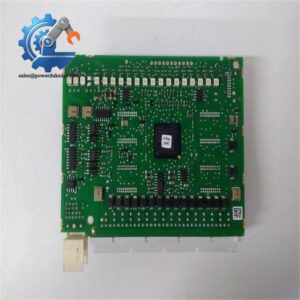
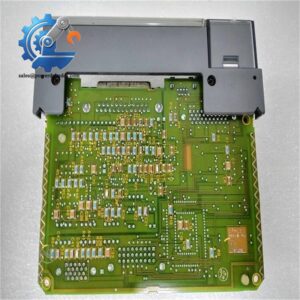
- OEM anti-counterfeit visual inspection: Inspect PCB markings, labels, connector construction, terminal condition, component population, solder quality, and evidence of prior repair.
- Mechanical inspection: Verify housing, mounting points, terminal block condition, connector alignment, and PCB edges.
- Power-on self-test (POST): Apply controlled supply voltage and verify normal startup and expected status/error indications.
- Supply verification: Check module supply requirements, current draw, grounding continuity, and abnormal heating.
- SSI channel testing: Verify both independent SSI channels using a compatible encoder simulator or controlled test source.
- Clock and data validation: Exercise programmable SSI timing within the supported test range and confirm stable position-data acquisition.
- Isolation check: Verify applicable field-to-system isolation according to the approved test procedure.
- PLC integration test: Confirm module recognition, correct I/O data exchange, diagnostics, and channel status in the test configuration.
- Extended operation: Run representative encoder feedback continuously and monitor communication stability and temperature.
- Final QC release: Record measured values, test results, board revision, serial information, test date, and technician approval.
Module 6: Procurement & Lifecycle FAQ
1. Is the GE -EE genuinely in stock, and what is the cutoff for emergency shipping?
Inventory should be confirmed against the exact suffix and revision. Secondary listings currently advertise the model as available, but emergency procurement should rely on physical warehouse confirmation rather than a catalog status. Same-day shipping depends on order approval, payment clearance, warehouse cutoff, and carrier collection.
2. How do you verify the condition and authenticity of obsolete GE SSI modules?
Verify the complete part number and revision first, then inspect PCB markings, labels, terminal blocks, connectors, and evidence of rework. A powered functional test should follow, including both SSI channels where suitable test equipment is available. Keep photographs and measured test results with the procurement record.
3. Are there firmware or configuration issues my engineers should check before issuing the PO?
Yes. The primary concern is configuration compatibility rather than simply physical fit. Confirm the VersaMax base arrangement, module addressing, encoder type, SSI clock requirements, PLC configuration, and any application-specific scaling or data interpretation before installation.
4. Can the -EE be replaced without modifying the existing cabinet?
A same-model replacement is generally intended to preserve the existing physical installation. Hardware modification is normally unnecessary when the original module, terminal arrangement, and system configuration match. The encoder wiring and PLC configuration should still be checked before applying power.
5. What warranty and return terms should procurement require?
The PO should identify the exact suffix, condition, revision, inspection status, test documentation, warranty duration, and return procedure. Warranty coverage should address DOA and verified functional defects while excluding damage caused by incorrect wiring, improper supply voltage, installation errors, or incompatible encoder configuration.



 Start Chat