

Description
- Brand: GE General Electric
- Full Model Number: IS200ERIOH1AAA
- Lifecycle Status: Legacy / Obsolete Support
- Core Function: Exciter Regulator I/O interface for GE EX2100 excitation control
- Top 3 Technical Specs: ERIO regulator-control interface; simplex and redundant EX2100 support; ECTBG2/EPCT customer-I/O and EROC/ERDD system-I/O interfacing
- Stock & Condition: New Surplus / Tested Refurbished; Physical stock confirmation required; Emergency dispatch subject to order cutoff
GE-related technical references identify IS200ERIOH1AAA as an Exciter Regulator I/O Board for the EX2100 excitation-control system. The ERIO board provides the interface between customer I/O and system I/O; in simplex applications it works with the ERBP backplane, while redundant configurations use the ERRB architecture.
Module 3: Obsolescence & Supply Chain Deep Dive
A failed IS200ERIOH1AAA can interrupt the signal interface between an EX2100 regulator and its customer or system I/O, potentially preventing normal excitation-control operation. The ERIO board connects customer-side signals through the ECTBG2 and EPCT terminal boards and provides system-I/O paths to the EROC and ERDD boards; redundant systems can also interface through the ERRR arrangement.For a legacy generator excitation system, locating the exact ERIO board can therefore avoid extended troubleshooting caused by an unavailable or mismatched interface assembly.
The TCO case is strongest when the installed EX2100 backplane, terminal boards, regulator electronics, and application configuration remain serviceable. A correct replacement preserves the established customer-I/O wiring and system-I/O topology rather than forcing a larger excitation retrofit. The board supports both simplex and redundant arrangements, but the associated backplane and system-board connections differ by architecture.That makes exact architectural matching more important than simply finding another IS200-series PCB — especially when factory-new supply is delayed and surplus inventory is being considered for an outage.
Module 4: Compatibility & Replacement Matrix
| Purchase Approval Item | Assessment |
|---|---|
| Replacement Classification | Conditional Drop-in Replacement |
| System Family | GE EX2100 Excitation Control |
| Module Type | Exciter Regulator I/O Board (ERIO) |
| Simplex Backplane | ERBP |
| Redundant Backplane | ERRB |
| Customer I/O Interface | ECTBG2 / EPCT |
| System I/O Interface | EROC / ERDD |
| Redundant I/O Path | ERRR where applicable |
| Software Compatibility | Existing application and configuration must be verified |
| Hardware Modification | Normally not required for exact replacement |
| Estimated Physical Changeover | 1–3 hours |
| Commissioning / Validation | Required for customer I/O, system I/O, backplane, and redundant-path verification |
| Engineering Cost Exposure | Typically far below a complete excitation-system retrofit |
Field Traps — Watch Out
- Simplex versus redundant architecture: The ERIO board is used in both arrangements, but the signal paths and backplane differ. Simplex uses the ERBP, while redundant systems use the ERRB and may include the ERRR board. Verify the actual installation before issuing the PO.
- Revision and suffix verification: The available technical references identify the base IS200ERIOH1A family, while the supplied unit is IS200ERIOH1AAA. Compare the complete board marking, artwork/revision information, connectors, and installed backplane arrangement before treating another ERIO variant as interchangeable.
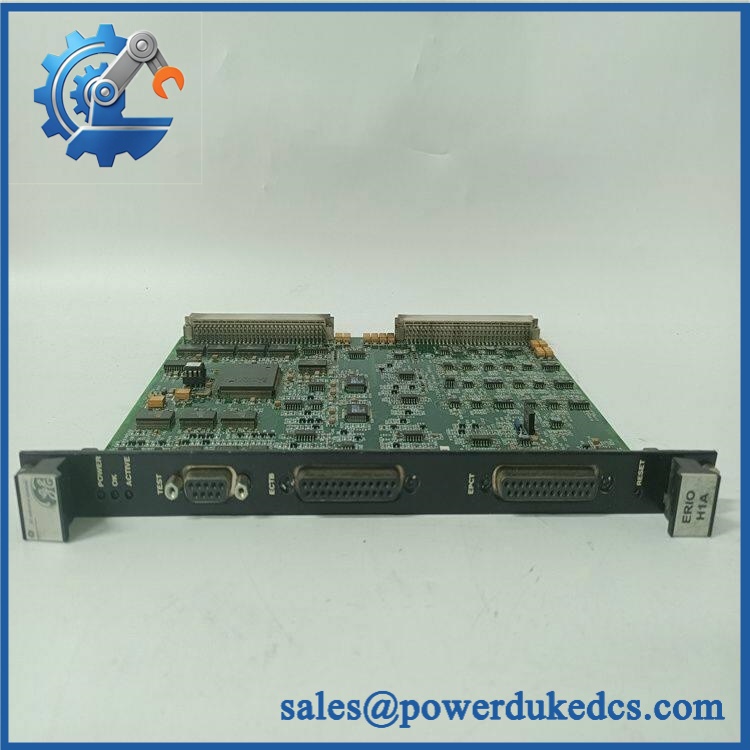
GE IS200ERIOH1AAA
Module 5: Quality Assurance & Testing SOP
The ERIO board should be tested against the actual interface architecture rather than evaluated only as a powered PCB.
- Incoming traceability: Record GE markings, complete IS200ERIOH1AAA part number, serial number, revision/artwork code, and visible configuration identifiers.
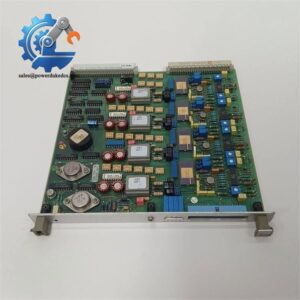
- OEM anti-counterfeit visual inspection: Inspect PCB markings, labels, connectors, terminal interfaces, FPGA/component population, solder quality, and evidence of unauthorized repair.
- Mechanical inspection: Check board dimensions, mounting points, backplane connectors, terminal interfaces, retainers, and PCB edges.
- Power-on self-test (POST): Install in an approved test arrangement and verify startup behavior and applicable status indications.
- Supply verification: Confirm approved backplane supply conditions and check current draw and temperature rise.
- Customer-I/O test: Exercise representative signals through the ECTBG2/EPCT interface and verify correct acquisition or output response.
- System-I/O test: Verify representative communication paths through the EROC and ERDD interfaces.
- Backplane integration test: Confirm correct board recognition and signal transfer through the applicable ERBP or ERRB backplane.
- Redundant-path test: Where applicable, verify interaction with the ERRR architecture.
- Data-memory/interface check: Verify stable board-level data exchange through the applicable dual-port-memory interface architecture.
- Signal isolation and continuity testing: Check connector continuity, signal paths, grounds, and unintended shorts.
- I/O load testing: Apply representative customer and system-I/O loads while monitoring current, signal stability, and board temperature.
- Diagnostic verification: Check for persistent communication, interface, or configuration faults.
- Extended operation: Run representative excitation-control I/O traffic continuously and monitor for intermittent failures.
- Final QC release: Record exact board identifier, revision, backplane type, I/O test results, inspection date, photographs, and technician approval.
Module 6: Procurement & Lifecycle FAQ
1. Is the GE IS200ERIOH1AAA genuinely in stock, and what is the cutoff for emergency shipping?
Current supplier listings show as commercially available, including listings advertising new-original inventory. Actual emergency availability should still be confirmed against physical warehouse stock, exact revision, condition, and dispatch cutoff before releasing the PO.
2. How do you guarantee the condition and authenticity of this surplus ERIO board?
Verification should begin with the complete identification and PCB inspection. Check board markings, revision/artwork code, connectors, terminal interfaces, FPGA/component condition, and evidence of prior repair. Functional testing should then cover customer I/O, system I/O, backplane integration, and redundant-path behavior where applicable.
3. Are there any firmware compatibility issues I should warn my engineers about before issuing the PO?
The principal risk is system architecture and revision compatibility, not a generic firmware flash. Engineers should verify simplex versus redundant topology, ERBP versus ERRB backplane, associated EROC/ERDD hardware, ERRR usage where applicable, terminal-board connections, and the installed application configuration. The ERIO board’s role changes with the system architecture, so those checks belong in the PO approval process.
4. Can the replace the existing ERIO board without hardware modification?
For an exact replacement in the same architecture, hardware modification is normally not required. The existing ERBP/ERRB arrangement, terminal-board connections, and associated system boards must match. A board that appears physically similar but belongs to a different revision or interface arrangement should not be treated as a direct substitute.
5. What warranty and return terms should procurement require?
The PO should specify , exact revision/artwork information, architecture, condition, test status, warranty period, and return procedure. Warranty coverage should address DOA and verified ERIO hardware failure while excluding damage caused by incorrect backplane installation, unsuitable power, wiring faults, ESD, incorrect system configuration, or unauthorized modification.



 Start Chat


