
Description
- Brand: GE General Electric
- Full Model Number: IS200STCIH2A
- Lifecycle Status: Active / Lifecycle-managed
- Core Function: Simplex contact input terminal board for GE Mark VIe / Mark VI systems
- Top 3 Technical Specs: 24 dry-contact inputs; 24 / 48 / 125 VDC external excitation; 4 ms hardware debounce filter
- Stock & Condition: New Surplus / Tested Refurbished; Physical stock confirmation required; Emergency dispatch subject to order cutoff
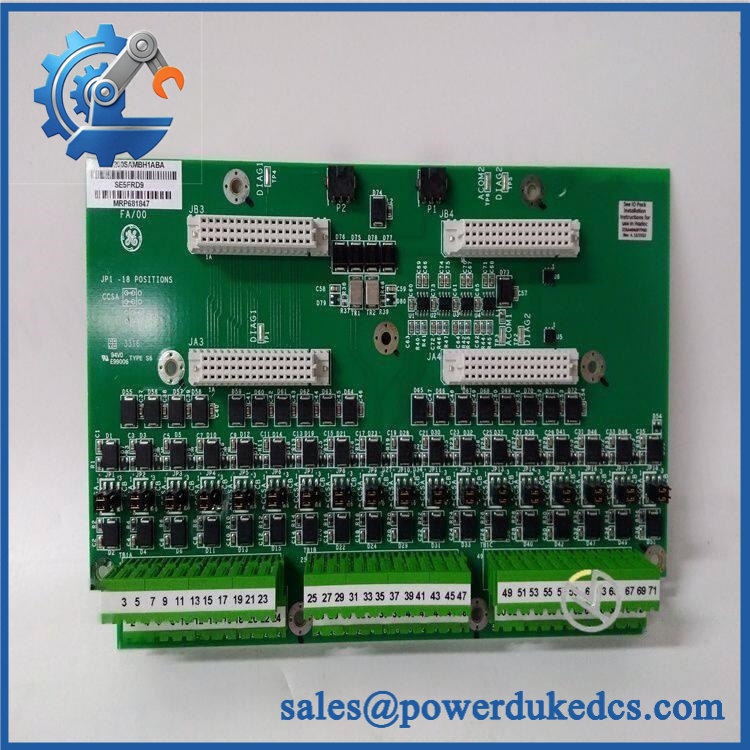
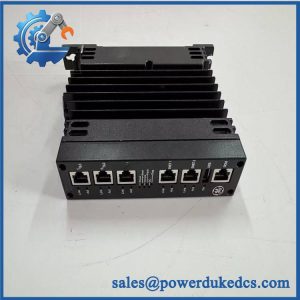
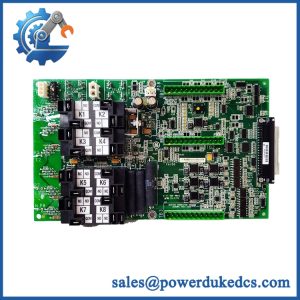
The IS200STCIH2A is a Simplex Contact Input Terminal Board used with the GE Mark VIe control platform. It accepts 24 contact-input channels with externally supplied 24, 48, or 125 VDC excitation. GE’s Mark VIe certification documentation identifies the IS200STCIH2A as an approved accessory terminal board for the IS220PDIAH1A Discrete Input Module.
Module 3: Obsolescence & Supply Chain Deep Dive
A failed IS200STCIH2A can interrupt a large group of discrete field signals at once, affecting switches, permissives, interlocks, status contacts, and other binary inputs. The board provides 24 contact-input circuits and is designed for simplex operation, with a removable terminal arrangement and direct field wiring. Published technical data specifies separate excitation ranges for nominal 24, 48, and 125 VDC applications: 16–32 VDC, 32–64 VDC, and 100–145 VDC, respectively.
The TCO case favors a matched replacement when the existing Mark VIe I/O architecture and field wiring remain serviceable. Preserving the installed terminal board avoids rewiring 24 points, changing cabinet hardware, and repeating a wider I/O engineering exercise. The board is used with the PDIA I/O Pack, which communicates with the controller over Ethernet, so the terminal board itself should be understood as the field termination/interface layer rather than the network-processing device.
Module 4: Compatibility & Replacement Matrix
| Purchase Approval Item | Assessment |
|---|---|
| Replacement Classification | Drop-in Replacement for an identical IS200STCIH2A installation |
| System Family | GE Mark VIe / Mark VI |
| Module Type | Simplex Contact Input Terminal Board |
| Input Capacity | 24 contact inputs |
| Excitation Options | 24 / 48 / 125 VDC nominal |
| Excitation Ranges | 16–32 / 32–64 / 100–145 VDC |
| Hardware Filter | 4 ms debounce/filter |
| Associated I/O Pack | PDIA |
| Software Compatibility | Verify associated I/O Pack and Mark VIe configuration |
| Hardware Modification | Normally not required for an exact replacement |
| Estimated Physical Changeover | 1–3 hours |
| Commissioning / Validation | Required for all transferred contact-input circuits |
Field Traps — Watch Out
- Wrong excitation class: The board supports different operating ranges for nominal 24, 48, and 125 VDC applications. Confirm the actual field excitation before energizing a replacement.
- PDIA pairing: The IS200STCIH2A is an accessory terminal board for the IS220PDIAH1A discrete input module. Do not assume another terminal board from the STCI family is electrically equivalent without checking the associated I/O Pack.
GE IS200STCIH2A
Module 5: Quality Assurance & Testing SOP
This board should be subjected to point-by-point electrical verification because a wiring error can affect many discrete signals simultaneously.
- Incoming traceability: Record GE identification, complete part number, revision, serial/lot information, and visible board codes.
- OEM anti-counterfeit visual inspection: Inspect PCB markings, labels, terminal construction, connectors, component population, solder quality, and evidence of unauthorized rework.
- Mechanical inspection: Check mounting holes, terminal strip, removable connector, board edges, mounting hardware, and flatness.
- Power-on self-test (POST): Install with an approved PDIA test arrangement and verify normal startup behavior.
- Supply verification: Apply the appropriate controlled excitation voltage and check current draw and abnormal heating.
- Terminal continuity test: Verify all applicable terminal paths against the approved wiring map.
- Contact-input simulation: Exercise representative open/closed contact states across all 24 channels.
- Voltage-range verification: Confirm correct input recognition for the applicable 24, 48, or 125 VDC configuration.
- Debounce verification: Exercise contact transitions and confirm the expected hardware filtering behavior.
- Fault simulation: Introduce controlled open-circuit and short-circuit conditions on test channels and verify diagnostic response where supported.
- PDIA integration test: Verify signal transfer between the terminal board and associated I/O Pack.
- I/O load testing: Apply representative field-side loads and monitor terminal stability, current, and temperature rise.
- Extended operation: Perform repeated input transitions across the configured channels while monitoring intermittent faults and signal integrity.
- Final QC release: Record terminal mapping, channel test results, excitation voltage, I/O Pack compatibility, inspection date, photographs, and technician approval.
Module 6: Procurement & Lifecycle FAQ
1. Is the GE genuinely in stock, and what is the cutoff for emergency shipping?
Current supplier listings show as commercially available, including listings marked in stock. Actual warehouse availability should still be verified against the physical unit, complete part number, revision, and condition before releasing the PO.
2. How do you guarantee the condition and authenticity of this surplus terminal board?
Verification should begin with the complete identification, PCB markings, connector arrangement, terminal construction, and revision. Functional QA should then exercise all 24 contact-input channels with controlled signal sources and confirm correct interaction with the associated PDIA I/O Pack.
3. Are there any firmware compatibility issues I should warn my engineers about before issuing the PO?
There is no conventional firmware requirement at the passive terminal-board level. The critical checks are PDIA compatibility, excitation voltage, terminal mapping, simplex architecture, and field signal type. GE certification documentation specifically pairs the with the IS220PDIAH1A Discrete Input Module.
4. Can the replace the existing terminal board without hardware modification?
For an exact replacement in the same Mark VIe installation, cabinet modification is normally unnecessary. The board supports DIN-rail or flat mounting, but the field wiring, excitation voltage, associated PDIA I/O Pack, and terminal arrangement must be verified before commissioning.
5. What warranty and return terms should procurement require?
The PO should specify , exact revision, associated I/O Pack, condition, test status, warranty period, and return procedure. Warranty coverage should address DOA and verified terminal-board failure while excluding damage caused by incorrect excitation voltage, reversed or incorrect wiring, short circuits, ESD, improper installation, or unauthorized modification.


 Start Chat