

Description
- Model: IS200TDBTH6ABC
- Brand: GE General Electric
- Series: Mark VI Speedtronic
- Board Type: TDBT Discrete Input/Output Terminal Board
- Functional Revision: A / B
- Artwork Revision: C
- Architecture: Mark VI TMR-compatible terminal-board architecture
- Contact Inputs: 24 group-isolated inputs
- Nominal Wetting Voltage: 125 VDC
- Relay Outputs: 12 Form-C relay outputs
- Input Filter: Approximately 4 ms hardware filtering
- Relay Contact Ratings: Up to 0.6 A at 125 VDC, 1.2 A at 48 VDC, and 3.15 A at 24 VDC or 120/240 VAC, subject to the applicable load conditions
- Approx. Board Size: 7.0 × 13.0 in
- Estimated Shipping Weight: Approximately 2 kg in some secondary inventory records; actual packed weight should control freight calculations
- Mounting: DIN-rail or flat mounting through the appropriate carrier
- I/O Pack Interface: PDIO-compatible Mark VI terminal architecture
- What’s in the Box: IS200TDBTH6ABC terminal board only unless the PO specifically includes carrier hardware, terminal plugs, option boards, cables, or documentation
- Packaging: ESD shielding bag, terminal-block protection, rigid cushioning, moisture-controlled outer carton
Product Introduction
Structure A — Environmental Hook
A Mark VI terminal board installed in a turbine-control cabinet operates around continuous electrical switching, field wiring, vibration, and temperature cycling. The GE IS200TDBTH6ABC is a TDBT discrete input/output terminal board designed around 24 isolated contact inputs and 12 Form-C relay outputs. The H6 configuration is associated with a nominal 125 VDC wetting voltage, making the exact electrical revision important during replacement.
For plant asset management, do not reduce this part to the generic description “Mark VI terminal board.” The complete IS200TDBTH6ABC identification includes functional and artwork revision information that should remain on the warehouse record. A correct spare can preserve existing field termination and I/O architecture, while an incorrect voltage or revision can create a much larger commissioning problem (especially in turbine shutdown circuits).
Core Technical Specifications
| Parameter | Value |
|---|---|
| Manufacturer | GE General Electric |
| Part Number | IS200TDBTH6ABC |
| Series | Mark VI Speedtronic |
| Board Acronym | TDBT |
| Product Type | Discrete Input/Output Terminal Board |
| Functional Revision | A / B |
| Artwork Revision | C |
| Architecture | Mark VI TMR-compatible |
| Contact Inputs | 24 group-isolated inputs |
| Input Type | Remote dry-contact inputs |
| Nominal Wetting Voltage | 125 VDC |
| Typical Wetting Range | Approximately 100–145 VDC |
| Input Filtering | Approximately 4 ms |
| Relay Outputs | 12 Form-C |
| Relay Contact Material | Silver-nickel alloy |
| Maximum Relay Load | 0.6 A @ 125 VDC |
| Maximum Relay Load | 1.2 A @ 48 VDC |
| Maximum Relay Load | 3.15 A @ 24 VDC |
| Maximum AC Load | 3.15 A @ 120/240 VAC, 50/60 Hz |
| Approx. Relay Response | 25 ms |
| Electrical Contact Life | Approximately 100,000 operations |
| Mechanical Contact Life | Approximately 5,000,000 operations |
| Option Board | WROBH1A may be used depending on configuration |
| PDIO Interface | Three PDIO positions for TMR architecture |
| Wiring Range | Approximately #24 to #12 AWG |
| Mounting | DIN rail or flat mounting via carrier |
| Power Draw | Determined by connected field circuits and relay loading |
| Heat Dissipation | Field-load dependent |
| Memory | None as a standalone terminal board |
| Firmware | None on the passive terminal-board function |
| Approx. Dimensions | 7.0 × 13.0 in |
| Approx. Weight | Approximately 2 kg shipping reference; verify actual unit |
| Lifecycle Profile | Legacy Mark VI hardware |
The H6 configuration is the critical asset-control point because the field wetting arrangement differs across the broader TDBT family. Match the full ordering code before approving a replacement.
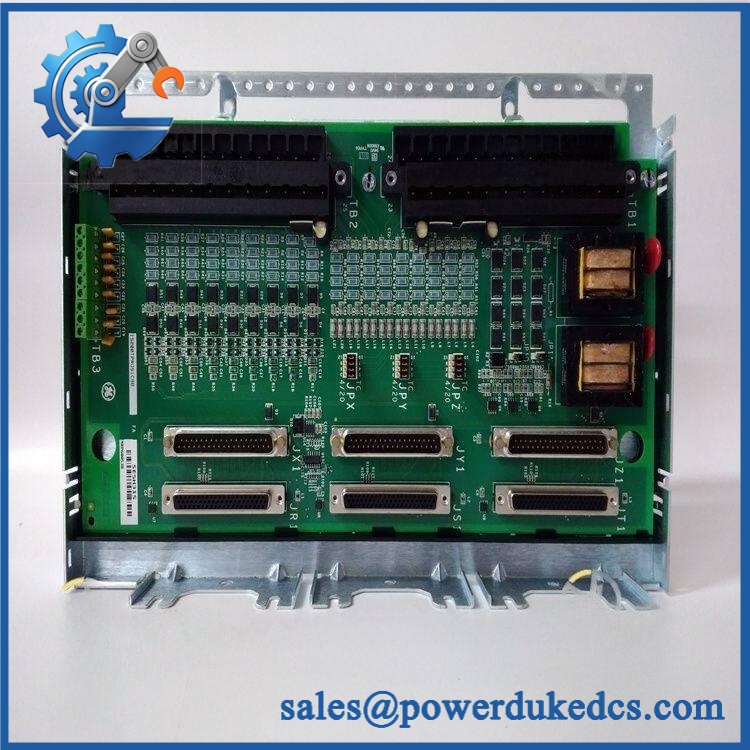
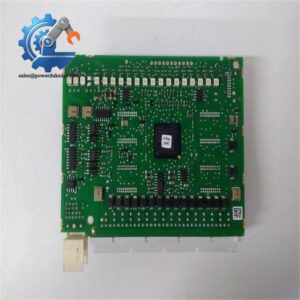
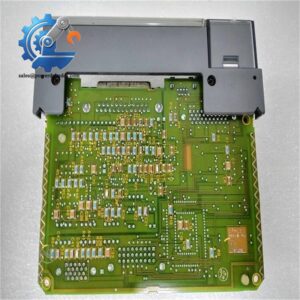
GE IS200TDBTH6ABC
🚨 Global Compliance & Industry Certifications
- CE Mark: May apply at the complete Mark VI equipment level. Do not make a standalone CE claim for the PCB without revision-specific documentation.
- UL/cUL: Certification may depend on the overall Mark VI configuration, cabinet, and market version. Verify the specific hardware record.
- ATEX / IECEx: Do not assume hazardous-area certification. The terminal board may interface with field equipment located in hazardous areas, but that does not make the PCB independently certified.
- Marine Approvals: No revision-specific marine approval should be claimed without the applicable certificate.
- Electrical Safety: The H6 configuration uses 125 VDC field wetting, and the relay circuits can carry substantial loads. Full electrical isolation is required before maintenance.
- Functional Safety: TMR compatibility is an architectural characteristic, not a standalone SIL certification for the terminal board.
- Audit Documentation: Retain the exact part number, A/B/C revision marking, serial or lot identification, nameplate photograph, applicable GE documentation, COO, and test record.
Verify specific lot certifications with OEM.
🚨 Long-Term Storage & Asset Preservation Guide
Keep the board inside an ESD shielding bag. The PCB contains terminal interfaces, relay components, connectors, and configuration-related hardware that can be damaged by static discharge or uncontrolled handling.
Protect the terminal blocks and connector interfaces. Do not place heavy electronic assemblies on top of the board. Keep terminal plugs, carrier hardware, and any WROBH1A option assembly separately protected and clearly associated with the asset number.
Control warehouse humidity. Store indoors in a clean, dry environment, preferably below 60% RH where no more specific OEM storage specification is available. Add suitable desiccant to sealed secondary packaging and inspect relay areas, terminal screws, connectors, and metallic hardware for oxidation during periodic inventory audits.
Do not casually energize shelf stock. Record the part number, revision, jumper or option-board configuration, serial/date code, packaging condition, and last functional-test date. A controlled pre-installation test is preferable to repeated uncontrolled power cycling.
Physical Installation Prerequisites
- System Match: Confirm the host Mark VI architecture and the specific TDBT application before installation.
- Field Wetting: Verify the external wetting supply against the H6 configuration; nominal value is 125 VDC.
- Input Wiring: Confirm all 24 contact-input circuits, commons, and associated wetting returns.
- Relay Loads: Check each connected relay load against the applicable Form-C contact rating before energization.
- PDIO Interface: Verify the compatible PDIO I/O-pack arrangement and TMR wiring topology.
- WROBH1A Option: When fitted, verify the option board’s presence and configuration before replacing the terminal board.
- Terminal Carrier: Use the correct mechanical carrier; do not drill, cut, or mechanically modify the PCB.
- Grounding: Follow the Mark VI cabinet grounding and shield-termination arrangement.
- Cooling: Maintain unobstructed cabinet airflow and prevent wiring from pressing against the PCB.
- Power Isolation: Lock out the external wetting supply and relay power before removing any field wires.
- ESD: Use a grounded wrist strap and approved antistatic work surface.
- Service Clearance: Provide enough room to remove terminal connectors and inspect field wiring without placing strain on the board.
The most common field error is treating the terminal board as a passive generic replacement. The wetting voltage, relay configuration, terminal mapping, and PDIO architecture all need to match the installed turbine-control design.
Buyer’s FAQ
Q1. What HS tariff code should be used for GE IS200TDBTH6ABC?
Do not classify it simply as a generic circuit board. The is a dedicated Mark VI discrete I/O terminal board, so the final tariff classification should be based on its electrical function and the importing country’s tariff schedule.
For the commercial invoice, use a precise description such as “GE Mark VI TDBT Discrete Input/Output Terminal Board” and have the importer or customs broker confirm the final national HS code.
Q2. What Country of Origin should appear on the COO?
Use the actual manufacturing origin of the physical board supported by the unit’s identification and supplier records. Do not copy the origin from an unrelated historical listing.
For audit purposes, retain the actual-unit photograph, serial or lot information, supplier COO declaration, and commercial invoice together.
Q3. Should I insure shipment of ?
Yes, especially for turbine-critical inventory. Protect the terminal blocks, relay interfaces, connector areas, and mounting hardware against impact during transportation.
Photograph the complete board, part number, revision marking, terminal side, and packaging before dispatch. Keep those records with the freight documentation.
Q4. Does include the latest firmware pre-loaded?
No. This is a terminal/interface board rather than a firmware-bearing controller. The important configuration variables are the hardware revision, field wetting voltage, relay wiring, terminal mapping, PDIO arrangement, and any installed option board.
Q5. Can I substitute another TDBT board automatically?
No. The TDBT family includes different electrical configurations. The H6 version is associated with 125 VDC wetting, and an apparently similar board may use a different field-voltage arrangement or revision. Before issuing the PO, verify the complete part number, functional revision, artwork revision, wetting voltage, relay configuration, option board, and PDIO architecture.


 Start Chat