

Description
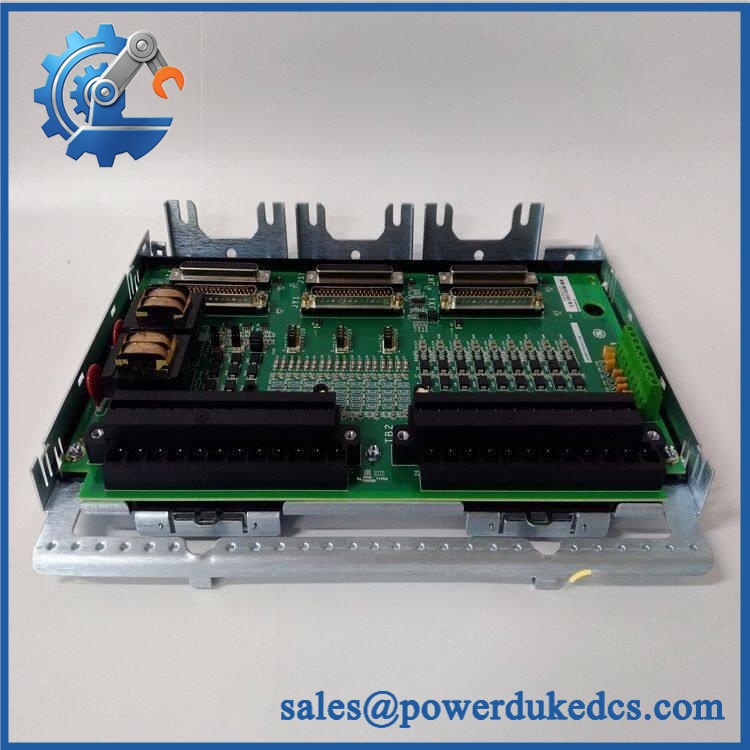
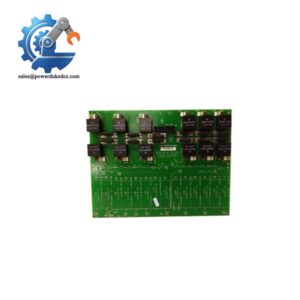
- Model & Brand: GE General Electric IS200TPROH1BCB
- Series: GE Mark VI Speedtronic
- Part Type: TPRO Emergency Protection Terminal Board
- Functional Acronym: TPRO
- Primary Function: Interfaces speed, temperature, generator-voltage, and bus-voltage signals with the VPRO turbine protection boards
- Protection Architecture: Triple-redundant VPRO interface
- Trip System: Supports the emergency trip architecture associated with up to three trip solenoids
- Field Trip Supply: 125 VDC through the associated TREx/TRPx terminal-board arrangement
- Terminal Style: Barrier-type terminal arrangement reported for the IS200TPROH1B family
- Connector Interface: DC-37-pin connection associated with the TPRO architecture
- Physical Dimensions: Approx. 17.8 H × 33.0 W cm reported for the IS200TPROH1B family; verify the exact IS200TPROH1BCB assembly before cabinet planning
- Estimated Shipping Weight: Approximately 0.8 kg planning value; verify actual packed weight before freight booking
- What’s in the Box: IS200TPROH1BCB board and ESD protective packaging; terminal hardware, cables, and mounting accessories only when explicitly included on the PO
- Handling Class: ESD-sensitive turbine-protection PCB; treat the terminal blocks and relay assemblies as mechanically vulnerable components
GE documentation identifies the TPRO as the Emergency Protection Terminal Board that provides the VPRO boards with speed, temperature, generator-voltage, and bus-voltage inputs. The TPRO sits within an independent emergency overspeed and synchronization protection system. ([GE technical documentation])
Product Introduction
Architecture Hook
In the Mark VI turbine-protection architecture, IS200TPROH1BCB serves as the physical termination interface feeding the redundant VPRO protection boards. Its monitored inputs include turbine speed, temperature, generator voltage, and bus voltage; the VPRO then performs the emergency overspeed and stop functions. The TPRO architecture also interfaces with the TREx/TRPx terminal boards for emergency trip-solenoid control. ([GE technical documentation])
For asset management, this board belongs to the protection chain, not the ordinary process-I/O layer. That distinction changes the receiving standard. Exact board identity, connector arrangement, terminal wiring, and revision must be preserved because a substitution error in a trip circuit can affect turbine-protection availability (a cabinet can remain powered while the protection path is still incorrectly wired).
Core Technical Specifications
| Parameter | Value |
|---|---|
| Manufacturer | GE General Electric |
| Complete Part Number | IS200TPROH1BCB |
| Functional Base | IS200TPROH1B |
| Series | Mark VI |
| Functional Acronym | TPRO |
| Product Type | Emergency Protection Terminal Board |
| Primary Role | VPRO signal termination/interface |
| Speed Inputs | Yes |
| Temperature Inputs | Yes |
| Generator Voltage Inputs | Yes |
| Bus Voltage Inputs | Yes |
| Associated Protection Board | VPRO |
| Associated Trip Boards | TREx and TRPx families |
| Trip Solenoid Capacity | Up to 3 emergency trip solenoids in the documented architecture |
| Trip Supply | 125 VDC architecture |
| Connector Reference | DC-37 interface reported for the TPRO family |
| Terminal Style | Barrier |
| Potentials / PTs | 2 potential-transformer inputs reported for the family |
| PCB Type | Multilayer Mark VI terminal PCB |
| Reported Dimensions | Approx. 178 × 330 mm* |
| Reported Weight | Approx. 0.8 kg* |
| Operating Temperature | Approx. -30 to +65°C reported by independent records* |
| Firmware | No standalone application firmware function |
| Lifecycle | Legacy Mark VI hardware |
*Dimensions, weight, and environmental figures are reported by independent technical records for the TPRO/IS200TPROH1B family. Treat them as planning values until verified against the exact hardware revision and approved GE documentation.
GE IS200TPROH1BCB
🚨 Global Compliance & Industry Certifications
- CE Mark: Do not assume a standalone CE declaration for IS200TPROH1BCB. Certification should be tied to the applicable Mark VI control/protection assembly.
- UL / cUL: No standalone UL or cUL certificate for this exact board was independently verified. Retain documentary evidence before entering an approval claim in the asset register.
- ATEX / IECEx: No standalone ATEX/IECEx certificate for the bare TPRO board was verified. Hazardous-area compliance, where relevant, applies to the complete approved installation.
- Marine Approvals: No exact DNV, ABS, or other marine certificate was verified for .
- Safety-System Relevance: TPRO is part of an independent turbine emergency-protection path. This matters because incorrect termination or loss of an input can affect overspeed or emergency-stop protection.
- EMC: The board operates in a turbine-control environment containing switching and generator-related electrical energy. Shielding, grounding, and routing should follow the original Mark VI installation design.
The TPRO is documented as supplying inputs to all three VPRO boards, so certification and maintenance records should be maintained at the complete protection-system level rather than for the PCB alone.
Verify specific lot certifications with OEM.
🚨 Long-Term Storage & Asset Preservation Guide
Keep inside an ESD shielding bag. The board contains exposed terminal hardware, connector interfaces, relay components, and adjustable elements. Bare-board storage can damage contacts long before the PCB itself appears visibly degraded.
Maintain warehouse humidity below 60% RH where practical. TPRO hardware is used around low-level measurement signals and turbine protection circuits; oxidation on a terminal or connector can introduce intermittent faults that are difficult to reproduce during commissioning.
Preserve every jumper, potentiometer, and terminal setting. Take high-resolution photographs of the replacement unit before it enters storage and compare them with the installed board record. The TPRO family includes adjustment components, so factory appearance alone does not prove that the unit is configured for the customer’s application.
Avoid uncontrolled thermal cycling. Store indoors at stable temperature, away from steam lines, washdown areas, and roof-level heat. Allow a cold-soaked module to reach cabinet ambient temperature before installation to avoid condensation on connectors and PCB surfaces.
Physical Installation Prerequisites
Install only in the intended GE Mark VI TPRO/VPRO emergency-protection architecture. The TPRO is not a generic terminal board.
The documented TPRO architecture interfaces the board with three VPRO boards and associated TREx/TRPx trip-terminal hardware. TPRO provides the required measurement signals to all three VPRO protection paths. ([GE technical documentation])
No reliable GE-specific universal 50 mm clearance requirement was verified for this board. Preserve the original Mark VI cabinet layout and provide sufficient access for terminal blocks, DC-37 connectors, wiring bends, inspection, and board removal.
Grounding and shielding must follow the Mark VI protection-system design. Low-level speed and voltage-sensing conductors should remain properly separated from high-energy switching circuits.
De-energization deserves special attention here. The emergency protection path includes a 125 VDC trip architecture. Before disconnecting the TPRO, isolate the appropriate control and trip power sources, verify the absence of hazardous voltage with approved test equipment, and follow the plant’s lockout/tagout procedure.
Before installation, document every terminal and connector position. The TPRO’s function depends on correct signal routing to the redundant VPRO boards; a swapped speed or voltage connection can create a credible-looking but incorrect protection measurement.
Buyer’s FAQ — Logistics & Compliance Focus
Q1. What HS tariff code should be used for ?
Do not assign a final HS code from the GE model number alone. The classification depends on the importing country’s tariff schedule and whether customs treats the item as a turbine-control terminal board, a protection-system apparatus, or a part of another electrical system. A suitable customs description is “GE Mark VI TPRO Emergency Protection Terminal Board, ”; the destination-country broker should validate the final tariff code.
Q2. Does a GE label prove the Country of Origin?
No. Brand identity is not evidence of manufacturing origin. Some independent listings report USA origin for the TPRO family, but that should not be applied automatically to every historical revision. Obtain a COO declaration tied to the actual unit or shipment lot and retain it with the commercial invoice.
Q3. Should shipping insurance cover the board’s replacement value?
Yes. The physical board is relatively light, but the financial exposure can be much larger because it is part of a turbine emergency-protection circuit. Before carrier handoff, record the serial number, revision, physical condition, declared value, package dimensions, and pre-shipment photographs.
Q4. Does a New Original include the latest firmware pre-loaded?
No standalone firmware should be expected on the TPRO itself. It is a protection terminal board rather than an application processor. Engineering compatibility is driven by the Mark VI architecture, board revision, terminal wiring, connector arrangement, and the associated VPRO/TREx/TRPx configuration.
Q5. What should receiving inspection verify before this board is released to controlled spare stock?
Record the complete number, functional base IS200TPROH1B, serial number, hardware revision, certification markings, connector condition, terminal condition, physical measurements, COO evidence, and photographs. For a protection-system spare, retain a full terminal map and configuration record with the serialized asset; this is essential when the card may sit in inventory for years before an emergency replacement.


 Start Chat