

Description
- Model: GE IS210AEAAH1B
- Brand: General Electric
- Series: Mark VIe Wind
- Part Type: AEAA Alternative Energy Application Board A — I/O Stator Feedback
- Core Function: Interfaces stator-feedback signals within the GE wind-turbine control architecture; it is a specialized application PCB rather than a generic analog I/O module.
- Key Specs: Functional acronym AEAA, functional revision B, conformal-coated construction, six factory-drilled mounting holes, and GE material/part reference 104W7777P001.
Product Introduction
In a wind-turbine control system, a misleading catalog description can be almost as troublesome as a failed board. The GE IS210AEAAH1B is identified within GE Energy documentation as the AEAA Alternative Energy Application Board A — I/O Stator FDBK, placing it in the Mark VIe Wind application-specific hardware family rather than the conventional process I/O category. GE-related line-card records associate the AEAA family with material number 104W7777P001.
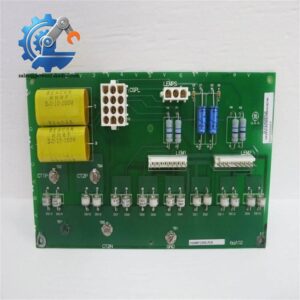
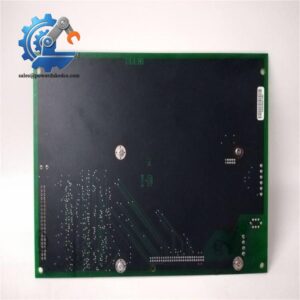
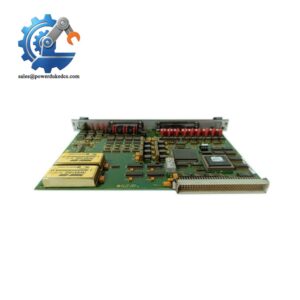
Physically, the H1B is a conformal-coated PCB with six factory-drilled mounting holes, intended for board-level installation rather than standard VME rack mounting. The conformal coating is significant for wind-turbine service because the board is exposed to the environmental conditions of the turbine control enclosure (but coating does not make an uncontrolled installation acceptable). GE’s Mark VIe/Mark VIeS system documentation also specifically recognizes IS210AEAAH*B as a legacy coated-board family.
Core Technical Specifications
| Parameter | Value |
|---|---|
| Manufacturer | GE General Electric |
| Model | IS210AEAAH1B |
| Series | Mark VIe Wind |
| Functional Acronym | AEAA |
| Functional Description | Alternative Energy Application Board A — I/O Stator Feedback |
| Product Type | Application-specific wind control PCB |
| Functional Revision | B |
| Technology / Assembly Family | IS210 coated legacy PWA family |
| PCB Construction | Conformal coated |
| Primary Application | Wind-turbine control / stator feedback |
| GE Material Reference | 104W7777P001 |
| Mounting | Factory-drilled board mounting |
| Mounting Holes | 6 insulated factory-drilled holes |
| Standard VME Rack Mounting | Not the normal installation method |
| Processor | Not established as a standalone application CPU |
| Standalone Firmware | Not established |
| Analog I/O Channel Count | Not reliably established for this exact board revision |
| Power Supply Rating | Not reliably published for this exact H1B board |
| Communication Protocol | Application-dependent |
| Conformal Coating | Yes |
| Approx. Board Envelope | Supplier data varies; approximately 100 × 330 mm class |
| Estimated Shipping Weight | Approximately 0.8–1.2 kg, depending on packaging |
| Operating Temperature | Application-dependent; verify the installed GE wind-system specification |
| Hot Replacement | Do not assume live replacement |
| Lifecycle Position | Legacy / application-specific spare |
Identification warning
The IS210AEAAH1B should not be marketed as a generic analog I/O module simply because some reseller databases describe it that way. GE-associated records specifically classify the AEAA family as “Alternative Energy Application Board A — I/O Stator FDBK.”
Public aftermarket records also provide conflicting dimensions and weights, ranging from compact PCB figures to much larger packaged envelopes. Those discrepancies are sufficient reason not to use an unverified dimensional number for cabinet engineering or freight documentation. Measure the actual unit for final packing specifications.
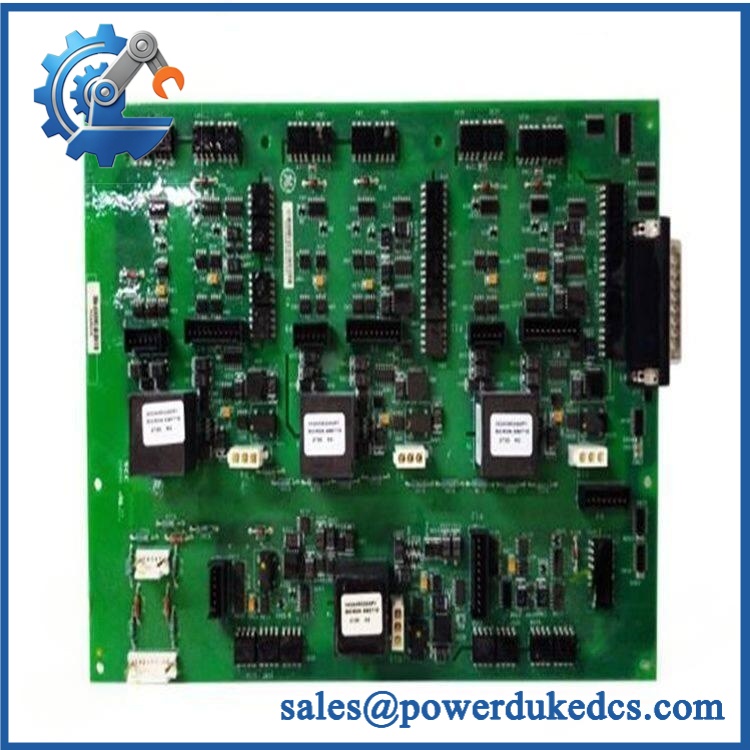
GE IS210AEAAH1B
Application Scenarios & Pain Points
Wind-turbine stator monitoring: The AEAA board belongs to the Mark VIe Wind control environment and is associated with stator-feedback functions. Its failure can therefore affect turbine feedback processing rather than simply removing one conventional PLC input.
Wind-generator control cabinets: Conformal-coated construction is relevant where turbine environmental exposure is higher than a clean indoor control room. The coating provides a physical barrier against environmental contamination, but it does not replace proper cabinet environmental control.
Brownfield wind farms: During maintenance of an older GE wind installation, identifying the exact H1B functional revision is more important than finding a board with the same general AEAA acronym. Closely related AEAA variants exist with different extended suffixes.
Stator-feedback troubleshooting: A failed feedback path should be traced from the sensing circuit through the board interface before the PCB is condemned. Wiring, sensor hardware, connectors, and upstream/downstream control electronics can generate similar symptoms.
High-temperature nacelle or control enclosure: At 50°C+ ambient, inspect enclosure ventilation and PCB contamination carefully. A conformal-coated board can tolerate its specified environment only when the complete control cabinet remains within the equipment’s approved limits.
🚨 Common Error Codes & Diagnostic Symptoms
Symptom/Code: Stator feedback signal missing or implausible
→ Diagnosis: Possible AEAA signal-conditioning failure, open feedback wiring, sensor fault, connector problem, or incorrect system configuration.
→ Action: Verify the feedback signal at the field/interface level first, then test the board with an approved GE-compatible setup; replace the module when board-level testing confirms failure.
Symptom/Code: Multiple stator feedback channels become abnormal simultaneously
→ Diagnosis: A common supply, reference, connector, or board-level conditioning fault is more likely than several independent sensor failures occurring at the same instant.
→ Action: Check shared electrical references and board connections before replacing multiple field sensors.
Symptom/Code: Control system reports an unexpected or unavailable application-board signal
→ Diagnosis: A hardware-revision mismatch, incorrect board installation, communication/configuration problem, or failed application PCB may be responsible.
→ Action: Confirm the complete IS210AEAAH1B identity and the approved wind-system configuration before replacement.
There is no reliable basis for assigning a universal numerical fault code to the IS210AEAAH1B itself. Exact diagnostics depend on the Mark VIe Wind controller, application software, and system revision.
🚨 Cross-Reference & Lifecycle Migration
Lifecycle Status: Legacy / Obsolescence-Controlled
The is part of a legacy GE Mark VIe Wind PWA family. GE system documentation specifically lists IS210AEAAH*B among legacy coated PWA part numbers, while GE-related line-card material identifies the AEAA family as the I/O Stator Feedback application board.
Compatibility data
- Exact H1B AEAA board identity.
- 104W7777P001: GE material/part reference associated with the broader AEAA family.
- IS210AEAAH1AAA and extended AEAA suffixes: Related AEAA variants exist, but the suffix must be matched to the installed application.
- IS210AEAAH2BHB / H2BJE: Related AEAA family variants; not automatic substitutes for H1B.
- IS200AEAA: Earlier uncoated designation appears in legacy records, but GE’s system manual notes that the uncoated versions were not used in the host product and that the IS210 coated versions are maintained under the current legacy part-number rules.
- Firmware flashing: Do not assume a standalone firmware update applies. This is an application-specific PCB, and the available public documentation does not establish a user-loadable firmware process for the H1B board.
- Drop-in replacement: No generic cross-reference should be treated as a drop-in replacement without checking the wind-turbine drawing, parent assembly, connectors, and application revision.
- Buffer-stock strategy: Because the board is legacy application hardware, maintain a verified spare where the corresponding wind-turbine platform remains operational. Exact suffix matching is more valuable than holding a nominally similar AEAA board.
Field Engineer’s Tech Notes
Warning 1 — Do not substitute by the AEAA acronym alone.
GE records contain numerous AEAA variants. The complete identifier matters, particularly the H1B construction and functional revision. Check the board label against the turbine’s electrical drawing before installation.
Warning 2 — Do not assume the conformal coating means the board is interchangeable with an uncoated version.
GE’s system documentation distinguishes the IS210 coated legacy family from the historical IS200 designations. The coating and corresponding assembly identifier are part of the physical product configuration.
Strict QA & Testing SOP
Step 1 — Inbound identity inspection
Verify , functional revision B, AEAA designation, serial/traceability markings, and the associated GE material reference where present.
Step 2 — Visual inspection
Examine the conformal coating under controlled lighting. Look for coating cracks, exposed conductor areas, contamination, corrosion, overheated components, and unauthorized component replacement.
Step 3 — Mechanical inspection
Verify all six factory-drilled mounting holes, board edge condition, connectors, standoffs, and mounting hardware. Confirm the physical board matches the original installation.
Step 4 — Electrical pre-check
Perform controlled resistance and continuity checks before applying power. Because reliable public specifications for the exact H1B supply rails are limited, use the turbine’s approved schematic and test procedure rather than applying a guessed voltage.
Step 5 — Interface testing
Connect the board to an approved GE test arrangement that reproduces the original AEAA application interface. Verify signal paths relevant to the installed stator-feedback configuration.
Step 6 — Feedback simulation
Use calibrated signal sources or an approved simulator to exercise representative stator-feedback conditions. Compare board response against the documented system acceptance values.
Step 7 — Fault-condition testing
Where the test procedure permits, simulate open-circuit, abnormal-reference, and signal-loss conditions and verify that the associated control system responds as expected.
Step 8 — Configuration verification
Confirm the board revision and application identity against the turbine’s approved configuration. Do not attempt arbitrary firmware modification on an application-specific PCB.
Step 9 — Documentation
Record identification photographs, measured electrical results, feedback-test results, board condition, serial number, and final QC status. Test videos are available as part of the QA evidence package when requested.
Step 10 — Final packaging
Place the tested PCB in an ESD shielding bag, use conductive cushioning around the board, protect every connector and mounting point, and package it against moisture and mechanical shock.
Buyer’s FAQ — Dynamic Q&A
A: Do not assume it. This is an application-specific wind-turbine PCB rather than a standard hot-swappable I/O pack. Follow the GE wind-system maintenance procedure and isolate the relevant equipment before removal.
Q: Is an analog I/O module?
A: No — the more defensible GE identification is AEAA Alternative Energy Application Board A, I/O Stator Feedback. Several reseller catalogs incorrectly describe it as a generic analog I/O module. GE-associated documentation identifies the AEAA family by its stator-feedback function.
Q: How do I verify a New Original unit?
A: Confirm , functional revision B, GE material reference 104W7777P001 where applicable, board construction, conformal coating, six mounting holes, connector arrangement, and traceability information. A visually similar AEAA variant should not be accepted without engineering confirmation.
Q: What warranty should I require?
A: Require a written warranty tied to the exact serialized board and its tested condition. For a legacy wind-turbine spare, the purchase record should include the part number, revision, inspection photographs, functional-test results, traceability information, and a clearly stated warranty period.


 Start Chat