

Description
- Model: IS210AEPSG1AFC
- Brand: GE General Electric
- Series: Mark VI / GE Energy turbine-control hardware
- Functional Acronym: AEPS
- Part Type: Alternative Energy Power Supply PCB
- Primary Function: AC/DC power conversion and distribution for associated GE control electronics
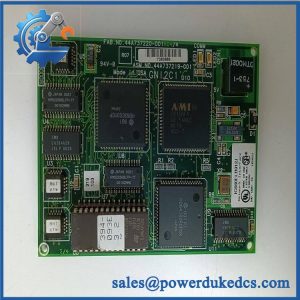
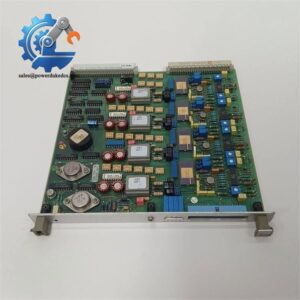
- Board Construction: Rectangular multilayer PCB with transformer, inductor, power-supply circuitry, fuses, MOV protection, heat sinks, and status/test points
- Protection Components: 12 replaceable fuse positions reported on the board
- Connectors: Stab-on, plug, and header-style interfaces
- Approx. Board Dimensions: 29.2 × 13.0 × 2.7 cm in secondary inventory records
- Estimated Bare-Board Weight: ~0.32 kg reported by one secondary source
- Estimated Shipping Weight: Allow approximately 0.7–1.0 kg packed, subject to actual carton, ESD packaging, and shock protection
- What’s in the Box: IS210AEPSG1AFC PCB only unless the PO specifically includes cables, fuse sets, mounting hardware, or documentation
- Packaging: ESD shielding bag, connector protection, rigid PCB support, moisture barrier, shock-resistant carton
GE-associated component catalogs identify IS210AEPSG1AFC within the AEPS Alternative Energy Power Supply PCB family and associate it with GE Energy equipment.
Product Introduction
Structure B — Architecture Hook
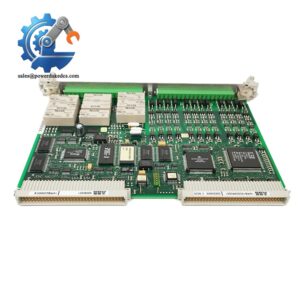
The GE IS210AEPSG1AFC is an AEPS power-supply PCB used within GE Energy control equipment. Its physical construction includes a transformer, inductor, power-supply components, multiple fuses, MOV-type surge protection, capacitors, heat sinks, transistors, LEDs, and diagnostic test points. Secondary technical records consistently identify it as a power-supply board rather than an I/O or processor card.
For asset management, that distinction matters. A warehouse should not catalog IS210AEPSG1AFC as a generic Mark VI controller board because its replacement decision depends on the input source, downstream DC rails, fuse configuration, connector layout, and cabinet application. GE component catalogs also associate the board with part number 104W8038P001, giving procurement a useful cross-reference for identity control.
Core Technical Specifications
| Parameter | Value |
|---|---|
| Manufacturer | GE General Electric |
| Part Number | IS210AEPSG1AFC |
| Functional Acronym | AEPS |
| Product Type | Alternative Energy Power Supply PCB |
| System Association | GE Energy / Mark VI-family control hardware |
| Related Part Number | 104W8038P001 |
| Input Function | AC power conversion / control-system power distribution |
| Primary Components | Transformer, inductor, power-supply circuitry |
| Fuse Count | 12 |
| Fuse Style | Multiple quick-connect fuse holders |
| Surge Protection | MOV / varistor protection |
| Capacitors | Polyester, ceramic, and high-voltage electrolytic types reported |
| Heat Management | Heat sinks near power transistors |
| Diagnostic Hardware | LEDs and test points |
| Connector Types | Stab-on, plug, and header connectors |
| Processor | No dedicated application processor established for the power-board function |
| Memory | No user memory |
| Firmware | None expected on the power-supply board itself |
| Power Draw | Downstream-load and input-configuration dependent |
| Heat Dissipation | Load dependent; concentrated around transformer, rectification, switching, and heat-sink areas |
| Reported Board Dimensions | 29.2 × 13.0 × 2.7 cm |
| Reported Board Weight | 0.32 kg |
| Reported Operating Temperature | -20°C to +60°C in one secondary record |
| Reported Storage Temperature | -40°C to +85°C in one secondary record |
| Lifecycle Profile | Legacy / specialized GE Energy spare |
The 104W8038P001 cross-reference appears in GE Energy component listings alongside . Be cautious with electrical specifications: some current commercial records publish broad voltage and frequency values that conflict with the board’s actual application context, so the installed cabinet drawing and nameplate should control final acceptance.
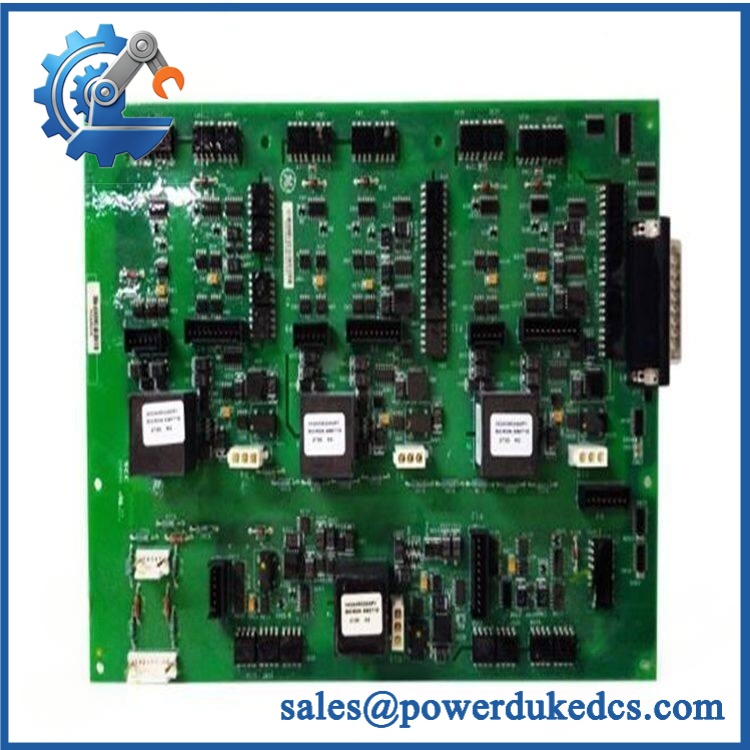
GE IS210AEPSG1AFC
🚨 Global Compliance & Industry Certifications
- CE Mark: Potentially applicable to the complete GE Energy control equipment in which the AEPS board is installed. Do not claim standalone CE conformity for the PCB without the applicable declaration.
- UL/cUL: Verify the complete cabinet/equipment certification and exact board revision before making a UL or cUL statement.
- ATEX/IECEx: Do not assume hazardous-area certification. The power board may supply equipment used in industrial or classified environments, but that does not make the PCB independently certified for hazardous-area installation.
- Marine Approvals: No revision-specific marine approval was established for this exact board.
- Electrical Safety: This is a power-conversion board containing capacitors, transformer circuitry, fuses, and power semiconductors. Stored electrical energy may remain after shutdown.
- Functional Safety: Do not assign a SIL rating to the AEPS board itself. Any safety classification belongs to the complete engineered system.
- Audit Documentation: Retain the exact board number, revision, cross-reference, serial/date code, fuse configuration, COO, test record, and applicable certification documents.
Verify specific lot certifications with OEM.
🚨 Long-Term Storage & Asset Preservation Guide
Protect this board from humidity and electrostatic exposure. The AEPS contains high-voltage capacitors, transformers, inductive components, fuses, connectors, and power semiconductors. Keep it inside an ESD shielding bag with the connector interfaces protected.
Inspect the electrolytic capacitors before service. Do not automatically assume a long-stored power board is ready for immediate full-load energization. Check for bulging, leakage, discoloration, or seal deformation. Where shelf storage has been extended for several years, controlled power-up or capacitor-forming procedures should follow the applicable GE maintenance requirements rather than an improvised test.
Keep the fuse population documented. The board is reported with 12 fuse positions. Record installed fuse ratings and locations at receiving; never replace a blown fuse with a visually similar component having an unknown current or interrupt rating.
Control warehouse conditions. A clean indoor environment below approximately 60% RH is a practical preservation target when a specific OEM storage specification is unavailable. Avoid condensation, salt-laden air, corrosive vapors, and repeated unplanned energization.
Physical Installation Prerequisites
- Application Match: Confirm the exact GE Energy cabinet and downstream equipment served by the AEPS board.
- Input Voltage: Do not rely on a generic catalog voltage. Verify the installed cabinet schematic and the actual nameplate before applying power.
- Fuse Configuration: Match every fuse position, rating, and circuit designation against the original board.
- Connector Mapping: Photograph all stab-on, plug, and header connections before removal.
- Capacitor Safety: Verify DC-link or capacitor discharge has reached the site’s safe threshold before touching the PCB.
- Grounding: Confirm protective-earth continuity and the board’s intended chassis/ground connections.
- Cooling: Leave adequate cabinet airflow around the transformer, heat sinks, and power semiconductor area. Do not press cable bundles against heat-producing components.
- Clearance: Maintain sufficient room for fuse inspection and replacement, connector access, and safe measurement of test points.
- ESD: Use a grounded wrist strap and ESD-safe workstation whenever handling the board.
- Cable Strain: Route connected cables so their weight is not transferred into PCB headers or soldered connectors.
- Post-Installation: Verify each downstream DC rail, current draw, alarm/status indication, and fuse condition before reconnecting the powered equipment.
Because the available secondary specifications conflict on some electrical details, the actual cabinet schematic and board nameplate should override commercial catalog data during installation.
Buyer’s FAQ
Q1. What HS tariff code should be used for GE ?
Do not classify this item simply as a generic circuit board. It is a dedicated industrial power-supply PCB, so the final tariff treatment depends on whether the importing jurisdiction classifies it as a power-supply apparatus, part of electrical control equipment, or another category.
For the commercial invoice, use a precise description such as “GE Energy AEPS Alternative Energy Power Supply PCB” and have the importer or customs broker confirm the final national HS code.
Q2. What Country of Origin should appear on the COO?
Use the actual manufacturing origin of the physical board supported by the nameplate and supplier traceability. Some secondary listings report USA, but that should be verified against the specific serial-numbered asset rather than copied from a generic database entry.
Retain the actual-unit photograph, serial/date code, supplier COO declaration, and commercial invoice together.
Q3. Should I insure shipment of ?
Yes, especially for turbine-control equipment. Power boards contain heavy magnetic components and fragile PCB connectors, so an ordinary loose-carton shipment is not appropriate. Use rigid internal support, connector protection, ESD shielding, and moisture control.
Photograph the board, fuse section, transformer area, revision marking, serial label, and packaging before dispatch.
Q4. Does include the latest firmware pre-loaded?
No. This is a power-supply PCB, not an application CPU or firmware-bearing control module. The critical configuration data are the electrical input arrangement, fuse population, connector mapping, downstream load, and cabinet-specific power architecture.
Q5. Is 104W8038P001 equivalent to ?
Yes, GE Energy component listings associate 104W8038P001 with the AEPS power-supply PCB.
Treat that as an identity cross-reference, not permission to ignore hardware revision or cabinet compatibility. Before releasing the PO, match the complete marking, revision, connector layout, fuse configuration, and installed equipment drawing.



 Start Chat