

Description
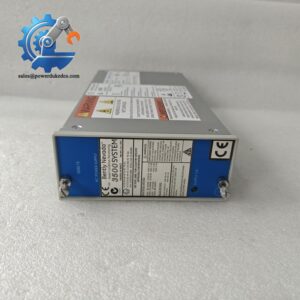
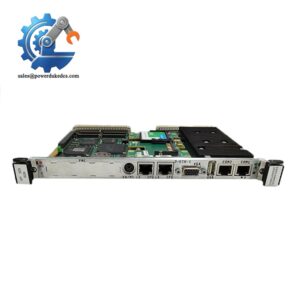
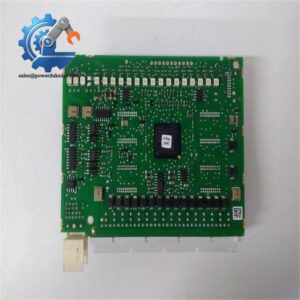
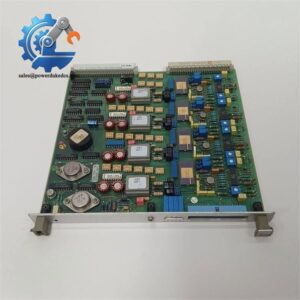
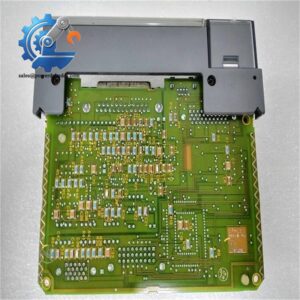
- Model & Brand: IS210MACCH2AEG | GE Energy
- Series: IS210 / GE Mark VI-related control hardware
- Part Type: MACC — Multi Application Converter Controller PCB
- Primary Application: GE Energy 1.5 MW wind-turbine control; also associated with GE industrial control equipment.
- Physical Dimensions: Approx. 148 × 103 × 32 mm from one current inventory record; other listings report substantially different measurements, so verify the actual unit before cabinet or freight planning.
- Estimated Net Weight: Approx. 0.24 kg according to one current listing; use actual scale weight for logistics records.
- Estimated Shipping Weight: Approximately 0.6–1.0 kg with ESD shielding and rigid carton
- What’s in the Box: IS210MACCH2AEG PCB assembly; ESD shielding bag; protective packaging; cables, mating boards, brackets, and mounting hardware only when specifically included
- Board Identification: MACC / H2 / AEG configuration
- PCB Type: Industrial control PCB
- Lifecycle Classification: Legacy / spare-part inventory; current OEM availability should be verified before stocking decisions
Product Introduction
GE IS210MACCH2AEG belongs to the controller layer of an industrial power-conversion or turbine-control architecture. Multiple industrial records identify it specifically as a MACC, or Multi Application Converter Controller, and a dedicated GE Energy component catalog places IS210MACCH2AEG within the 1.5 MW wind-turbine MACC family. This is an important distinction for asset registration: the board should not be cataloged merely as a generic analog I/O module.
Physical identification is equally important. Supplier records report conflicting dimensions and electrical data for this exact suffix, including different board footprints and power descriptions. Accordingly, the nameplate, board silkscreen, parent assembly, and GE drawing reference should control the engineering record. Do not populate an audit database with unverified processor, memory, or power specifications simply because they appear on a third-party listing (this is a common source of spare-part master-data errors).
Core Technical Specifications
| Parameter | Value |
|---|---|
| Manufacturer | GE Energy / General Electric |
| Part Number | IS210MACCH2AEG |
| Functional Designation | MACC |
| Product Type | Multi Application Converter Controller PCB |
| Related Product Family | IS210 |
| Reported Application | GE Energy 1.5 MW wind-turbine control |
| Other Application | GE industrial control equipment |
| Board Configuration | H2AEG |
| Reported Dimensions | 148 × 103 × 32 mm from one current inventory source |
| Alternate Dimensions Reported | Approximately 220 × 150 × 30 mm in another listing |
| Reported Weight | Approx. 0.24 kg |
| Alternate Weight Reported | Approx. 0.22 kg |
| Reported Supply | 24 VDC in supplier records |
| Processor | Third-party records report a processor, but exact device is not independently established |
| Memory | Public supplier records are inconsistent; do not use unverified memory figures for engineering approval |
| Communications | Various supplier descriptions report communications interfaces; exact interface set must be verified on the actual board |
| PCB Construction | Industrial printed-circuit board |
| Firmware | Application-dependent; exact firmware revision not established from reliable public documentation |
| Mounting | Internal GE control-system assembly |
| Lifecycle | Legacy / replacement inventory |
The MACC identification is independently supported by GE Energy component catalogs, while public supplier specifications for dimensions and electronics differ materially.
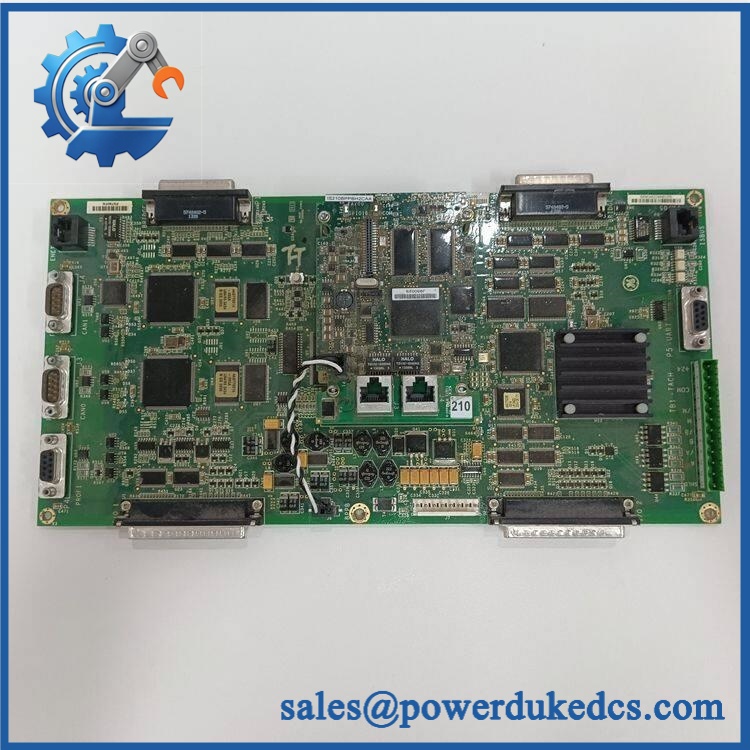
GE IS210MACCH2AEG
🚨 Global Compliance & Industry Certifications
IS210MACCH2AEG should be treated as an internal control-system PCB. Certification must be documented against the complete equipment configuration rather than assumed from the board number.
- CE Mark: No standalone CE declaration specific to was established from the reviewed records.
- UL/cUL: No exact-part UL/cUL listing was independently established.
- ATEX/IECEx: No standalone ATEX or IECEx certificate specific to this board was established.
- Marine Approvals: No specific DNV, ABS, or Lloyd’s Register approval was established.
- EMC: The complete GE control cabinet determines applicable EMC performance through grounding, shielding, cable routing, and enclosure design.
- Hazardous-Area Use: Do not infer Class I Division 2 or Zone 2 suitability from generic GE Mark VI or wind-turbine references.
The board’s application in wind-turbine equipment does not by itself establish a hazardous-area certification or a particular environmental rating. Verify specific lot certifications with OEM.
🚨 Long-Term Storage & Asset Preservation Guide
Keep in an ESD shielding bag from receiving inspection through installation. This is a controller PCB, so latent ESD damage is a greater concern than it would be for a purely mechanical spare.
Maintain warehouse humidity below approximately 60% RH where practical. Avoid condensation and uncontrolled temperature changes. Connector oxidation can create startup or communications problems that are difficult to distinguish from electronic faults.
Protect every connector mechanically. The reported board dimensions are inconsistent between suppliers, so the actual connector arrangement should be photographed during receiving inspection. Store the PCB in a rigid compartment rather than allowing it to slide against other boards.
Record the board revision and parent assembly reference. Save photographs of the label, H2AEG marking, connectors, and visible configuration components. This becomes particularly valuable when multiple MACC variants exist in the same plant inventory.
Do not introduce an unsupported capacitor-reforming procedure. No manufacturer-prescribed reforming interval was established for this exact board. A controlled bench test before deployment is the more defensible preservation method.
Physical Installation Prerequisites
The is an internal GE control PCB, not a generic DIN-rail controller.
Before installation:
- Confirm the exact part number.
- Identify the parent-board or equipment assembly to which the MACC board belongs.
- Confirm whether the application is the GE 1.5 MW wind-turbine configuration or another GE industrial assembly.
- Record connector positions and cable orientation before removal.
- Inspect all mating connectors for bent, recessed, oxidized, or contaminated contacts.
- Verify the actual supply voltage from the approved GE schematic before energization; do not rely solely on a third-party “24 VDC” listing.
- Use grounded ESD handling throughout installation.
- Confirm board orientation before applying insertion pressure.
- Do not force connectors into the mating assembly.
- Preserve existing grounding and shielding connections.
- Keep signal cables away from high-current switching conductors where the cabinet design permits.
- Maintain the cabinet’s designed airflow path around the parent assembly.
- Do not impose an arbitrary 50 mm board clearance; use the actual GE cabinet and parent-board mechanical design.
- Verify firmware/software compatibility at the equipment level before commissioning.
- Perform controlled power-up and system diagnostics after installation.
- Where the board controls power-conversion or turbine functions, complete the applicable functional test before returning equipment to service.
Buyer’s FAQ
Q1. What HS tariff code should be used for ?
A: One current supplier record assigns 8537101190, but that is a supplier classification and should not automatically be used for every destination country. Because this is a dedicated industrial control PCB, the importer or customs broker should confirm the final country-specific tariff classification.
Q2. Does Country of Origin follow the location from which the PCB is shipped?
A: No. COO is determined under the applicable origin rules for the physical item, not the export warehouse. One supplier record states USA as the origin, but the actual unit’s traceability documentation should control the customs declaration.
Q3. How should I package and insure ?
A: Use an ESD shielding bag, rigid protection around connectors, shock-absorbing internal material, and a carton that prevents movement. One current listing reports 0.24 kg net weight, but other records differ, so actual packed weight should be measured before freight booking. For a critical control spare, cargo insurance should cover the declared replacement value.
Q4. Does contain the latest firmware pre-loaded?
A: Do not assume it does. Public records disagree on the board’s processor, memory, and communication specifications. Firmware and application configuration should therefore be verified against the target GE system before commissioning rather than inferred from the part number.
A: Do not assume live replacement is permitted. This is a controller PCB, and no reliable hot-insertion specification for this exact suffix was established. De-energize the equipment according to the approved GE procedure, apply ESD controls, verify connector orientation, and complete system diagnostics after installation.



 Start Chat