

Description
- Brand: GE / GE Intelligent Platforms
- Full Model Number: VMICPCI-7632-03310 IS215UCCAH3A 350-657362-003310J
- System/Series Family: GE Mark VIe / UCCC Unit-Level Control Architecture
- Core Function: Unit-level control processor assembly for Mark VIe turbine control applications
- Top 3 Hardcore Specs: 650 MHz Intel Celeron; 128 MB DDR DRAM; 128 MB Flash
- Operating System: QNX Neutrino real-time operating system
- Form Factor: 3U CompactPCI single-slot processor assembly
- Network: 10/100 Mbps Ethernet; integrated VMIC PMC network interface
- Expansion: 2 PMC expansion positions
- Stock Status: New Surplus / Fully Tested Refurbished — confirm exact condition and test documentation before purchase
Available technical references identify IS215UCCAH3A as a Mark VIe UCCC processor assembly and associate VMICPCI-7632-03310 with the integrated VMIC network mezzanine. The 350-657362-003310J identifier is also listed with the same assembly.
Module 3: Commercial-Technical Deep Dive
When a Mark VIe turbine control cabinet loses its unit-level processor, the failure is much more serious than losing an ordinary communications card. The IS215UCCAH3A serves as a UCCC processor assembly within the Mark VIe architecture, handling application execution while the integrated VMIC interface supports control-network communications. Published technical data identifies a 650 MHz Intel Celeron processor, 128 MB DDR DRAM, 128 MB Flash, QNX Neutrino, and a 3U CompactPCI single-slot form factor. The assembly is therefore tied directly to the controller’s rack architecture; it should be sourced by the exact board and assembly identifiers rather than by processor family alone.
The practical value of keeping this spare is restoration speed. A matched processor assembly avoids the mechanical and electrical redesign that would accompany an attempt to replace a legacy CompactPCI controller with unrelated hardware. The integrated VMIC network function is also significant because Mark VIe control communications depend on the correct hardware interface and system configuration. Some supplier documentation describes the integrated interface as a deterministic control-network connection using GE’s control communications architecture. —The exact network behavior still depends on the installed Mark VIe configuration and project software, so a replacement should be matched to the existing controller revision and site image before commissioning.
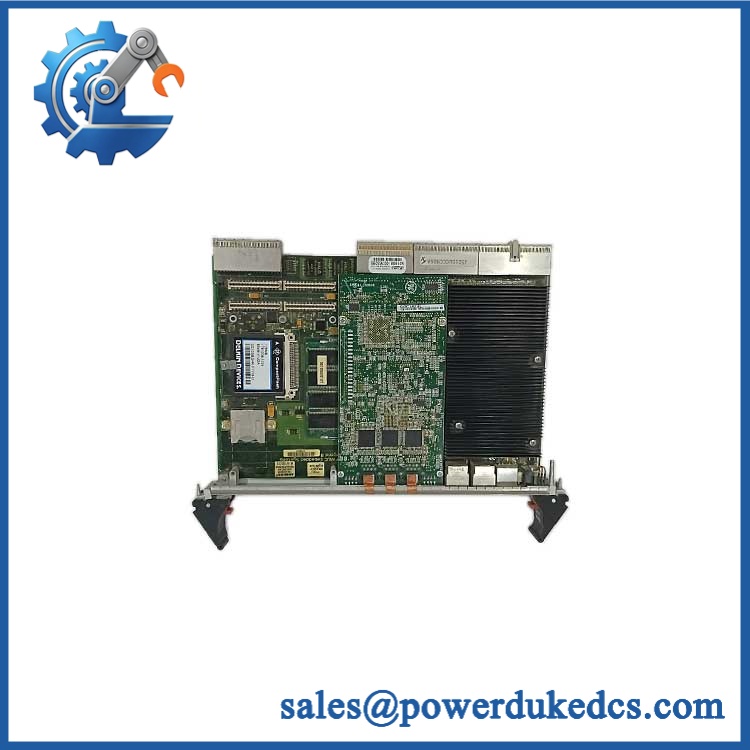
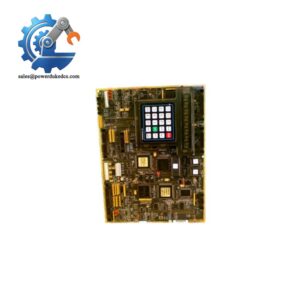
GE IS215UCCAH3A
Module 4: Compatibility & Installation Traps
Migration/Compatibility
For an existing GE Mark VIe installation specified for IS215UCCAH3A, replacement should be treated as a like-for-like UCCC controller exchange, subject to verification of the controller revision, application software, rack configuration, and associated VMIC network hardware. Available documentation describes the assembly as a 3U CompactPCI single-slot controller, with the main controller installed in the leftmost slot of the applicable CPCI cabinet.
Do not assume that installing the hardware automatically restores the customer’s application. The processor can require the correct project software, configuration data, and system-specific settings. A firmware or application-image transfer may therefore be part of commissioning, but that requirement should be established from the existing Mark VIe controller image rather than guessed from the board number.
⚠️ Field Traps (Watch Out)
- CPCI slot and backplane dependency: The UCCC assembly is designed for a CompactPCI rack environment. Published technical material identifies the main controller position as the leftmost slot. Installing the board into an incorrect position or into a non-matching chassis can prevent proper backplane operation.
- Project image and hardware identity mismatch: A board that passes a basic power-up test is not necessarily ready for service. Record the existing controller identification, application image, configuration, and network parameters before removal; restoring the wrong project image can produce communication or control faults even though the processor itself is healthy.
- ESD exposure: Handle the processor assembly and its PMC circuitry under controlled ESD conditions. Do not remove or insert the board by touching exposed component leads or connector contacts.
Module 5: Quality Assurance SOP
For a legacy Mark VIe processor assembly, pre-shipment verification should cover both physical authenticity and functional evidence:
- OEM anti-counterfeit visual inspection — verify GE identification labels, board markings, assembly number, connector layout, PMC hardware, PCB revision, and evidence of unauthorized repair.
- Part-number reconciliation — record and photograph VMICPCI-7632-03310, IS215UCCAH3A, and 350-657362-003310J wherever those identifiers are present on the assembly and labels.
- PCB and connector inspection — examine the CompactPCI edge connector, PMC area, mounting hardware, solder joints, capacitors, and board surface for corrosion, impact damage, contamination, or rework.
- Power-on self-test (POST) — install the unit in an appropriate Mark VIe-compatible test environment and verify expected startup behavior, processor initialization, and applicable ERR/RUN or diagnostic indications.
- Memory verification — verify accessible memory resources against the expected hardware configuration, including the documented 128 MB DRAM and 128 MB Flash architecture where the test platform supports direct verification.
- Communication handshake verification — establish the applicable GE control-network connection and verify successful controller-to-network communication using the approved test configuration.
- Processor and OS check — confirm expected QNX Neutrino startup behavior and record the installed software or firmware identification before release.
- PMC interface inspection — verify correct seating and physical condition of the integrated VMIC network mezzanine and associated connectors.
- Final QC record — retain serial/identification photographs, POST observations, communication test results, software identification, and packaging inspection results with the shipment file.
For this type of processor assembly, a visual inspection alone has limited value. The key evidence is whether the controller initializes correctly and establishes the expected communication path in a representative test environment.
Module 6: CRO-Driven Buyer FAQ
1. What do the three numbers VMICPCI-7632-03310, IS215UCCAH3A, and 350-657362-003310J represent?
Available technical references treat these identifiers as different identification layers associated with the same Mark VIe controller assembly: identifies the GE UCCC processor board, VMICPCI-7632-03310 identifies the integrated VMIC network hardware, and 350-657362-003310J is an associated GE assembly identifier. Always match the physical label on the offered unit against the customer’s installed hardware.
2. Is this a drop-in replacement for an existing ?
It can be a direct hardware replacement when the existing Mark VIe configuration calls for the same assembly and compatible revision. It should not be treated as a universal controller replacement. Verify the CPCI rack, board revision, project software, and network configuration before installation.
3. Can this controller be hot-swapped?
Do not assume hot-swap capability. This is a unit-level processor installed in a CompactPCI control rack, not a field I/O card designed for routine energized replacement. Follow the site’s shutdown, electrical isolation, and equipment-specific replacement procedure unless the applicable GE documentation explicitly authorizes energized exchange.
4. Does the replacement require firmware or application loading?
Potentially, yes. The board is the computing hardware, while the installed Mark VIe application and configuration determine how that hardware functions in the turbine control system. Capture the existing software and configuration information before removing the failed controller, then verify the replacement against the site-approved image and revision requirements.
5. What warranty and technical support should I expect?
The warranty should be stated in the quotation based on the actual unit condition, such as new surplus or tested refurbished. Support should cover part-number verification, physical compatibility, available test documentation, and basic installation guidance. Site-specific application recovery, control-logic modification, and turbine commissioning are separate engineering activities.



 Start Chat