

Description
- Brand: GE General Electric
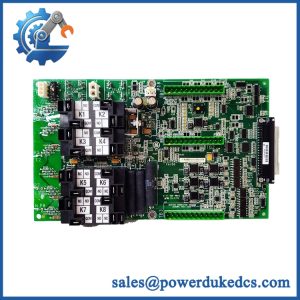
- Full Model Number: IS220PTURH1A
- System/Series Family: Mark VIe / Mark VIeS Speedtronic
- One-Sentence Core Function: Primary turbine-specific trip I/O pack interfacing turbine protection signals with one or two I/O Ethernet networks
- Top 3 Hardcore Specs: Four speed sensor inputs; eight flame sensor inputs; dual 10/100 Ethernet I/O network interfaces
- Stock Status: New Surplus / Fully Tested Refurbished — Stock Condition Confirmation Required
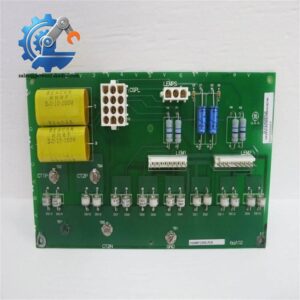
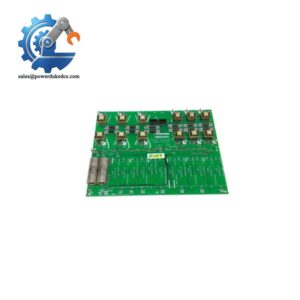
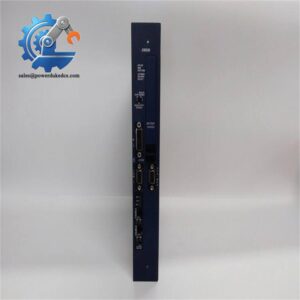
GE documentation identifies the IS220PTURH1A as a Mark VIe Control PTUR Turbine Specific Primary Trip module, used with the IS200TRPAH1A accessory terminal board. The technical architecture also documents compatibility with the TTURH1C turbine terminal board and STUR board.
Module 3: Commercial-Technical Deep Dive
A PTUR failure is a turbine-protection problem, not a routine analog-I/O replacement. The GE IS220PTURH1A provides the electrical interface between one or two I/O Ethernet networks and the turbine terminal-board architecture, processing critical turbine signals before they participate in protection functions. The documented signal set includes four speed inputs, bus and generator voltage inputs, shaft voltage and current signals, eight flame-sensor inputs, and outputs associated with the main breaker when installed in the applicable TTURH1C architecture. That is why exact terminal-board compatibility must be established before a replacement is installed.
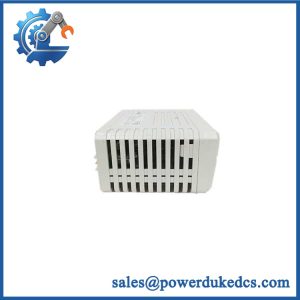
The architecture also gives maintenance teams a defined replacement path. The pack uses dual RJ45 Ethernet connections for I/O network communication, a three-pin power input, and a DC-62 connector to the associated terminal board. Diagnostic LEDs provide local status information, while the unit also includes an infrared service interface. In a simplex arrangement, one PTUR pack can be used; three PTUR packs can be applied for TMR operation on the documented TRPAH1A arrangement. The important ROI is architectural continuity: replacing the correct PTUR pack preserves the established turbine protection topology instead of forcing a redesign of the protection interface.
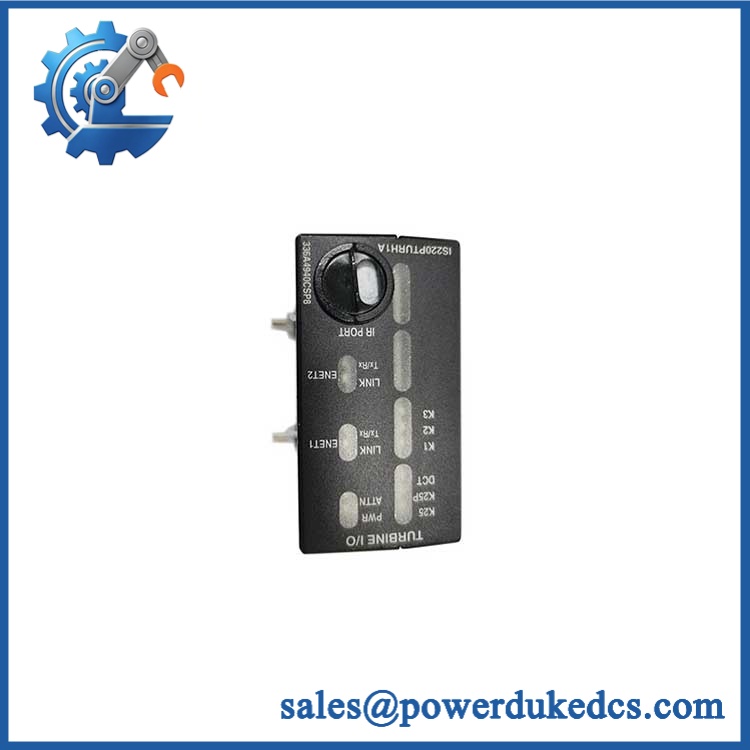
GE IS220PTURH1A
Module 4: Compatibility & Installation Traps
Migration/Compatibility
The IS220PTURH1A is a Mark VIe PTUR turbine-specific primary trip I/O pack, not a general-purpose I/O module. GE documentation identifies the IS200TRPAH1A as an accessory terminal board for this module. The Mark VIe system guide further identifies the PTURH1A as compatible with the TTURH1C, TRPAH1A/H2A, and STURH1A architectures while noting that it is not compatible with the DIN-rail DTUR or unrelated TTUR boards.
A like-for-like hardware replacement does not by itself prove that the installed protection configuration is correct. Verify the terminal-board type, simplex/dual/TMR architecture, controller configuration, software revision, and field wiring before commissioning. Do not assume that a different PTUR revision is automatically interchangeable merely because the housing and connector arrangement look similar.
⚠️ Field Traps (Watch Out)
- Terminal-board mismatch: The PTUR pack plugs into a specific turbine terminal-board architecture through the DC-62 interface. A physically similar Mark VIe I/O pack is not an acceptable substitute. GE documentation specifically distinguishes PTUR compatibility from DTUR and other TTUR arrangements.
- Trip-system wiring and sensor verification: Speed pickups, flame detectors, voltage inputs, shaft measurements, and breaker-related signals have distinct functional roles. Verify each field circuit against the approved Mark VIe wiring documentation before energization. A wiring error on a protection input should never be diagnosed by repeated live substitutions.
Module 5: Quality Assurance SOP
Before shipment, each IS220PTURH1A unit should pass a controlled inspection sequence appropriate for turbine protection hardware.
- OEM anti-counterfeit visual inspection — Verify GE identification labels, complete part number, functional revision, connector construction, enclosure condition, PCB layout, and visible manufacturing details.
- Physical inspection — Check the housing, DC-62 connector, Ethernet ports, power connector, mounting hardware, LED window, and PCB for cracks, contamination, corrosion, bent contacts, or unauthorized rework.
- Revision and traceability capture — Record available serial information, board revision, product label data, and hardware identifiers before testing.
- Power-on self-test (POST) — Apply controlled 24 VDC power through an approved test fixture and confirm expected startup behavior and diagnostic indications. Published technical references identify 24 VDC as the pack’s power input.
- Communication handshake verification — Check both applicable Ethernet interfaces for link and communication activity using a compatible Mark VIe test environment.
- I/O functional verification — Where the test fixture permits, verify representative PTUR input and output channels, including speed-input processing and applicable turbine protection signal paths.
- Diagnostic verification — Confirm expected LED behavior and review available diagnostic information before final release.
- Final QC release — Record part number, revision, test results, photographs, inspector approval, ESD packaging, and shipment condition.
Testing should be reported accurately. A unit that has passed electrical and communication tests should not be represented as a fully commissioned turbine-protection assembly unless the complete application environment has actually been validated.
Module 6: CRO-Driven Buyer FAQ
Is the GE IS220PTURH1A still an identifiable Mark VIe turbine-protection component?
Yes. GE’s published certification documentation explicitly identifies as the Mark VIe Control PTUR Turbine Specific Primary Trip module and specifies the associated IS200TRPAH1A terminal-board relationship.
Can the be hot-swapped?
Do not assume hot-swap capability for this protection module. The available technical documentation does not establish a universal hot-swap procedure. Follow the site’s approved turbine shutdown, isolation, power-discharge, and ESD procedures before removal or installation.
Can one PTUR pack replace a three-pack TMR arrangement?
Not as a direct architectural equivalent. GE’s system documentation describes simplex operation using one I/O pack and TMR operation using three PTUR packs, with the configuration dependent on the terminal-board and network architecture. Replacing one element in a TMR protection chain requires verification of the complete voting and communication arrangement.
Does replacement require a firmware or software reload?
Do not assume either answer from the part number alone. Verify the hardware revision, installed software/configuration, target Mark VIe application, and network configuration before commissioning. A replacement pack with correct hardware but an incompatible software state can still require engineering intervention.
What warranty and technical support are included?
Warranty duration should be confirmed for the specific unit condition on the quotation or order confirmation. Technical support should cover part-number verification, terminal-board compatibility checks, available test records, and pre-installation guidance. Turbine protection logic changes, site commissioning, trip-setpoint engineering, and final safety validation remain the responsibility of qualified plant personnel.



 Start Chat