

Description
- Model: IS230SNRTH2A
- Brand: GE
- Series: Mark VIe Speedtronic
- Part Type: RTD Input I/O Pack
- Core Function: Converts field RTD resistance signals into processed temperature data for Mark VIe turbine-control applications.
- Input Capacity: Commonly identified as an 8-channel RTD input configuration
- Communication: Dual Ethernet / Mark VIe IONet architecture
- Application: Turbine temperature monitoring, process measurement, control, and alarm functions
- Signal Type: Resistance-temperature detector inputs
- Configuration: Depends on the associated terminal-board assembly and installed control-system database
- Condition Priority: Verify exact hardware revision and mating terminal board before approving a replacement
- Lifecycle Focus: Treat this as legacy Mark VIe inventory and verify current GE replacement availability before depletion.
Product Introduction
Structure B — Technical Direct
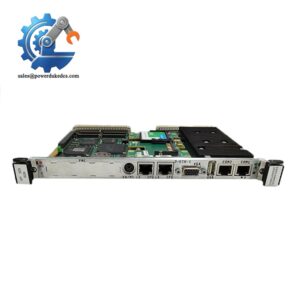
Installed within the GE Mark VIe distributed I/O architecture, the IS230SNRTH2A serves as an RTD temperature acquisition pack rather than a standalone temperature transmitter. Field resistance signals are presented through the associated terminal-board arrangement, processed by the I/O electronics, and transferred into the Mark VIe control network for monitoring, alarm, and control functions.
The unit is associated with 8-channel RTD acquisition and dual Ethernet connectivity in published field references. Exact sensor support, wiring configuration, and accuracy depend on the terminal-board variant and system configuration, so procurement should be based on the complete installed assembly rather than the I/O-pack number alone.
For plants maintaining older Speedtronic installations, this distinction has direct inventory value. A tested New Surplus IS230SNRTH2A can protect against an unexpected temperature-monitoring outage while the engineering team evaluates longer-term legacy migration.
Core Technical Specifications
| Parameter | Value |
|---|---|
| Manufacturer | GE |
| Model | IS230SNRTH2A |
| Series | Mark VIe Speedtronic |
| Product Type | RTD Input I/O Pack |
| Primary Function | Temperature signal acquisition and processing |
| Input Channels | 8 RTD channels |
| Input Signal | RTD / resistance-based temperature measurement |
| Communication Architecture | Mark VIe IONet |
| Ethernet Interfaces | 2 Ethernet ports |
| Network Speed | Up to 100 Mbps in the Mark VIe I/O architecture |
| Power Architecture | Mark VIe distributed I/O pack DC supply |
| Typical Mark VIe I/O Pack Supply | 28 VDC nominal |
| Mounting | Installed with a compatible Mark VIe terminal-board assembly |
| Diagnostic Method | LED status plus controller/I/O diagnostic variables |
| Application | Turbine temperature monitoring and control |
| Environmental Performance | Confirm against the exact terminal-board and certified assembly |
| Hardware Revision | H2A |
| Configuration Dependency | Terminal board, channel assignment, firmware, and control database |
| Lifecycle Consideration | Legacy hardware; verify current replacement path |
A caution is necessary here: online references for IS230SNRTH2A contain conflicting technical claims, including unsupported values for RTD temperature range, precision, isolation voltage, MTBF, and specific terminal-board part numbers. Those values should not be placed on an engineering procurement specification without verification against GE documentation for the exact H2A assembly.
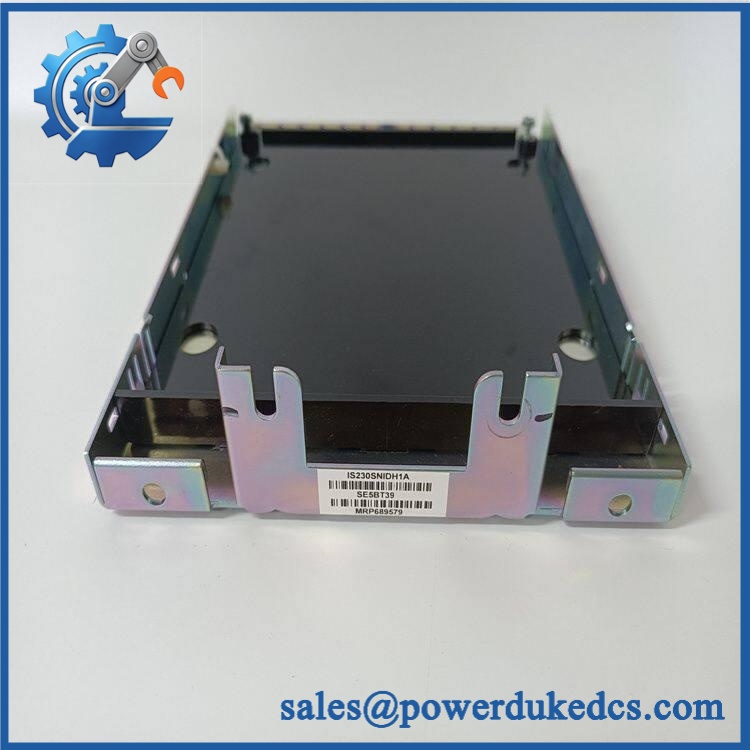
GE IS230SNRTH2A
Application Scenarios & Pain Points
The technical conclusion is simple: an RTD I/O-pack failure can affect several temperature channels at once, making common-hardware diagnosis important before replacing individual sensors.
Gas Turbine Temperature Monitoring
In turbine applications, multiple bearing, exhaust, winding, lube-oil, or auxiliary temperature measurements can be routed into the Mark VIe temperature-acquisition architecture. When several readings disappear simultaneously, inspect the common I/O path before assuming multiple RTDs have failed.
Combined-Cycle Power Generation
For combined-cycle plants, temperature data may feed both control logic and operator alarming. A replacement pack should therefore be validated against the active controller configuration rather than tested only for electrical power-up.
Petrochemical Processing
Where ambient cabinet temperatures exceed 50°C, connector condition, cabinet ventilation, and power quality become important inspection points. Thermal stress can expose marginal electronic assemblies that appear normal during a short bench test.
Process Heating and Utility Systems
Older Mark VIe installations may still depend on H2A-generation I/O hardware. Maintaining a tested spare avoids extending an outage while engineering searches for a compatible legacy component.
🚨 Common Error Codes & Diagnostic Symptoms
Symptom/Code: Multiple RTD channels simultaneously show invalid or unavailable values
→ Diagnosis: A common I/O-pack, terminal-board, power, or communication problem is more likely than simultaneous independent RTD failures.
→ Action: Check the 28 VDC supply, terminal-board interface, IONet communication, and controller diagnostics; replace the I/O pack when the fault follows the module.
Symptom/Code: I/O pack Attention/Fault indication remains active after power-up
→ Diagnosis: Possible internal hardware fault, configuration mismatch, communication problem, or incorrect terminal-board identification.
→ Action: Review system diagnostics and terminal-board identity; replace the IS230SNRTH2A if the diagnostic condition remains localized to the pack.
Symptom/Code: Temperature channels remain fixed, noisy, or implausible after sensor verification
→ Diagnosis: After confirming the field RTD and wiring, abnormal readings across several channels can indicate the acquisition electronics or associated signal-conditioning path.
→ Action: Isolate the field circuit and test the I/O assembly; replace the module when hardware failure is confirmed.
GE Mark VIe diagnostics can also distinguish I/O-pack health and incorrect terminal-board conditions, so controller diagnostics should be reviewed before condemning a pack.
🚨 Cross-Reference & Lifecycle Migration
Compatibility
- is an H2A-generation Mark VIe RTD input pack.
- It should be matched with the specific terminal-board assembly installed in the cabinet.
- Do not assume every Mark VIe temperature terminal board is interchangeable.
- Channel wiring, RTD type, channel allocation, and controller database configuration should be checked before installation.
- Firmware/configuration requirements depend on the controller and I/O-pack generation.
Previous and Later Hardware
No universal, verified direct-drop-in replacement should be stated solely from the catalog number. Some later Mark VIe I/O-pack technologies use IS4xx-series hardware, but migration can require software, configuration, wiring, and terminal-board review.
Firmware flashing: Do not flash firmware merely because the replacement pack has a different revision. First identify the controller generation, installed ControlST environment, existing I/O-pack firmware, and approved replacement procedure.
Lifecycle Status
Lifecycle Position: Legacy / availability-dependent
For a spare-parts warehouse, this means the stocking decision should be based on installed population and plant criticality. A turbine with several temperature-control loops dependent on H2A hardware should normally retain a tested replacement unit, rather than relying on emergency sourcing after failure.
Field Engineer’s Tech Notes
Warning 1 — Match the terminal board before connecting field wiring.
Do not let the connector fit convince you that the hardware is correct. Mark VIe I/O packs can look highly similar while serving different signal types and terminal-board architectures. Check the installed board identification first.
Warning 2 — Do not test RTD channels with an arbitrary resistance source and call the module good.
Use a calibrated RTD simulator or precision resistance source appropriate for the expected sensor configuration. A power-up test only proves that the electronics start; it does not prove accurate channel acquisition.
Also keep the module inside ESD-controlled packaging until the bench setup is ready. The connector interface and exposed electronics deserve the same handling discipline as other Mark VIe I/O assemblies.
Strict QA & Testing SOP
Step 1 — Inbound Identity Verification
Record:
- GE
- H2A hardware revision
- Serial number
- Nameplate markings
- Any secondary manufacturing identifiers
Photograph the label and connector faces.
Step 2 — Physical Inspection
Check the aluminum enclosure, connector housings, mounting points, PCB-related interfaces, and LED indicators for:
- Cracks
- Bent contacts
- Oxidation
- Foreign material
- Impact damage
- Signs of moisture exposure
Step 3 — Electrical Inspection
Verify the applicable Mark VIe DC supply requirements with a controlled test setup. Record startup current and look for abnormal heating or unstable power behavior.
Step 4 — Communication Test
Connect the module to an approved Mark VIe test environment and verify:
- Power indication
- Ethernet link
- Controller recognition
- I/O-pack identification
- Diagnostic status
- Terminal-board identification
Step 5 — RTD Channel Test
Use a calibrated RTD simulator or precision resistance source. Test all applicable channels individually and record:
- Input resistance
- Converted temperature
- Channel stability
- Diagnostic response
- Channel-to-channel consistency
Step 6 — Extended Run
Where test equipment permits, operate the assembly for an extended period while monitoring temperature stability, communication status, and channel readings.
Step 7 — Configuration Record
Document firmware and system configuration information that can be read from the test system. Preserve this record with the serial number so the spare does not enter warehouse stock as an unidentified electronic assembly.
Step 8 — Final QC and Packaging
After passing inspection, place the module in an ESD-safe antistatic package with moisture and shock protection. Attach the QC report and identify the tested condition clearly.
Test videos are available when video evidence is included in the individual inspection package.
Buyer’s FAQ
A: Do not treat it as a generic hot-swappable module. Mark VIe supports maintenance procedures for certain I/O architectures, but the actual replacement method depends on the installed system, terminal board, power arrangement, and site safety procedure. Follow the approved GE maintenance procedure for the specific installation.
Q: How can I verify a New Original unit?
A: Compare the GE nameplate, exact catalog number, hardware revision, serial number, physical construction, connector condition, and traceability documentation. A clean appearance by itself does not establish original-manufacturer status.
Q: Is the RTD terminal board included?
A: Do not assume it is. The is the I/O-pack assembly, while the field termination hardware is a separate system component. Confirm the quotation’s exact bill of materials before purchase.
Q: What warranty should I expect?
A: Warranty depends on the supplied condition and supplier terms. For New Original or New Surplus material, request the warranty period, test coverage, and serial-number traceability in writing. For refurbished equipment, require a documented test report covering power-up, communication, and RTD channel verification.



 Start Chat