

Description
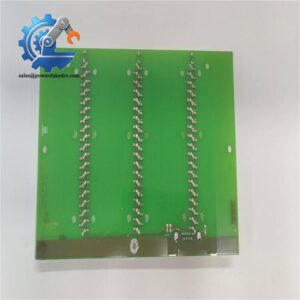
- Model: IS230SRTDH2A
- Brand: GE
- Series: Mark VIe
- Part Type: RTD SMX DIN-Rail Module / Simplex RTD Input Terminal Board
- Core Function: Provides field termination and RTD signal interface for temperature measurement within a GE Mark VIe control system.
- RTD Channels: 8
- Architecture: Simplex
- Mounting: DIN rail
- Field Interface: Pluggable terminal blocks
- Processor Interface: DC-37 connection to the associated RTD I/O processor
- Typical Application: Turbine bearing, exhaust, lube-oil, winding, and other process temperature measurements
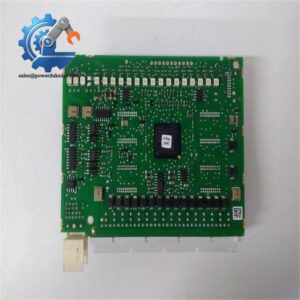
GE-oriented parts catalogs identify IS230SRTDH2A as a Mark VIe RTD input simplex assembly, while other technical listings identify it specifically as an RTD SMX DIN-rail module with eight RTD connections.
Product Introduction
Temperature feedback becomes a control risk when the field termination layer is degraded, miswired, or mismatched with the associated I/O processor. The GE IS230SRTDH2A is a Mark VIe simplex RTD input terminal assembly designed for DIN-rail installation. Available technical descriptions identify eight RTD input channels and a DC-37 connection to the corresponding RTD processor, making the assembly a field-facing component rather than a standalone controller.
Its role is straightforward, but replacement is not merely a connector swap. The RTD sensor wiring method, terminal arrangement, processor pairing, and cabinet installation all affect the temperature signal presented to the Mark VIe control system (particularly on older turbine cabinets where wiring documentation may no longer match the installed revision).
Core Technical Specifications
| Parameter | Specification |
|---|---|
| Manufacturer | GE |
| Part Number | IS230SRTDH2A |
| Product Family | Mark VIe |
| Product Type | RTD SMX DIN-Rail Module / RTD Input Terminal Board |
| Architecture | Simplex |
| Signal Type | RTD temperature input |
| Number of RTD Inputs | 8 |
| Mounting | DIN rail |
| Field Termination | Pluggable terminal blocks |
| Processor Connection | DC-37 interface |
| Associated I/O | PRTD / VRTD-type RTD processing hardware, subject to system configuration |
| Typical Application | Turbine and process temperature monitoring |
| Form Factor | Compact DIN-rail assembly |
| Protection | IP20 is reported by some secondary technical listings; verify against the applicable GE installation documentation before using this value for enclosure design. |
| Operating Temperature | Secondary listings report approximately -20°C to +60°C; exact environmental limits should be checked against the system-specific GE documentation. |
| Power | Some secondary listings report 24 VDC auxiliary power; do not use this value as a replacement wiring specification without checking the installed Mark VIe configuration. |
| Approx. Dimensions | Conflicting secondary data exists; published listings range around 167 × 145 × 85 mm to other cabinet-specific measurements. Verify from the physical assembly before mechanical replacement. |
| Approx. Weight | Secondary sources report roughly 0.26–1.0 kg; treat shipping weight and installed assembly weight separately. |
The most consistently supported identification is the eight-channel simplex RTD interface function and the Mark VIe DIN-rail form factor. Several online sources publish much more detailed electrical and environmental figures, but those values are not consistent enough to treat every number as OEM-confirmed.
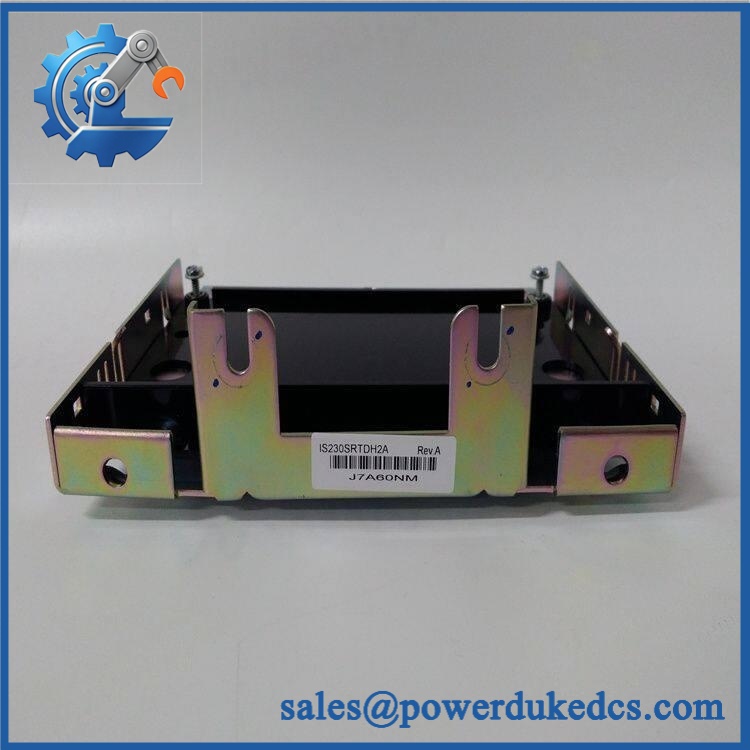
GE IS230SRTDH2A
Application Scenarios & Pain Points
Gas and Steam Turbine Temperature Monitoring
Bearing-metal temperature, lube-oil temperature, exhaust temperature, and other thermal measurements frequently feed protection or supervisory logic. The IS230SRTDH2A provides the field termination layer for these RTD signals in a Mark VIe environment. Eight RTD channels are identified for the assembly.
Turbine Bearing and Lube-Oil Systems
A single intermittent RTD channel can look like a sensor problem when the real issue is a loose terminal, damaged conductor, or degraded termination assembly. Inspection should therefore move from the sensor through the terminal board and into the associated processor rather than immediately replacing the RTD itself.
Power Generation MRO
For critical turbine assets, the terminal board can be an overlooked spare. It may be inexpensive relative to a controller, yet a failed termination assembly can still disable a group of temperature measurements. Keeping a verified spare is particularly useful when an installed board has been exposed to long-term vibration, thermal cycling, or repeated maintenance.
Retrofit and Legacy Mark VIe Cabinets
The IS230SRTDH2A appears in Mark VIe parts catalogs as an RTD input simplex assembly, alongside newer SRTD-family assemblies. That makes exact part-number control important when replacing an older board (similar-looking assemblies are not automatically interchangeable).
High-Temperature Cabinet Areas
Even when the RTD sensor itself is rated for a much broader process temperature range, the electronics and termination hardware remain constrained by cabinet environment. A cabinet operating near 50°C or higher deserves particular attention to ventilation, terminal torque, and connector condition before a temperature-channel fault is attributed to the sensor.
Common Error Symptoms & Diagnostic Checks
Symptom: One RTD channel suddenly reads open circuit or an implausible temperature
→ Diagnosis: Inspect the individual RTD loop, terminal seating, conductor continuity, and sensor resistance first. An open or shorted field circuit can mimic a terminal-board failure.
→ Action: Replace module after confirming the field wiring and sensor are healthy.
Symptom: Multiple RTD channels become unavailable together
→ Diagnosis: A multi-channel failure points more strongly toward the common termination path, processor connection, DC-37 interface, or associated RTD I/O processor than several independent sensors failing at once.
→ Action: Replace module after verifying the common interface and processor side.
Symptom: Temperature values become unstable after cabinet maintenance
→ Diagnosis: Check removable terminal blocks, conductor seating, cable routing, shielding/grounding practices, and connector engagement. Mechanical disturbance can create intermittent RTD resistance changes that appear as process instability.
→ Action: Replace module after confirming wiring integrity and connector condition.
No specific numeric GE fault-code table has been reliably verified for itself, so unsupported numeric alarm codes should not be assigned to this board.
Cross-Reference & Lifecycle Migration
The should be treated as a specific Mark VIe RTD simplex assembly, not as a generic replacement for every GE RTD board. Public Mark VIe catalogs list several closely related assemblies, including IS230SNRTH2A and several SRTD2A/SRTD2AG variants. Their similar naming does not establish electrical or mechanical interchangeability.
A key distinction is architectural: is identified as an RTD input assembly/simplex SMX DIN-rail module, whereas other SRTD-family numbers are cataloged as different S-type or twin I/O assemblies. The mating processor, channel architecture, and terminal arrangement therefore need to be checked before substitution.
For lifecycle planning, exact OEM end-of-life or last-time-buy dates for were not reliably established from the public material reviewed. In practical MRO terms, that makes tested physical stock and configuration traceability more important than relying on a generic statement that the Mark VIe platform is still supported.
Recommended buffer-stock approach: For a turbine where this assembly is still installed and no qualified substitute has been formally approved, hold at least one tested spare and retain the original board’s revision, wiring arrangement, and associated I/O processor information with the inventory record.
Field Engineer’s Tech Notes
Tech Note 1 — Photograph the terminal arrangement before pulling the board.
RTD troubleshooting becomes much harder when wires are moved before their original positions are documented. Record every channel, polarity/conductor arrangement, shield connection, and removable-terminal position before disassembly. The eight-channel architecture makes a single wiring transposition easy to miss during reinstallation.
Tech Note 2 — Do not diagnose the terminal board in isolation.
The is a field-interface assembly connected to the associated RTD processor. A loss of several channels can originate upstream or downstream of the terminal board. Check the common processor connection and DC-37 path before condemning the board.
Strict QA & Testing SOP
Step 1 — Inbound Inspection
Confirm the complete part number, GE markings, hardware revision, serial information, terminal blocks, connector condition, mounting hardware, and enclosure integrity.
Step 2 — Mechanical Inspection
Check the DIN-rail mounting mechanism, removable terminal blocks, connector retention, PCB condition, and signs of corrosion, contamination, cracked solder joints, or previous field rework.
Step 3 — RTD Channel Verification
Use a calibrated RTD simulator or precision resistance source to verify each of the eight input channels individually. Record the simulated temperature/resistance and compare the received value at the corresponding Mark VIe diagnostic point.
Step 4 — Wiring Configuration Test
Where the installed configuration supports different RTD wiring arrangements, verify the actual 2-wire/3-wire/4-wire implementation against the approved wiring diagram rather than assuming the terminal board is universally configured the same way.
Step 5 — Processor Interface Test
Connect the assembly to the appropriate Mark VIe test setup and verify communication through the DC-37 interface with the intended RTD processor.
Step 6 — Multi-Channel Test
Run all eight channels under controlled simulated inputs. Look specifically for intermittent readings, channel cross-talk, unstable values, and connector-related faults.
Step 7 — Extended Test
For critical inventory, conduct an extended powered test while monitoring channel stability and cabinet temperature. A 24-hour or longer burn-in provides more useful evidence than a simple power-on check.
Step 8 — Final QC and Packaging
Record the final part number and revision, test results, channel verification data, and physical photographs. Package the assembly in ESD protection with mechanical cushioning and a traceable QC label.
QC Documentation: Test reports and available test videos should remain associated with the spare-part record so the replacement can be released rapidly during a plant outage.
Buyer’s FAQ
Q1. What is GE ?
It is a GE Mark VIe simplex RTD input terminal assembly / RTD SMX DIN-rail module used for field temperature-sensor termination. Public catalog and supplier references consistently identify it as an eight-channel RTD assembly.
Q2. Is an I/O processor?
No. It is primarily the field termination/interface assembly. The RTD signal is passed through the terminal arrangement to the associated Mark VIe RTD I/O processing hardware.
Q3. Can it be replaced with another GE SRTD module?
Do not assume so. Mark VIe catalogs contain multiple RTD assemblies with similar prefixes but different architectures and suffixes. Confirm the complete part number, installed processor, channel arrangement, and wiring before substitution.
Q4. What should I verify before purchasing?
Verify the , physical terminal arrangement, revision/serial information, condition, and test evidence. For a critical turbine spare, specify whether the unit is new, unused, refurbished, or repaired and request a functional RTD-channel test record before acceptance.



 Start Chat