

Description
- Brand: GE Intelligent Platforms
- Full Model Number: PCIE-5565PIORC-10000
- System/Series Family: 5565 Reflective Memory PCI Express
- One-Sentence Core Function: PCI Express reflective-memory interface card for deterministic real-time data sharing across networked computer nodes
- Top 3 Hardcore Specs: PCIe x4 host interface; 128 MB reflective-memory configuration; 2 Gbaud-class multimode fiber network with 4K FIFO architecture
- Stock Status: New Surplus / Fully Tested Refurbished — exact memory option, fiber configuration, and hardware revision verified before shipment
Module 3: Commercial-Technical Deep Dive
When a real-time simulation or distributed-control system cannot tolerate Ethernet jitter, the communication layer becomes the bottleneck. The GE PCIE-5565PIORC-10000 belongs to the 5565 Reflective Memory family, providing a PCI Express host interface and hardware-based memory replication between nodes. GE’s controller catalog lists the 5565 PCIe family as a 2 GigaBaud reflective-memory interface with 4K FIFOs, and the documented 128 MB multimode configuration is the closest match to the -10000 option family. The architecture is software-transparent at the memory interface: data placed into the local reflective-memory address space is propagated over the fiber network to peer nodes.
For integration, the important parameters are memory size, optical configuration, host-bus type, and network topology. The historical GE catalog identifies the 5565 PCIe family as PCI Express, 2 Gbaud, 128 MB or 256 MB, with 4K FIFOs and separate multimode/single-mode ordering variants. Current third-party references associate PCIE-5565PIORC-10000 with a multimode optical configuration and PCIe x4 implementation, but some newer listings incorrectly claim 512 MB for this exact part number. Because the GE catalog establishes the 128 MB option family, the physical board label and configuration code should take precedence over conflicting reseller data.
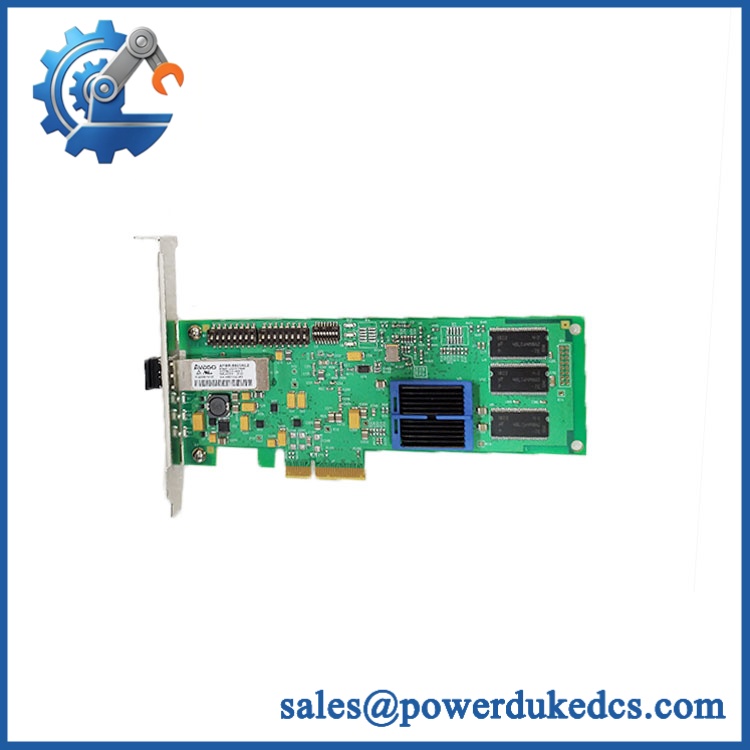
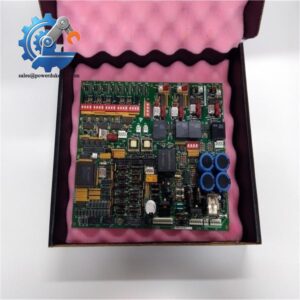
GE PCIE-5565PIORC-10000
Module 4: Compatibility & Installation Traps
Migration/Compatibility
- Replacement status: Configuration-specific PCI Express reflective-memory interface card.
- Official family: GE Intelligent Platforms 5565 Reflective Memory PCIe family.
- Interface: PCI Express host interface with optical reflective-memory networking. GE’s catalog distinguishes the 5565 PCIe family from older PCI and PMC variants.
- Memory configuration: The historical GE ordering structure identifies
-100000as the 128 MB multimode PCIe configuration and-200000as 256 MB multimode; verify the exact-10000suffix against the physical label before replacement. - Firmware/driver requirement: Hardware replacement normally does not require application-logic rewriting, but the host operating system must have a compatible reflective-memory driver and the application must recognize the replacement card.
- Logic rewrite: Normally unnecessary when replacing the same hardware configuration. Validate the RFM memory map, node configuration, interrupt settings, and application access after installation.
- Network configuration: All nodes in a reflective-memory network must use compatible memory sizing and network configuration.
⚠️ Field Traps (Watch Out)
- Memory-size mismatch: Do not mix nodes with incompatible reflective-memory sizes in an established network. A replacement with the wrong memory option can prevent correct initialization or produce an invalid shared-memory map.
- Fiber-mode mismatch: Multimode and single-mode optical configurations are not interchangeable simply because the LC connectors look identical. Confirm the exact optical option before connection. GE’s catalog explicitly separates these configurations.
- PCIe versus PCI/PMC: The PCIE-5565 family is not a drop-in substitute for the older PCI-5565 or PMC-5565 forms. Confirm host-bus architecture and physical bracket requirements.
- Node topology: Verify fiber transmit/receive orientation and ring closure before starting the application. A card can initialize locally while the reflective-memory network remains broken.
- Driver compatibility: Preserve the existing RFM driver version and operating-system environment before replacing the card. A hardware-identical board can still fail at software initialization if the driver stack is incompatible.
- ESD protection: Handle the PCIe card with grounded ESD controls and protect the LC optical connectors from contamination.
Module 5: Quality Assurance SOP
Our pre-shipment inspection for a GE PCIE-5565PIORC-10000 focuses on hardware identity, optical interface integrity, PCIe operation, and reflective-memory communication:
- OEM anti-counterfeit visual inspection — verify GE Intelligent Platforms markings, complete PCIE-5565PIORC-10000 identifier, board revision, serial/label information, PCIe edge connector, optical interfaces, and PCB construction.
- Option-code capture — photograph all labels and record the memory and optical configuration markings before testing.
- Memory-option verification — confirm the physical configuration against the customer requirement; do not rely on a generic “5565” family description.
- PCB inspection — check the PCIe edge connector, optical components, solder joints, capacitors, heatsinks, and board surface for contamination, corrosion, or thermal damage.
- Optical-port inspection — inspect both LC interfaces, protective caps, ferrules, and optical transceiver areas for damage or contamination.
- Power-on self-test (POST) — install the card in a compatible PCIe test platform and verify initialization, status indications, and absence of abnormal current draw.
- PCIe enumeration test — confirm that the host BIOS and operating system recognize the installed card correctly and report the expected hardware identity.
- Driver verification — install or validate the appropriate reflective-memory driver and confirm successful device initialization.
- Local-memory test — perform controlled read/write checks across the configured reflective-memory address space.
- Fiber communication handshake verification — connect the card to a compatible 5565 reflective-memory test network and verify link establishment on both optical paths as applicable.
- Multi-node memory replication test — write known data from one node and verify correct propagation to peer-node memory without corruption.
- Throughput and latency observation — where qualified test equipment is available, monitor representative transfer performance against the applicable 5565 test limits.
- Network fault simulation — where the installed configuration supports redundancy, interrupt one fiber path under controlled test conditions and confirm expected network response.
- Extended observation — operate the card continuously while monitoring link stability, PCIe status, optical errors, and abnormal temperature rise.
- Configuration record — document board revision, memory option, driver version, host platform, optical mode, node ID, test results, and photographs.
- Final ESD packaging — protect the PCIe edge connector and LC optical interfaces against ESD, impact, dust, and moisture.
GE’s historical controller catalog gives the strongest family-level reference for this platform: PCI Express 5565 reflective memory, 2 GigaBaud, 4K FIFOs, with separate 128 MB/256 MB and multimode/single-mode configurations.
Module 6: CRO-Driven Buyer FAQ
1. Is GE PCIE-5565PIORC-10000 obsolete, and how do I verify authenticity?
The 5565 Reflective Memory family is legacy GE Intelligent Platforms hardware and is now commonly encountered in installed-base real-time systems. The strongest authenticity check is the complete identifier, board revision, optical configuration, memory option, and physical PCB layout. GE’s historical controller catalog confirms the 5565 PCIe family and its configurable memory and optical variants.
2. Is a standard Ethernet network card?
No. It is a reflective-memory PCIe interface card. The shared-memory model differs from conventional packet networking because the card maps networked memory into the host address space and propagates updates through the dedicated reflective-memory fabric.
3. Does the -10000 version use 128 MB memory?
The historical GE ordering catalog establishes a 128 MB multimode PCIe configuration for the 5565 family under the corresponding -100000 configuration code. However, current third-party listings disagree, with some claiming 512 MB for . For a replacement purchase, use the actual board label and GE configuration documentation as the acceptance criterion rather than relying on an aftermarket specification.
4. Can be hot-swapped?
Do not assume live PCIe replacement is permitted. The card is installed in a host computer and may be part of a deterministic shared-memory network. Power down the host, isolate the equipment as required, and follow the host manufacturer’s PCIe servicing procedure. After replacement, verify driver initialization and reflective-memory network health before restoring the real-time application.
5. What warranty and technical support should I expect?
Warranty duration should be stated on the quotation for the exact physical card supplied. Technical support should cover part-number verification, memory and optical-option matching, PCIe compatibility, driver checks, node configuration, fiber-network verification, and documented pre-shipment testing. It should not substitute for real-time application engineering, host OS administration, or system-level commissioning.



 Start Chat